REVIEW · RIO DE JANEIRO
Rio: Olympic Boulevard, Museum of Tomorrow & History Tour
Book on GetYourGuide →Operated by C2RIO TOURS & TRAVEL · Bookable on GetYourGuide
Rio’s Downtown works like a time machine. You start at Valongo Wharf, then jump into the future at the Museum of Tomorrow, and finish with a proper classic at Confeitaria Colombo. My favorite part is how the stops connect art, architecture, and history into one walking route. One thing to keep in mind is that timing can hinge on smooth pickup and guide coordination, so show up ready and stay flexible.
This is a small-group tour, capped at 19 people, with hotel pickup from Rio’s South Zone (Copacabana, Ipanema, Leblon, Leme). You get a professional guide speaking English, Spanish, and Portuguese, plus a comfortable air-conditioned van when you need a break from walking.
Plan for a moderate amount of strolling in Rio, and expect it to run rain or shine. And if your day falls on a Sunday, note that Confeitaria Colombo is closed, so that final stop won’t be the same.
In This Review
- Key highlights worth planning around
- Starting in Rio’s South Zone: pickup, van ride, and the Downtown pace
- Valongo Wharf and the African influence story you can walk
- Eduardo Kobra’s mural: why the biggest street art matters here
- Olympic Boulevard and the Museum of Tomorrow: future ideas in a real building
- Monastery of Saint Benedict: simple façade, gold interior
- Rio 2016 Olympic Cauldron: a Games-era art object you can read
- Praça XV and the empire headquarters area
- Confeitaria Colombo: the Art Nouveau finale and what to eat there
- Value, group size, and the guide factor
- Who should book this tour?
- Should you book Rio Olympic Boulevard, Museum of Tomorrow & History Tour?
- FAQ
- How long is the tour?
- Is the Museum of Tomorrow ticket included?
- Does the tour include hotel pickup and drop-off?
- What time does hotel pickup happen?
- What languages are the guides available in?
- Is food included at Confeitaria Colombo?
- Is Confeitaria Colombo open every day?
- How big is the group?
- Does the tour run in bad weather?
- Are unaccompanied minors allowed?
Key highlights worth planning around
- Valongo Wharf (UNESCO): a powerful start focused on African influence in Brazil
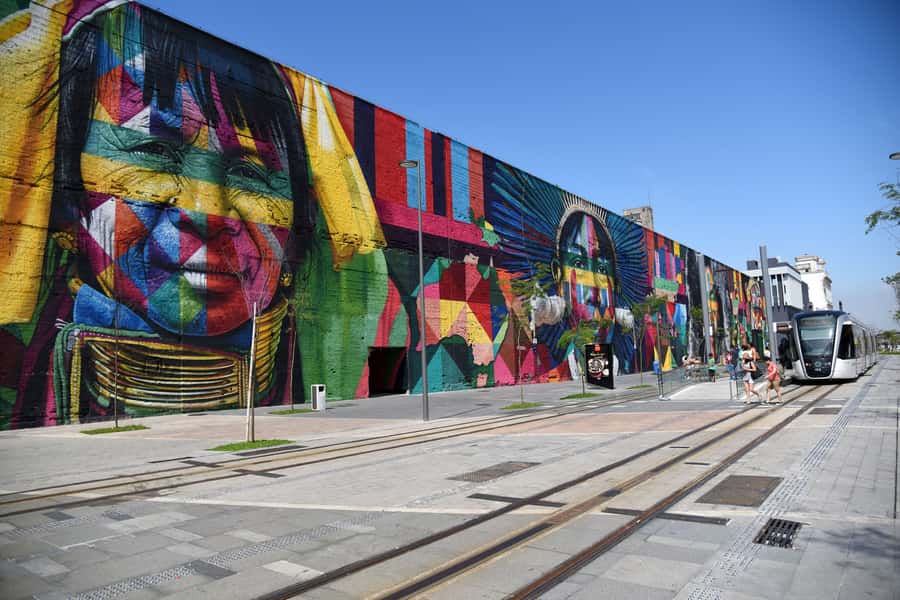
- Eduardo Kobra mural: huge geometric street art featuring five ethnic groups
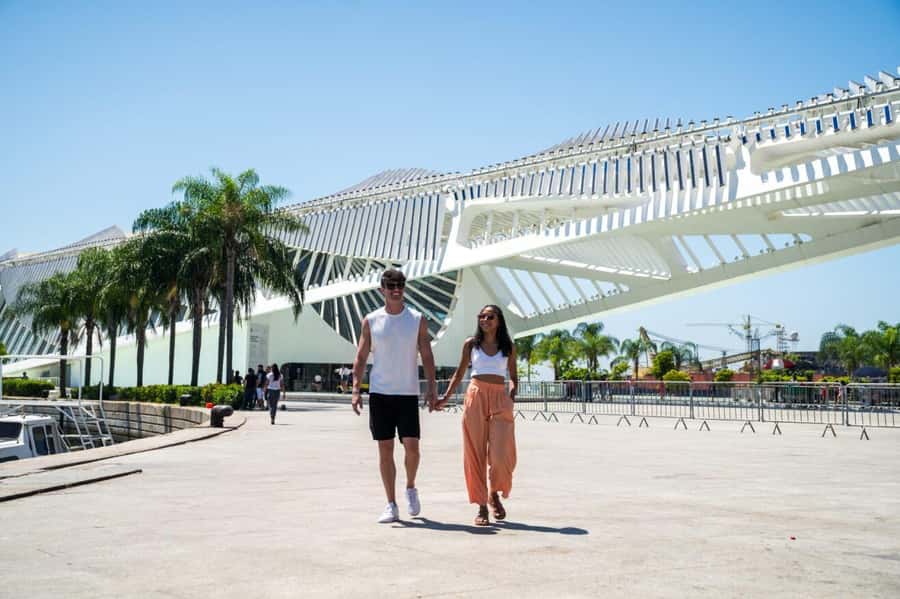
- Museum of Tomorrow: futuristic architecture plus a chance to explore at your own pace inside
- Baroque contrast at the Monastery of Saint Benedict: simple exterior, gold-covered interior
- Rio 2016 Olympic Cauldron: the reflective, kinetic sphere structure as a Games-era marker
- Confeitaria Colombo: Art Nouveau coffeehouse with big stained glass and imported-style details
Starting in Rio’s South Zone: pickup, van ride, and the Downtown pace
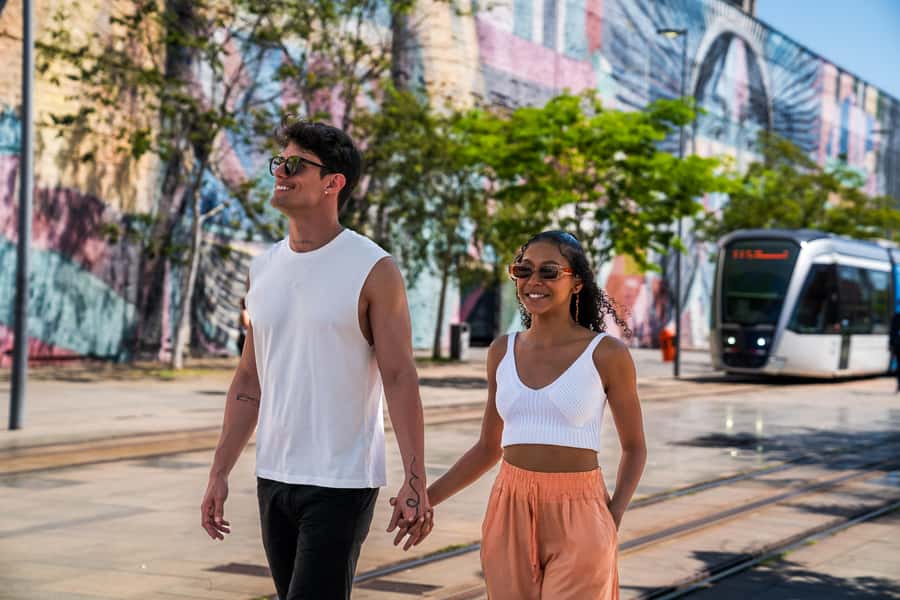
This tour is built for convenience. You’re picked up from hotels in Rio’s South Zone, specifically Copacabana, Ipanema, Leblon, and Leme, during the early window of 8:10 to 8:55 AM. If you’re staying in a hostel or B&B, you’ll be pointed to a nearby pickup hotel, so you don’t end up chasing the van through side streets.
The group rides in an air-conditioned van with a maximum of 19 people. That matters in Rio, because Downtown can feel crowded and traffic can shift fast. When the logistics run smoothly, the van time becomes a useful reset between stops instead of a stressful shuffle.
One pro move: be at the pickup point a few minutes early. In the past, there have been cases where guides were reported to get off track and rush the schedule, which can cause end-of-tour delays. When that happens, it’s the schedule that suffers, not the places themselves.
You can also read our reviews of more historical tours in Rio De Janeiro

Valongo Wharf and the African influence story you can walk
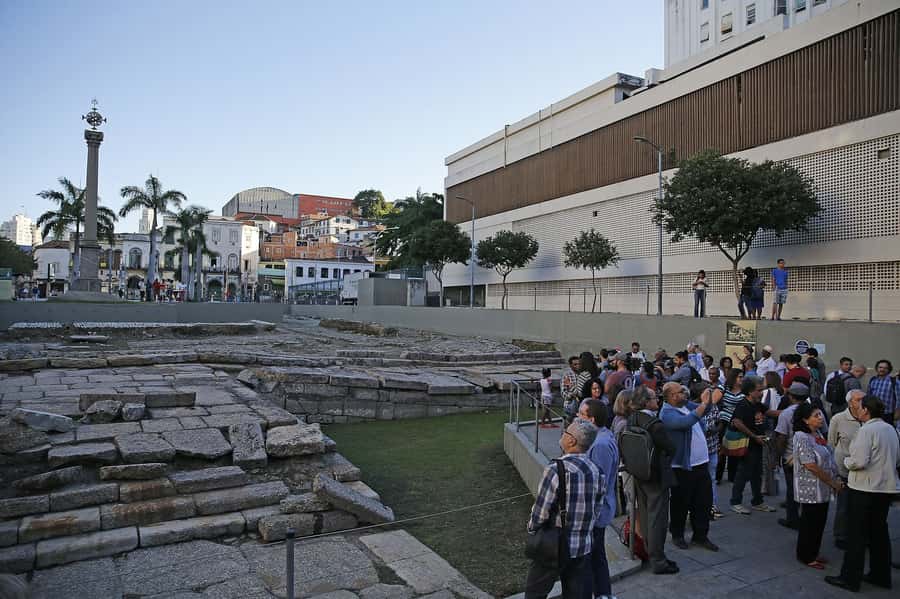
You start at Valongo Wharf, and that choice is smart. It’s not just a scenic pier stop. The tour frames it as the latest UNESCO World Heritage site in Rio, tied to the history of African influence in Brazil.
What you’ll get from this part isn’t a lecture that stays stuck in one spot. It’s more like getting your bearings for the rest of Downtown: where Rio’s wealth, migration, and cultural mix began to take shape. Standing near the waterfront also helps the story feel physical. You’re not just hearing dates and names; you’re seeing the kind of place where movements of people and goods changed the city.
If you like history that has visible anchors, this start will feel especially grounding. It also sets a tone that keeps the later stops from feeling random. The tour keeps asking you to connect culture and change.
Eduardo Kobra’s mural: why the biggest street art matters here
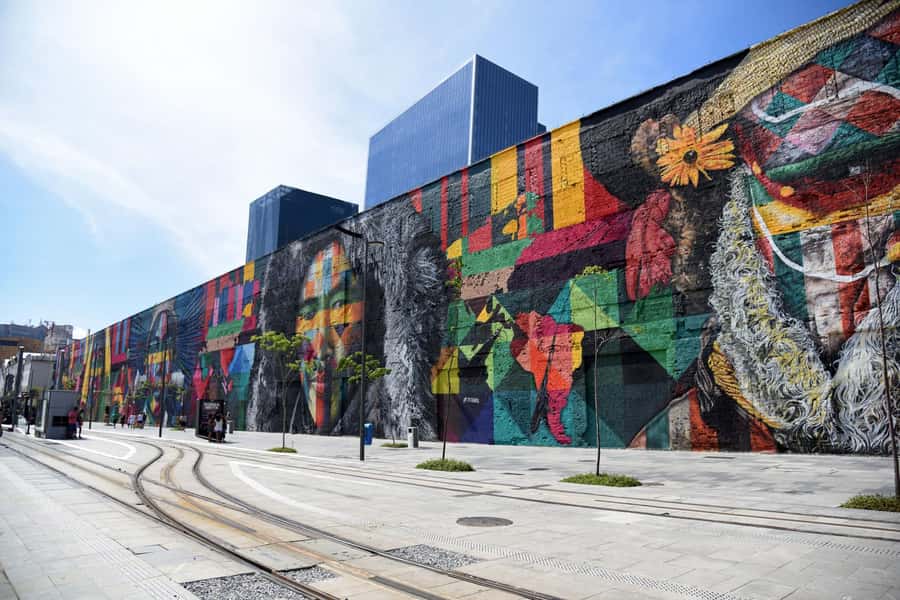
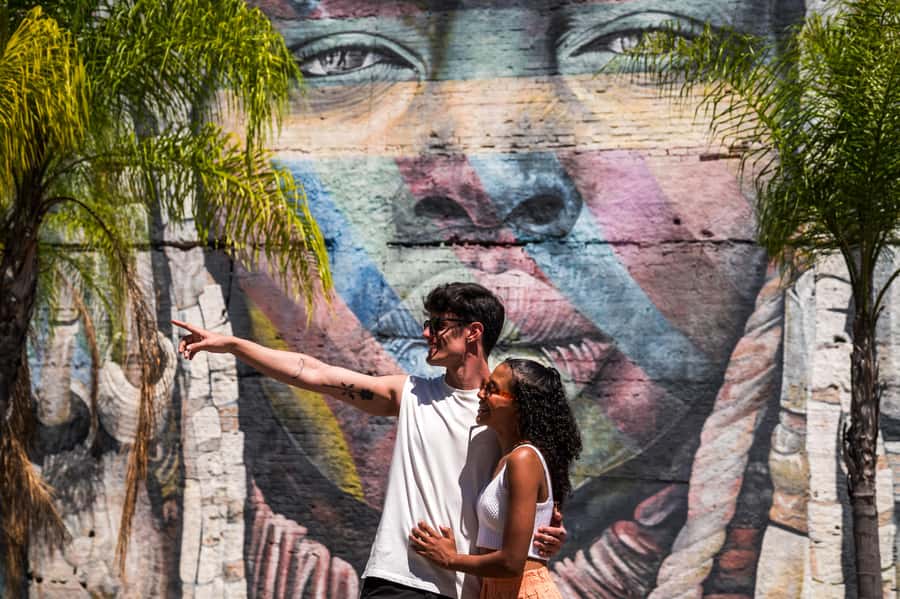
After Valongo Wharf, you walk to the Eduardo Kobra mural. This is the kind of public art that can make your camera roll useless because your eyes keep moving to new details. The mural is known for its scale, and this version uses a colorful geometric background with five ethnic groups portrayed.
Street art gets a lot of attention worldwide, but this stop has a different role than copy-and-paste photos. Here, the mural acts like a visual summary of the city’s identity, and the tour’s commentary ties it to broader Brazilian cultural threads.
Practical tip: give yourself time for pictures, but don’t get stuck only on faces. Zoom out mentally and look at the geometry as a whole. That’s where the mural’s structure feels most intentional.
Olympic Boulevard and the Museum of Tomorrow: future ideas in a real building
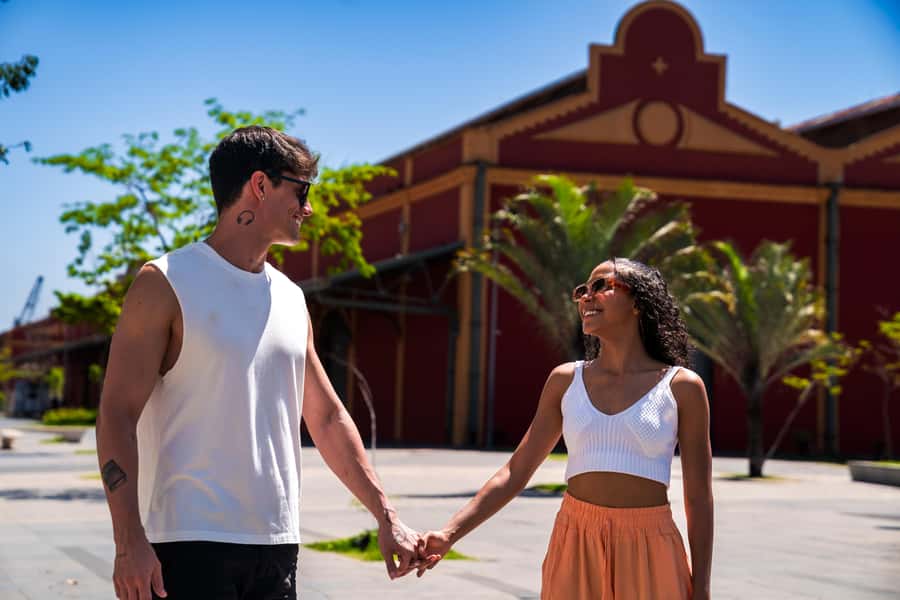
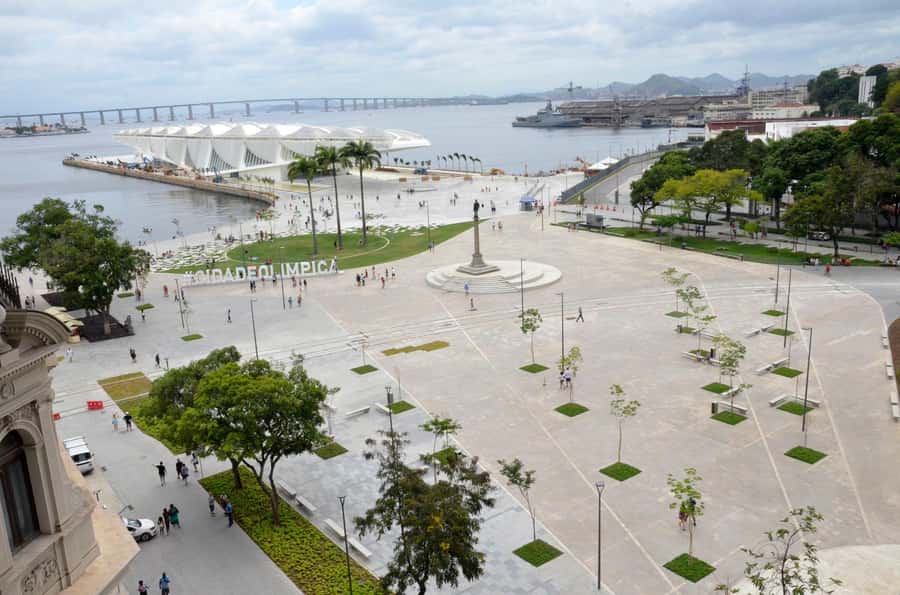
From the mural area, you head along Olympic Boulevard toward the Museum of Tomorrow. The walk helps you transition from street-level history into the museum’s bigger, more futuristic mood.
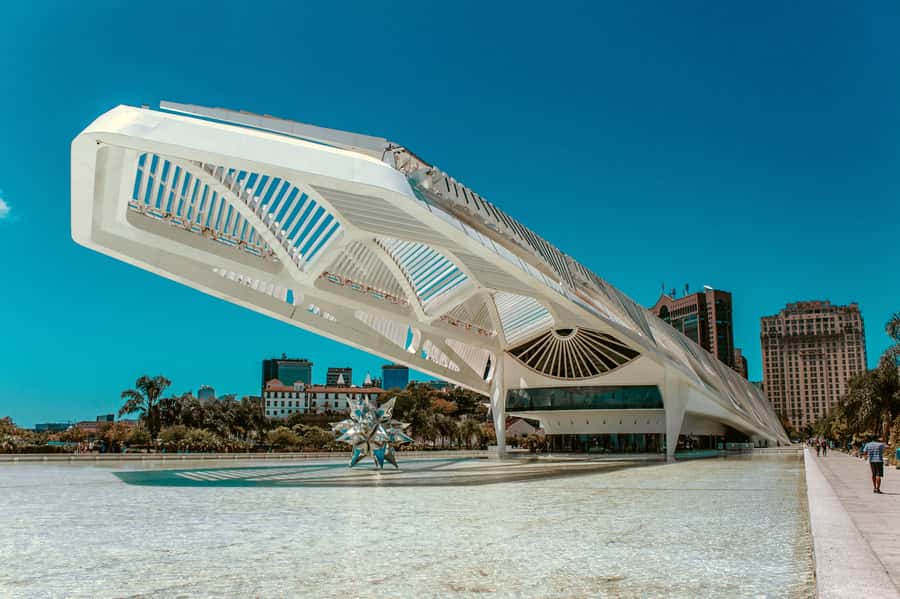
The Museum of Tomorrow is the core highlight, and not just because it’s popular. It’s described as a modern, technological science museum focused on questioning possibilities for the future of the planet and humankind. In other words, it’s not sci-fi cosplay. It’s a science-and-society museum with a building that looks like it belongs in a movie.
Two things I like about this stop for visitors:
- The architecture itself gives you something immediate to notice, even before you understand the exhibits.
- You’re not forced to rush through. You can explore with flexibility once you’re inside.
That pacing point came up in guest experiences tied to specific guides. When your guide is organized, you get a smoother rhythm: explanation outside, then breathing room inside.
If you tend to enjoy museums where you can choose your own route, this works well. If you hate uncertainty, just know you’re entering a space where the displays are meant to be explored rather than marched through like a checklist.
Monastery of Saint Benedict: simple façade, gold interior
Next comes a sharp contrast: the Monastery of Saint Benedict. The outside is described as simple, but the interior is covered with golden ornaments tied to the Baroque period.
That kind of before-and-after difference is exactly what makes a Downtown history tour feel worth it. You’re not only collecting landmarks. You’re learning how style can hide inside itself. From outside, you might expect austerity. Inside, the decoration and gilding are the point.
For you, this stop is a chance to see how religion, wealth, and artistry show up in Rio’s urban layers. It’s also a nice change from the museum’s modern tone. Your brain gets to reset into a different timeline.
You can also read our reviews of more museum experiences in Rio De Janeiro





Rio 2016 Olympic Cauldron: a Games-era art object you can read
Before the tour moves deeper into historical streets, you’ll see the Rio 2016 Olympic Cauldron created by American artist Anthony Howe.
The standout feature is the reflective, kinetic-sphere-like structure, described as a reminder of the Games. What helps here is that this isn’t treated like sports trivia. The tour positions it as public art. That makes it easier to appreciate even if you weren’t glued to Rio 2016 as a viewer.
Look closely at how the structure catches light. When you see kinetic design, the effect changes as you move around the object. Even a quick stop can feel more meaningful when you treat it like a sculpture rather than a photo prop.
Praça XV and the empire headquarters area
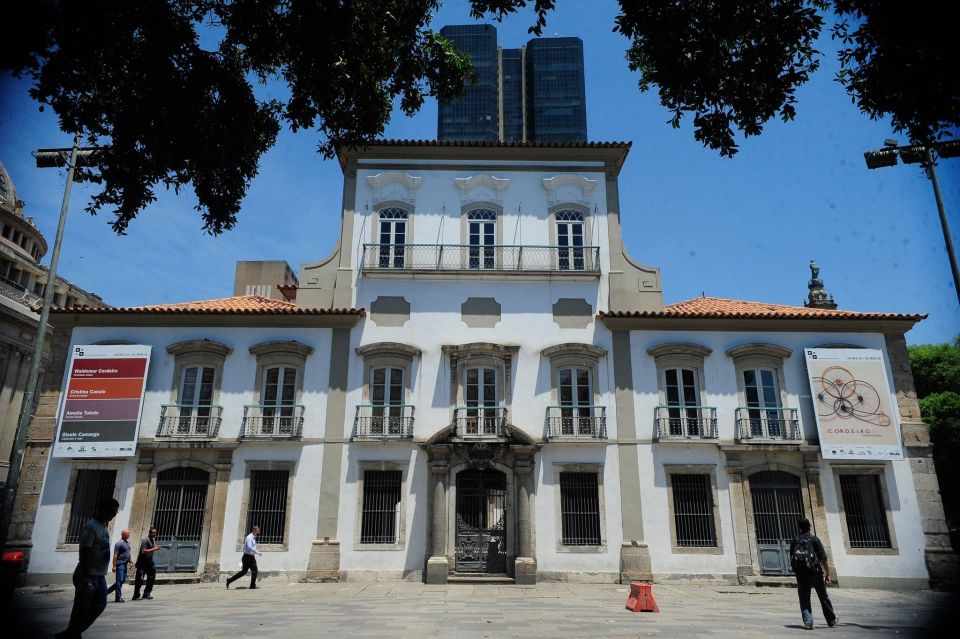
At Praça XV, you’ll see one of the former headquarters of the Brazilian empire. This is one of those Downtown places where the square isn’t the whole story. The tour uses the location to point you toward important events tied to Brazilian history that happened in the area.
For me, the value here is how it knits together everything you already saw. You start at a pier tied to African influence. You view street art tied to cultural identity. You see a futuristic museum tied to how societies shape the future. Then you step into a square tied to empire-era power and decision-making.
It’s a lot of time periods in one half-day, but the tour’s order gives it a thread.
Confeitaria Colombo: the Art Nouveau finale and what to eat there
The final stop is Confeitaria Colombo, one of Rio de Janeiro’s famous cafés. It’s described as a must-see, with opulent Art Nouveau decoration: huge stained glass, tiles, and details with materials imported from France, Portugal, and Belgium.
This is a great wrap-up because it turns the history walk into a pause. You’re not just looking at buildings anymore. You’re moving into the kind of place where people historically went to socialize, talk politics or business, and linger.
A couple of practical notes:
- Food and drinks are not included in the tour price.
- Confeitaria Colombo is closed on Sundays, so your day matters.
If you want ideas, the tour points out Brazilian classics you can order there: coxinha de frango (little chicken thigh) and desserts like brigadeiro. These are comfort-food choices that feel local without needing deep culinary knowledge.
If your feet are tired, this is the stop to slow down. Even if you only stay long enough to try one snack, it helps the whole experience feel complete.
Value, group size, and the guide factor
This tour costs $67 per person and lasts about 4 hours. For Downtown Rio, that price can feel like a fair trade when you factor in museum tickets included and hotel pickup from the South Zone.
Where the value really comes through is the structure:
- You’re bundling a major museum with multiple Downtown landmarks in a short window.
- You get professional live commentary in English, Spanish, and Portuguese.
- You travel with a small group (max 19), which usually makes it easier to hear and move as a unit.
The guide matters a lot here. In positive experiences, guides like Emma and Pedro were described as friendly and dedicated to history, with guides making time to let you explore the Museum of Tomorrow at your own pace. Other guide experiences were less smooth, with reports of one guide losing time and another leaving a group behind during drop-off logistics. Those are outlier situations, but they’re worth remembering: pay attention to the meeting points and keep an eye on timing.
If you go, choose this tour if you want:
- a Downtown overview that links art, architecture, and history
- a short-but-structured way to hit several key sites
- a guide-led route that saves you from figuring transit and entry points
If you’re someone who hates any schedule pressure at all, you might prefer a self-paced day. This tour is short, so delays show up fast.
Who should book this tour?
I’d recommend this one if:
- you’re in Rio for a few days and want a Downtown hit with real context
- you enjoy museums where the building and the ideas matter, not just the photos
- you like seeing Rio’s layers in a compact route: African-influence history, street art, futuristic science, and Baroque-era religion
It’s also a good choice for couples and small friend groups because the van and the guided timing help everyone stay together.
It may not fit if you need a low-walking plan. You should expect moderate walking and wear comfortable shoes.
Also, unaccompanied minors aren’t allowed, and children must be accompanied by an adult. Children under 5 can go free if they don’t occupy a seat.
Should you book Rio Olympic Boulevard, Museum of Tomorrow & History Tour?
If you want a half-day that mixes Downtown history with a modern science museum and a proper café finale, this tour is a solid pick. The Museum of Tomorrow alone is worth planning around, and the route makes the rest of the stops feel connected instead of random.
Before you book, check two things:
- Your day of the week, because Confeitaria Colombo is closed on Sundays.
- Your comfort with walking, since it runs rain or shine and moves at a guided pace.
If you can be ready at pickup and you’re flexible about timing, you’ll likely come away with a stronger read on Rio than you’d get from landmarks alone.
FAQ
How long is the tour?
The tour duration is about 4 hours.
Is the Museum of Tomorrow ticket included?
Yes. Tickets to the Museum of Tomorrow are included.
Does the tour include hotel pickup and drop-off?
Yes, pickup and drop-off are included for hotels in Rio’s South Zone (Copacabana, Ipanema, Leblon, and Leme).
What time does hotel pickup happen?
Pickup is available between 8:10 AM and 8:55 AM. You’ll want to confirm the exact pickup time with the provider for your hotel.
What languages are the guides available in?
The live guide provides commentary in English, Spanish, and Portuguese.
Is food included at Confeitaria Colombo?
No. Food and drinks are available for purchase at Confeitaria Colombo, but they are not included in the tour price.
Is Confeitaria Colombo open every day?
No. Confeitaria Colombo is closed on Sundays.
How big is the group?
The tour has a maximum group size of 19 passengers.
Does the tour run in bad weather?
Yes. The tour operates rain or shine.
Are unaccompanied minors allowed?
No. Unaccompanied minors are not allowed. Children must be accompanied by an adult.