REVIEW · RIO DE JANEIRO
Olympic Boulevard, Museum of Tomorrow & Historical Rio
Book on Viator →Operated by C2Rio Tours & Travel · Bookable on Viator
Downtown Rio in four hours beats the big-street chaos. This half-day tour threads together Olympic Boulevard, the downtown Port Zone, and two standout interior visits, so you get context fast without spending your whole day commuting. It’s designed for time-pressed travelers who still want more than a quick photo stop.
I especially like the hotel pickup and drop-off, which keeps you from hunting a meeting point in traffic. I also love that Museu do Amanhã is built into the route with an included, interactive visit that feels worth the time even if you’re not a museum person.
The main thing to consider is that this is a walking-heavy downtown route with a shared group, so if you hate stopping and starting (or you’re tired from jet lag), you’ll want to plan for a slower pace.
In This Review
- Key points to know before you go
- Olympic Boulevard and Historical Rio: why this route fits short stays
- Price and what you actually get for $72
- Hotel pickup from South Zone and Barra: the real convenience factor
- Stop 1: Cais do Valongo and the start of Rio’s port story
- Painel Etnias: a quick photo stop with meaning
- Porto Maravilha and Mauá Square: seeing the Olympic-era Port Zone in context
- Museu do Amanhã: the interactive stop that justifies your ticket
- Mosteiro de São Bento: quick inside time, big impact
- Passing the Church of Our Lady of Candelaria and why it belongs on your route
- Olympic Avenue highlights: the 2016 cauldron and quick Olympic nostalgia
- Travessa do Comércio and preserved colonial traits
- Praça XV and the Master Valentine Fountain: old civic Rio in a compact space
- Praça Quinze de Novembro and the day’s final walking commentary
- Confeitaria Colombo: where the tour lets you buy one good treat
- Who this tour suits best
- What the guides do well (including names you may hear)
- Should you book this tour
- FAQ
- How long is the tour?
- Is the Museum of Tomorrow admission included?
- What about Mosteiro de São Bento?
- Does the price include food at Confeitaria Colombo?
- Where does hotel pickup happen?
- Is Confeitaria Colombo open every day?
Key points to know before you go
- Hotel pickup from Copacabana, Ipanema, Leblon, Leme, and Barra (West Zone) means less stress right away
- Museum of Tomorrow is the anchor stop with an included 1.5-hour interactive visit
- Mostly free sightseeing outside ticketed stops keeps the total value strong
- You’ll walk colonial streets and port-zone areas for an overview that’s hard to DIY in a few hours
- Group size tops out at 19 with an air-conditioned van between walking segments
- Rain or shine so bring a simple plan for weather (you can’t count on a perfect forecast)
Olympic Boulevard and Historical Rio: why this route fits short stays
If you’re in Rio for just a couple days, downtown can feel intimidating. There are big squares, famous churches, and the Port Zone’s newer architecture all in one patchwork, and it’s easy to waste time figuring out what’s worth your effort.
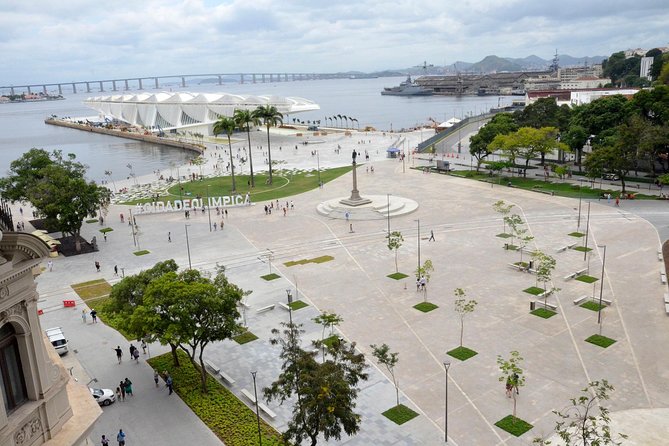
This tour gives you a guided path through the main “story chapters.” You start with Rio’s port history, move into the revitalized Porto Maravilha area (the modern tourist circuit), then circle back through the historic city center highlights, ending with Praça Quinze de Novembro. The pacing is built for a half-day hit, not a full-day marathon.
And the point is not to cram every landmark. It’s to help you understand how Rio connects: the older port and African heritage sites, the Olympics-era redesign of the waterfront and nearby spaces, and the historic core with its squares, fountains, and old government buildings.
You can also read our reviews of more historical tours in Rio de Janeiro

Price and what you actually get for $72
At $72 per person for about four hours, this is priced like a true guided half-day rather than a “see a few things and go” outing. You’re paying for a professional guide, live commentary, transportation in an air-conditioned van, and the two paid interior experiences included in the schedule.
Here’s the value logic in plain terms:
- Most stops are free (Cais do Valongo, Painel Etnias photo stop, Mauá Square, Orla Conde stroll, Praça Quinze de Novembro, and several pass-bys around the historic center).
- The itinerary includes Museu do Amanhã (interactive) and Mosteiro de São Bento (internal visit), both listed as included.
- You also get roundtrip pickup/drop-off from major South Zone neighborhoods plus Barra da Tijuca.
The one thing to keep in mind: food is not included. There’s a planned stop at Confeitaria Colombo where you can buy pastries or a meal on your own.
Hotel pickup from South Zone and Barra: the real convenience factor
This tour is easiest when you use the pickup. It runs with roundtrip van service from main hotels in the South Zone (Copacabana, Ipanema, Leblon, Leme, and Leme) and West Zone (Barra da Tijuca). That means you’re not stuck with a last-minute taxi scramble, and you avoid the headache of finding a specific downtown meeting point.
The van is also capped at 19 passengers, which matters more than it sounds. Small enough to feel personal, large enough to run efficiently. You’ll get that between-stop transport so your day isn’t just walking from start to finish.
One practical note: there are multiple languages for the guide’s commentary (English, Spanish, and Portuguese). If you’re traveling with mixed language needs, this setup is a plus.
Stop 1: Cais do Valongo and the start of Rio’s port story
You begin at Cais do Valongo, with live commentary while you walk by. Admission is free and the stop is short, about 15 minutes, but it’s a powerful starting point because it frames Rio’s identity as a port city before you move into the “pretty skyline” parts.
This is the kind of stop that helps the rest of the day click. Later, when you’re looking at the Port Zone’s modern redevelopment and the city’s main public spaces, you’ll understand that the waterfront has layers. The guide’s narration is what ties those layers together quickly.
If you like context but don’t want a long museum-style lecture, this is a smart opener.
Painel Etnias: a quick photo stop with meaning
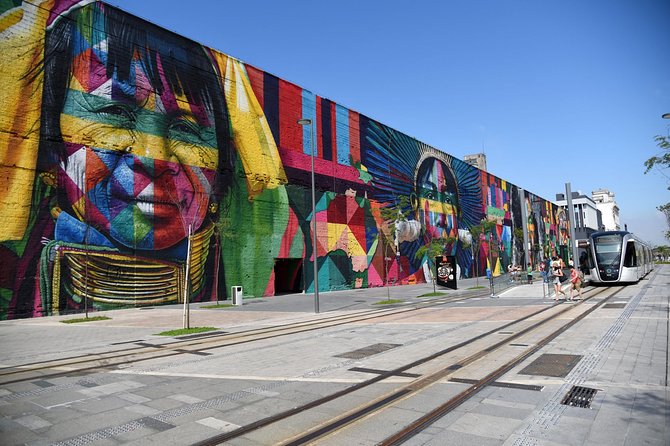
Next up is Painel Etnias, a 10-minute stop for photos with free admission. It’s brief by design, but it works as a visual pause—one of those moments where you can shoot a few images, then keep moving.
Even if you’re not a “photo person,” you’ll still likely appreciate it as a quick cultural landmark marker before you head toward Porto Maravilha.
You can also read our reviews of more museum experiences in Rio de Janeiro





Porto Maravilha and Mauá Square: seeing the Olympic-era Port Zone in context
Then you move through Porto Maravilha, the revitalized Port Zone. This is where the tour starts to feel like a city circuit: new-to-you architecture, an easy-to-walk atmosphere, and enough points of interest to keep you oriented.
You also stop at Mauá Square, a quick 5-minute visit. It was revitalized around the 2016 Olympics, and the short time here matters because you’ll see how the city used major events to reshape public space—without turning the day into an Olympic-only tour.
Between these blocks, you’ll also get a stroll along the Orla Conde. This part is not about checking off another museum door. It’s about giving your eyes a break and letting you contemplate Rio from the waterfront edge. For many people, that pause is what keeps the day feeling relaxing even when you’re walking.
Museu do Amanhã: the interactive stop that justifies your ticket
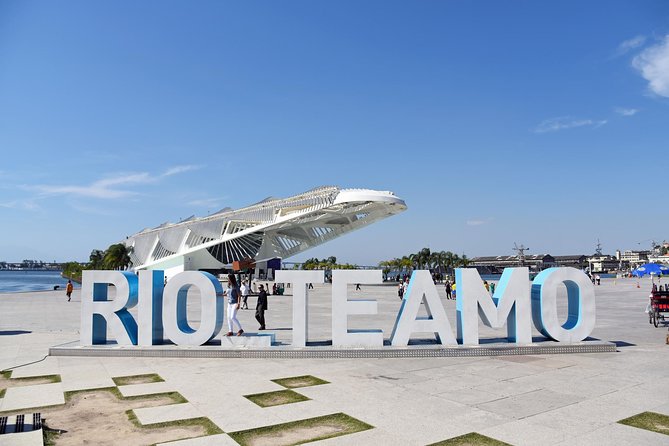
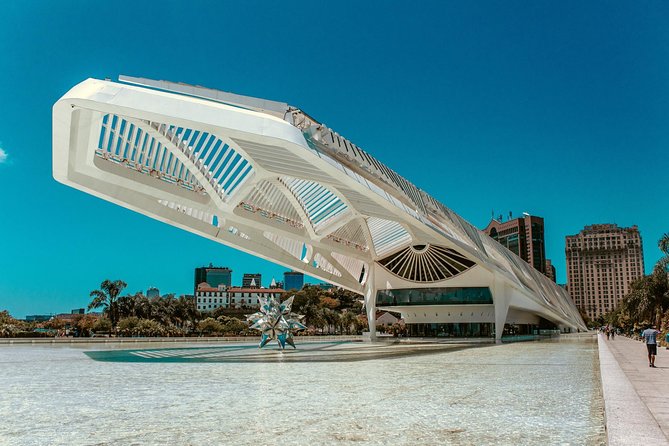
Museu do Amanhã (Museum of Tomorrow) is the centerpiece. You’ll get an internal and interactive visit for about 1 hour 30 minutes, and admission is included.
Why this stop is so worth it: the museum isn’t just a “look and read” experience. The time is long enough to actually do something inside, and it’s set up so you can get value even if you don’t speak Portuguese fluently. Many visitors also enjoy it as a contrast point—modern architecture and future-themed design standing next to Rio’s older port and civic spaces.
In my view, this is the stop that turns the tour from a “walk around and photos” outing into a real experience. If you’re deciding whether to do this specific tour on a busy trip, this museum is often the deciding factor.
If it’s raining (and the tour runs rain or shine), this is also the part that makes the day feel sheltered.
Mosteiro de São Bento: quick inside time, big impact
After the museum, you visit Mosteiro de São Bento for an internal visit, around 15 minutes, with admission included.
This monastery is one of those places where a short visit can still feel substantial if you slow down for a moment inside. The tour’s structure gives you just enough time to take in the space without dragging out your half-day. It’s a good fit when you want historic architecture without burning your whole afternoon.
It’s also a nice “temperature shift” from the modern Port Zone museum experience. One area feels forward-looking; the other pulls you into older, religious, artistic Rio.
Passing the Church of Our Lady of Candelaria and why it belongs on your route
The tour then includes pass-by time for Igreja de Nossa Senhora da Candelária (Church of Our Lady of Candelaria). You don’t get an included interior visit here, but you’ll see one of Brazil’s best-known church landmarks. It receives hundreds of tourists daily and is described as a major 19th-century artistic work in Brazil.
This pass-by is useful because it anchors the day in a major visual reference point. Even if you’re not going inside, it gives you a strong image to remember later when you’re planning other downtown stops on your own.
Olympic Avenue highlights: the 2016 cauldron and quick Olympic nostalgia
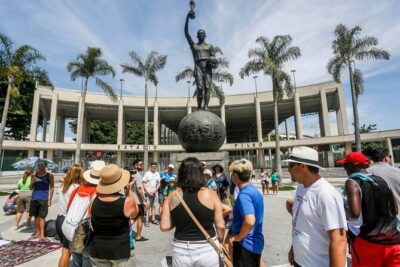
One of the standout “wow” moments is Pira Olímpica, where you see the 2016 Summer Olympics cauldron. The stop is very short—about 1 minute—but it’s a recognizable symbol for people who followed Rio’s Olympic story.
And there’s a smart trick to how this fits the day. The tour isn’t only showing Olympics artifacts. It uses the Olympics connection as a bridge to explain how the city’s waterfront and nearby spaces became more visitor-friendly, then guides you back toward the historic core.
Travessa do Comércio and preserved colonial traits
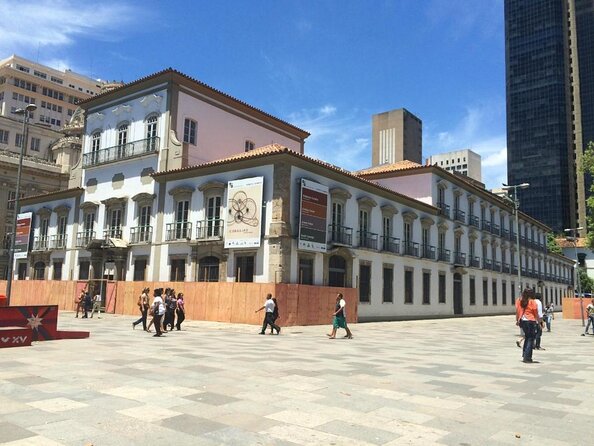
From there, you walk through the alleys from Travessa do Comércio and look for preserved colonial traits. This is where downtown walking becomes more “street-level” and less “landmark checklist.”
You’ll also observe an architectural landmark tied to the former residence of the Telles de Menezes family. The remaining structure connects XV Square to Travessa do Comércio, and it’s the kind of surviving link that helps you picture what the neighborhood looked like before redevelopment.
If you like architecture and old city textures, this is one of your favorite stretches of the day.
Praça XV and the Master Valentine Fountain: old civic Rio in a compact space
Next you’ll pass Paço Imperial, an 18th-century colonial building built for governors’ residence and used today as a Cultural Center. You’ll also see Master Valentine Fountain, also referred to as the Colonial Fountain, located at Praça XV.
Praça XV de Novembro is one of those squares where multiple layers overlap: civic life, colonial design, and the kind of public gathering space that makes a city feel alive, even if you only see it briefly.
This is a good zone for slow looking. Don’t rush it just because the tour timetable keeps moving.
Praça Quinze de Novembro and the day’s final walking commentary
The tour ends with Praca Quinze de Novembro, again with live commentary while you walk by for about 15 minutes. This final walk helps you stitch the narrative together: the waterfront start, the museum anchor, the historic interiors, and then the civic core.
It’s also where you’ll likely feel the most oriented about downtown. Even if you don’t remember every stop name, you’ll remember the shapes: squares, fountains, church silhouettes, and the colonial lane connections.
Confeitaria Colombo: where the tour lets you buy one good treat
The schedule includes a stop at Confeitaria Colombo, internal visit, around 20 minutes, with admission not included and food/drinks not included.
This is basically your optional reward. If you want a sit-down break, this is a natural place for it. The nice part is the tour gives you extra time if you choose to eat, so you’re not forced to stand outside and snack on a single pastry while everyone else keeps marching.
One detail to remember: Confeitaria Colombo is closed on Sundays. If your tour date lands on a Sunday, plan that the pastry break may not be the same.
And yes, this is also a popular photo stop because the building itself is part of the appeal.
Who this tour suits best
This experience fits best if you want a guided downtown overview without building a complicated day plan. It’s a strong choice for:
- First-timers who need orientation quickly
- Time-pressed visitors who still want history plus a real included museum
- People who like walking with breaks (not nonstop pacing)
- Families who want an interactive museum anchor plus historic sights
It may not be ideal if you’re dealing with limited mobility or you strongly dislike walking through multiple city blocks and squares. The itinerary is designed for normal walking days, and you should wear comfortable shoes.
It’s also rain-or-shine, so pack for weather. Even when it’s wet, the museum and interior monastery help keep the day from feeling miserable.
What the guides do well (including names you may hear)
The guide is the key ingredient. Multiple guides have been mentioned by name—Gabriella, Sandra, Carlos, Alexia, and Newton—and the consistent thread is live commentary that helps you understand what you’re seeing.
One other detail worth noting: the tour has a friendly, adaptable rhythm in the field. On rainy days, the plan can shift a bit so you still get the museum time and key city segments without turning into a rushed mess.
Should you book this tour
I’d book it if you want the fastest path to downtown Rio’s main story beats: port history context, the Port Zone’s Olympic-era redevelopment feel, and the Museum of Tomorrow as a true included highlight. At $72, the value stays strong because the major ticketed components are built in and the pickup removes a lot of friction.
Skip it or think twice if you’re expecting a long, Olympics-only site tour or if you want minimal walking. You’re buying an overview with a museum centerpiece, not an all-day excavation of every Olympic site.
If you’re deciding in one sentence: if you like city context plus one excellent interactive museum stop, this half-day plan is a solid use of your time in Rio.
FAQ
How long is the tour?
The tour runs about 4 hours on average, starting at 9:00 am.
Is the Museum of Tomorrow admission included?
Yes. Museu do Amanhã is an internal and interactive visit with admission included for about 1 hour 30 minutes.
What about Mosteiro de São Bento?
Mosteiro de São Bento has an internal visit with admission included, about 15 minutes.
Does the price include food at Confeitaria Colombo?
No. Food and drinks are not included. You can purchase items on-site, and you get a little extra time if you decide to eat.
Where does hotel pickup happen?
Pickup and drop-off are available from main hotels in Copacabana, Ipanema, Leblon, Leme, Leme, and from Barra da Tijuca in the West Zone.
Is Confeitaria Colombo open every day?
No. Confeitaria Colombo is closed on Sundays.