REVIEW · RIO DE JANEIRO
Rio’s city walking tour: a glimpse of history and olympic legacy
Book on Viator →Operated by Gray Line Brazil · Bookable on Viator
Old Rio has a talent for surprising you. This 4-hour downtown walking tour links colonial churches, royal-era landmarks, and the modern Olympic makeover you can still see today.
I especially love the art-and-architecture combo: Nossa Senhora de Candelária shows neoclassical drama, then São Bento Monastery brings you gilt carvings and chapel artwork that really stick in your memory. I also like how the route gives you a practical sense of Rio’s layout, from Praça XV down past the busy market streets toward places like the Metropolitan Cathedral and Carioca Square.
One heads-up: downtown can mean traffic and interruptions, so the walking time may feel more “meander + short drives” on some days. If you hate moving around slowly, you’ll want to set your expectations for a guided route rather than nonstop steps.
In This Review
- Key highlights you’ll actually notice
- Old Rio in one afternoon: what you’re really buying for $60.77
- Pickups, pace, and the reality of downtown movement
- Church of Our Lady of Candelária: neoclassical grandeur with real dates
- São Bento Monastery: chapel art and the Benedictine craft feeling
- Mauá Square and the Olympic legacy you can walk into
- Praça XV do Novembro and Paço Imperial: Brazil’s royal page becomes street-level
- Uruguaiana Street to the Metropolitan Cathedral: scale you can feel
- Confeitaria Colombo: the classic pastry-and-break stop
- Price and value: when this tour is a smart buy
- Practical tips that make a difference
- Who this tour fits best (and who should skip it)
- Should you book this Old Rio walking tour?
- FAQ
- What time does the tour start?
- How long is the walking tour?
- Where do hotel pickups and drop-offs happen?
- Is food included?
- Are admissions included for the main stops?
- How much walking is involved?
- What’s the group size limit?
- Is the tour dependent on weather?
Key highlights you’ll actually notice
- São Bento Monastery’s interior art and the feel of Benedictine religious craftsmanship up close
- Mauá Square Olympic legacy: museums, culture spots, and famous Cobra murals in one area
- Praça XV do Novembro + Paço Imperial: where Brazil’s imperial story takes physical form
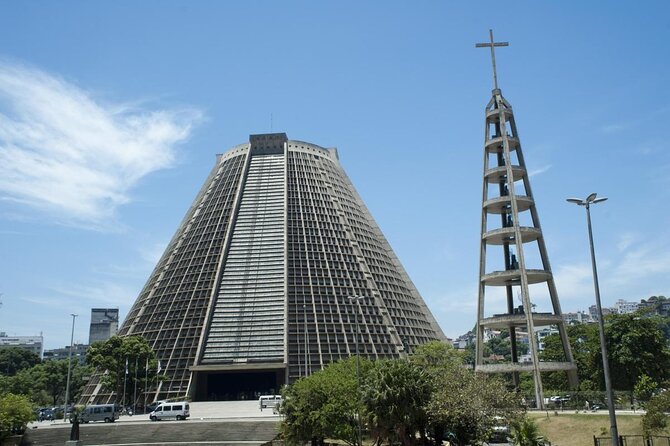
- Metropolitan Cathedral of Saint Sebastian: a giant conical church with impressive scale
- Confeitaria Colombo stop: a classic Rio break that’s easy to turn into a snack plan
- Hotel pickup/drop-off in São Conrado, Leblon, Ipanema, and Copacabana makes it low-stress
Old Rio in one afternoon: what you’re really buying for $60.77
This tour is priced at $60.77 per person for about 4 hours, with hotel roundtrip transfers included for hotels in São Conrado, Leblon, Ipanema, and Copacabana. That matters. If you’re staying in one of these neighborhoods (very common for first-timers), you save the hassle of figuring out downtown transport on your first day.
You’re paying for three things:
- A guided walk through a concentrated slice of Rio’s core
- Expert context so churches and palaces stop being random stops
- Transfers to and from your hotel so you can spend your energy sightseeing
It’s also booked often enough that it tends to fill closer to a week out (on average about 8 days in advance). With a maximum of 35 people, you won’t feel like you’re packed into a stadium, though very large groups can still move at the pace of the slowest step.
You can also read our reviews of more walking tours in Rio de Janeiro



Pickups, pace, and the reality of downtown movement
You start around 1:00 pm, picked up from your hotel. Then you’ll follow your local guide through Old Rio’s tight streets and bigger downtown corridors.
Most of the value here comes from the guidance: your route threads together religious landmarks, imperial-era buildings, and modern cultural spaces without you needing to connect the dots yourself. The better guides also keep questions flowing, so you’re not just being read at—you’re learning in context.
A fair warning from real-world experience: downtown Rio traffic can change the day. Some days feel like more walking; others feel like short drives between clusters. One practical way to handle this is to ask your guide early how much time you’ll spend walking vs. riding. If you want more street wandering and fewer vehicle hops, say so right at pickup.
Group energy also varies with who’s on your tour. Reviews mention guides like André and JB (Juan Baptiste/Jean-Baptiste) showing up on time and moving fast with a lot of info, plus others who will adjust the schedule if you’re already familiar with a stop. The upside: if your group is small, there’s often more flexibility.
Church of Our Lady of Candelária: neoclassical grandeur with real dates
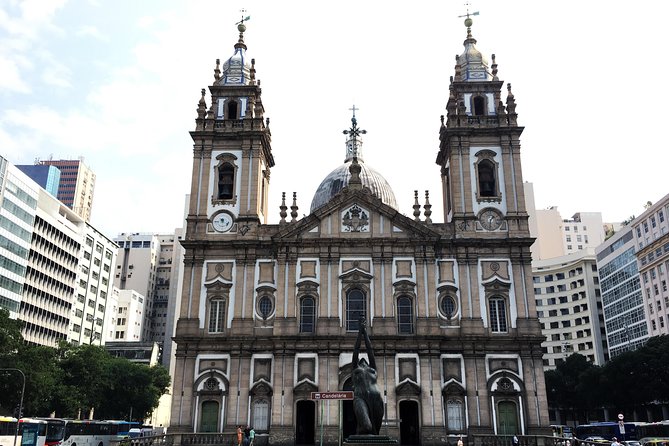
The tour begins at Nossa Senhora de Candelária, a church that started in 1630 and finished in 1775. That date range matters because it frames what you see: you’re looking at a building that belongs to the slow, long-build era of colonial Rio, when churches functioned as community anchors and political statements at the same time.
This stop is marked as a short visit (about 10 minutes), so go in with a simple goal: spot the style. Look for how the neoclassical feel creates order and symmetry, then compare that to the emotional weight a working church carries—bells, footsteps, and the simple fact that people are still using this space.
If you’re someone who likes taking photos, you’ll have time, but it’s not an all-day photo shoot. Treat it like a “get the architecture, then move” stop.
São Bento Monastery: chapel art and the Benedictine craft feeling
Next comes Mosteiro de São Bento, founded in 1590. This is one of those places where the guide’s commentary makes the visit. The monastery is considered a major patrimony of Brazilian architecture, and it tends to be the emotional high point for many people because it doesn’t just look old—it feels made.
You’ll see:
- The monastery complex
- Church interiors tied to the Benedictine tradition
- Attention to paintings and gilt carving details that can be hard to appreciate on your own
There’s also often a library element people get excited about. Reviews highlight the Portuguese-style library building and the standout art work in the chapel area. Even if you don’t spend long inside, the “wow” factor hits quickly: gilded details, layered religious imagery, and craftsmanship you can’t rush through.
This is another short stop (about 10 minutes), so don’t try to take everything in. Pick two things to focus on:
1) One visual feature in the chapel
2) One architectural detail you can explain to your travel partner later
If you’re taking a lot of pictures, keep your energy for the next blocks too—because the tour keeps moving.
Mauá Square and the Olympic legacy you can walk into
After the older religious and royal landmarks, you’ll pivot into the modern storyline of Rio. The route includes Mauá Square, described as a gift from the Olympic legacy that changed life for the Cariocas—especially by creating a new entertainment and culture zone.
This is where the tour becomes photo-friendly and present-day. You’ll pass and see:
- The Museum of Tomorrow area (often viewed from the outside as you move through)
- A major cultural center in the area
- The famous Cobra murals
- A broader “new public space” vibe compared with the older downtown blocks
Some tours also get an extra viewpoint moment here. One review noted a shuttle ride around the Museum of Tomorrow area added by the guide, which makes sense given how streets and traffic can complicate perfect photo angles. Even without that, the exterior look and the surrounding transformation make Mauá Square a strong contrast to the colonial stops.
If you want modern Rio’s architecture and public art, this is a good anchor stop.
You can also read our reviews of more city tours in Rio de Janeiro






Praça XV do Novembro and Paço Imperial: Brazil’s royal page becomes street-level
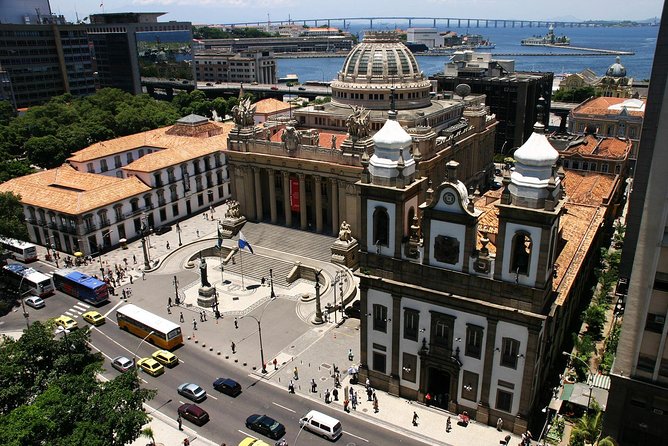
From there you pass through Quinze de Novembro Square (Praça XV do Novembro). This place matters because it links the political calendar of Brazil to physical streets. The square is connected to coronations of Brazil’s emperors in the 1800s and also multiple major historical events.
Then you’ll see the Paço Imperial (Imperial Palace) area. It was built for Brazil’s rulers as both a home and a workplace in the 1700s, originally tied to the Portuguese Royal Family’s arrival in Brazil. Even when you’re only passing or viewing from outside, it’s useful to understand what this building represented: governance, daily power, and the “official Rio” identity before the city became what we picture today.
The guide’s role is especially helpful here. Without commentary, a palace can feel like a backdrop. With context, it becomes a timeline you can walk.
Uruguaiana Street to the Metropolitan Cathedral: scale you can feel
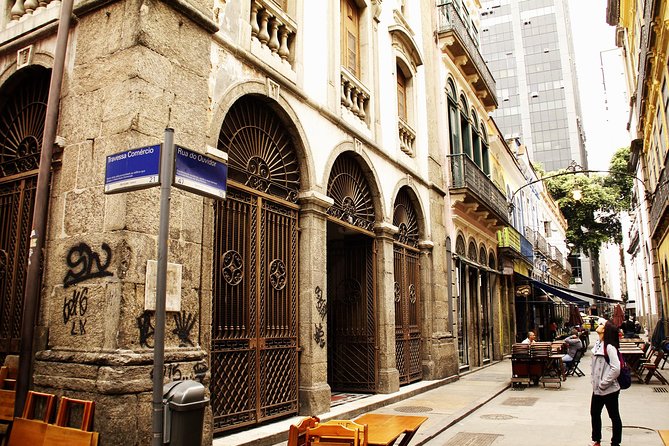
As you continue, the route moves along Uruguaiana Street, then toward the core downtown landmarks: the Metropolitan Cathedral of Saint Sebastian and Carioca Square.
The cathedral is not subtle. It’s an enormous conical cathedral with:
- 96 metres internal diameter
- 106 metres external diameter
- 75 metres overall height
That scale is exactly why guided help is useful. If you stand at a cathedral of this size without any frame, it’s just impressive. With the right context, it becomes impressive and meaningful—an example of modern religious architecture designed to be seen and felt by crowds.
This stop is listed as about 10 minutes with free admission, which means you should prepare to move your feet once you’re inside. Look around for the geometry and for how the interior space changes your sense of scale.
Confeitaria Colombo: the classic pastry-and-break stop
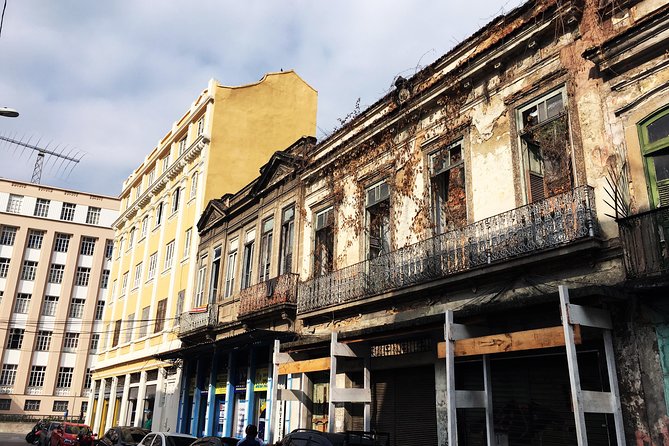
At some point in the afternoon, you’ll make a stop at Confeitaria Colombo. It’s set up for a longer visit (about 20 minutes) and is described as a chance to see and visit the famous bakery.
This is your built-in reset. Since food and drinks aren’t included on the tour, you’re free to treat this as:
- a quick coffee and snack moment
- a sit-down break to avoid decision fatigue later
- a low-key window into classic Rio café culture
One practical tip: if you’re sensitive to sugar or caffeine, use this stop strategically. It’s tempting to overdo it because the place is famous and photogenic.
Price and value: when this tour is a smart buy
At $60.77, you’re not just paying for walking. You’re paying for:
- Hotel pickup/drop-off in several major beach neighborhoods
- A connected downtown route that includes multiple top landmarks
- Free-entry church and cultural stops listed on the schedule
- Local commentary that helps you understand why these sites exist and how Rio grew
Compared with buying separate tickets and trying to stitch together downtown stops yourself, this can be good value—especially if it’s your first or second day in Rio and you want an orientation walk.
If you already have strong downtown knowledge and you prefer total independence, you might feel the tour time is structured. But if you’re trying to see Old Rio in one afternoon without getting lost, this route gives you a tidy overview.
Practical tips that make a difference
Here are a few things that will help you enjoy the walk more and stress less:
- Wear shoes you trust. It’s a walking tour, and downtown steps plus museum-street time add up.
- Bring cash or a card for snacks. Food and drinks are not included.
- Ask your guide what matters most to you. Guides often adapt pacing if you’re flexible and specific.
- If your day has heavy traffic, don’t fight it—just use the seated transport time for questions.
- If you’re worried about moving safely through busy areas, lean on your guide. Some guides are careful about showing you the right routes and keeping the group together.
Also note that the tour requires a moderate physical fitness level, so if you struggle with longer walking stretches, you might want to plan short breaks during the stops.
Who this tour fits best (and who should skip it)
This is a solid fit if:
- You’re new to Rio and want a first-pass orientation of downtown
- You like architecture, churches, and public spaces
- You want a guided timeline from colonial and imperial Rio into the Olympic-era transformation
- You’d rather have transfers than manage downtown logistics on your own
It’s less ideal if:
- You want nonstop walking with no vehicle movement
- You dislike structured schedules and short stop durations
- You’re hoping for a deep museum day with long interior time (this is more of a landmark walk)
Should you book this Old Rio walking tour?
I’d book it if you want a guided “map in motion” that hits big names without turning your day into separate taxi missions. The free-entry church stops, the monastery art, the royal-era squares, and the Mauá Square Olympic legacy make the route feel like one connected story instead of a checklist.
I would hesitate if you’re extremely sensitive to traffic-driven delays or if you hate the idea of short visits where you have to choose what to look at first. In that case, you might still enjoy the tour—but go in ready to pick priorities fast.
If you do book, pick a top three: one church/monastery moment, one royal/political landmark, and one modern-photo stop (Mauá and the Museum of Tomorrow zone). That way, even if the day slows down, you’ll still come away satisfied.
FAQ
What time does the tour start?
The tour starts at 1:00 pm.
How long is the walking tour?
It lasts about 4 hours.
Where do hotel pickups and drop-offs happen?
Pickup and drop-off are included for most hotels in São Conrado, Leblon, Ipanema, and Copacabana.
Is food included?
No. Food and drinks are not included.
Are admissions included for the main stops?
The stops listed for visits include free admission, such as the Church of Our Lady of the Candelária, São Bento Monastery, Confeitaria Colombo, and the Metropolitan Cathedral of Saint Sebastian.
How much walking is involved?
It’s a walking tour, and it’s best suited to travelers with moderate physical fitness.
What’s the group size limit?
The tour has a maximum of 35 travelers.
Is the tour dependent on weather?
Yes. It requires good weather, and if it’s canceled for poor weather you’ll be offered another date or a full refund.