REVIEW · RIO DE JANEIRO
Rio Samba Bus: hop-on hop-off city tour in Rio de Janeiro
Book on GetYourGuide →Operated by C2RIO TOURS & TRAVEL · Bookable on GetYourGuide
Rio looks best from a moving window. This hop-on hop-off panoramic bus tours major Rio landmarks with live, multi-language commentary and onboard Brazilian music that keeps things fun instead of stiff. You’ll get a fast, clear feel for the city layout, from the beach belt of Copacabana to the hilltop spectacle of Christ the Redeemer.
I also like the way this route is built for choices. You can get off at 24 stops and decide how long to linger, whether that’s for photos at Sugarloaf or time to wander around downtown sights like the Selarón steps and Lapa arches. One watch-out: the hop-on hop-off part can be less tidy than the map suggests, with waiting times and stop-finding that can take extra effort, especially if you’re jumping off for a tight schedule.
In This Review
- Quick take: what makes Rio Samba Bus worth your time
- What you’re really buying: a 2-hour sampler with 24 chances to explore
- The morning start in Copacabana: waterfront views and easy orientation
- Sugarloaf Mountain stop: cable car access for dramatic skyline photos
- Aterro do Flamengo and the South Zone glide: more views, fewer chores
- Cinelândia and downtown landmarks: from theaters to tiled stairs
- Lapa to Aquário and Sambódromo: the city gets weirder in a good way
- Christ the Redeemer: the Corcovado train ride and the Tijuca Forest views
- Onboard Brazilian music: MPB, Samba, and the vibe on the road
- When the hop-on hop-off part gets messy: how to protect your time
- Food, drinks, and comfort: what to plan for on a bus day
- Price and value: is $31 a smart deal for Rio first-timers?
- Who this tour fits best
- Should you book Rio Samba Bus?
- FAQ
- How much does the Rio Samba Bus tour cost?
- How long is the Rio Samba Bus experience?
- Is it hop-on hop-off, and how many stops do you get?
- Where does the tour start?
- Does the route include Christ the Redeemer?
- Does it include Sugarloaf Mountain?
- Are attraction tickets included in the price?
- What’s included on board besides the bus ride?
- What departure times are available?
Quick take: what makes Rio Samba Bus worth your time

- Copacabana and Aterro do Flamengo waterfront views right at the start, so you’re oriented fast.
- Sugarloaf Mountain photo stop at the cable car area (you can do the cable car, but tickets aren’t included).
- Downtown history stops like Cinelândia-area sights, Lapa arches, and the Selarón staircase.
- Christ the Redeemer by Corcovado train with the Tijuca Forest ride included in the experience flow (your train ticket is not listed as included).
- Onboard sing-alongs with MPB, Samba, and other Brazilian rhythms during the trip.
- Timing and stop signage can be tricky, so build in buffer time and plan for a bit of patience.
What you’re really buying: a 2-hour sampler with 24 chances to explore
Rio Samba Bus is a guided hop-on hop-off city tour built around one simple idea: help you see the big highlights without doing a full-blown planning project. The tour runs for about 2 hours, but the point is that you’re not locked into a nonstop ride. You can step off at stops as you go, then hop back on later along the same loop.
At $31 per person, it’s priced like a “get your bearings fast” tour, not like a private car and guide. The value comes from combining three things: transport across South Zone and central Rio, live commentary in Portuguese, English, and Spanish, and onboard entertainment that makes the bus feel like part of the day, not just transit. Free Wi-Fi also helps if you want to check maps, confirm next stops, or coordinate with friends.
The trade-off is also part of the deal: you’ll still be doing real-world stops and walks. Tickets for sights aren’t included, so you need to plan ahead for anything that costs extra at the viewpoint or museum level.
You can also read our reviews of more city tours in Rio De Janeiro



The morning start in Copacabana: waterfront views and easy orientation
The tour begins in the Copacabana area, with departure options that place you near the beach promenade. The outward route includes several Copacabana beach stations, plus a Hilton Hotel stop and a Rio Sul Shopping Mall stop. That’s useful because it means you don’t have to be right at one single pier-like starting point.
This early section matters more than it sounds. Copacabana is the visual backbone of Rio’s South Zone. When the bus passes the waterfront and you’re looking out over the promenade and sea, you instantly understand where beaches, neighborhoods, and major roads line up. It also sets expectations for the rest of the trip, since you’ll spend the day moving between coastal views and the inland sight hubs.
If you’re the type who likes photos, this is where you catch them without rushing. The bus focuses on getting you a view first, then moving you toward the “wow” climbs and viewpoints.
Sugarloaf Mountain stop: cable car access for dramatic skyline photos

After Copacabana, the itinerary pushes toward the Sugarloaf area, with a clear stop at the Sugarloaf Cable Car Park. This is your gateway to one of Rio’s most iconic shapes: the twin peaks look like a poster from every angle.
Here’s the practical bit. The tour description mentions the thrill of taking the cable car to Morro da Urca. But attraction tickets aren’t included in the tour package, so you’ll likely need to buy your own ticket to do the cable car portion. Even if you skip the ride, this stop is still valuable because it gives you time to frame Sugarloaf in your photos with the right background.
One more detail worth knowing: the bus experience can shift between closed and open vehicles. If you want less window glare and a more direct skyline feel, you’ll probably prefer the open vehicle when available. If heat or sun is a concern, a closed bus with air-conditioning can be more comfortable.
Aterro do Flamengo and the South Zone glide: more views, fewer chores

On the way through the city, the tour highlights the Aterro do Flamengo waterfront area and the broader South Zone viewpoints. This section is ideal when you want to see Rio as a connected system rather than a pile of separate attractions.
The return route also brings you past several South Zone landmarks and practical “pause” points, including:
- Largo do Boticário
- Lage Park
- Lagoa Skate Park
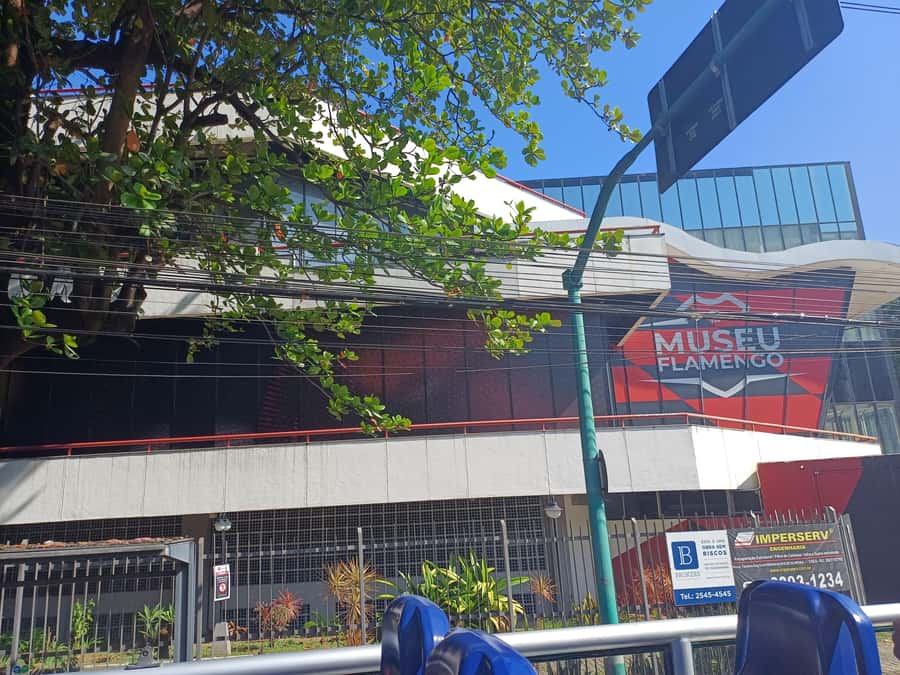
- Flamengo Museum
- Rua Garcia Dávila (the gastronomic center zone)
- Ipanema Beach posts (Post 9 and Post 8 stops)
Why that matters: these aren’t all headline monuments. They’re the neighborhood texture stops that help you decide where to spend extra time later. If you picture your Rio day as a series of “photo breaks + casual wandering,” these stops support that plan.
If you’re hungry, Rua Garcia Dávila can help you time a meal without forcing you to cross the whole city. If you’re just trying to see more coastline, the Lagoa area and the Ipanema beach post stops can help you build a clean loop.
Cinelândia and downtown landmarks: from theaters to tiled stairs

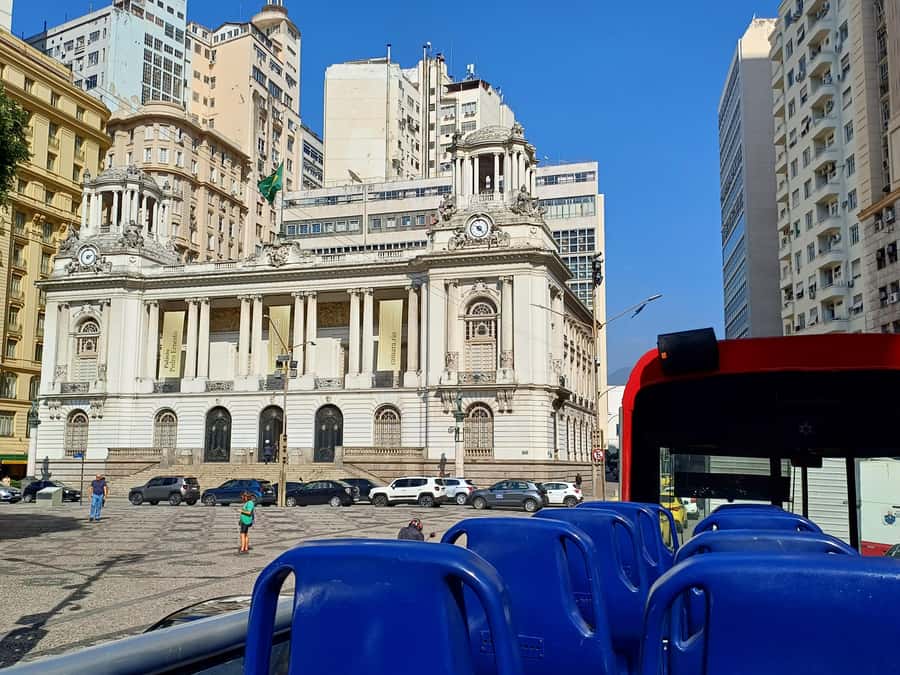
Once the route heads into the center, it turns into a walking-and-photo day. The tour passes through the Cinelândia area, where Rio’s historic institutions cluster around the Municipal Theatre, plus the Museum of Fine Arts and the National Library. Even if you only catch exterior views from the bus, this stretch helps you understand why central Rio feels different from the beach neighborhoods.
Then you hit two of the most instantly recognizable photo stops:
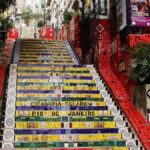
- Selarón Steps stop (the famous tiled staircase)
- Lapa Arches stop (the aqueduct-style arches area)
These places are great because they reward short stops. You can step off, walk a block or two, take photos, and get back on. That’s exactly how you’ll want to use a hop-on hop-off bus: quick checks of key sights, without committing your entire day to one specific neighborhood.
Down-town religious and civic landmarks also appear along the route, including:
- Rio de Janeiro Metropolitan Cathedral
- Paço Imperial
- Candelária Church
This is a good time to listen closely to the guide. The commentary helps connect what you see (architecture, squares, institutional buildings) to why it matters for Rio’s story. Even if you already know the headlines, you’ll likely pick up a few useful context points that make the scenes make more sense.





Lapa to Aquário and Sambódromo: the city gets weirder in a good way
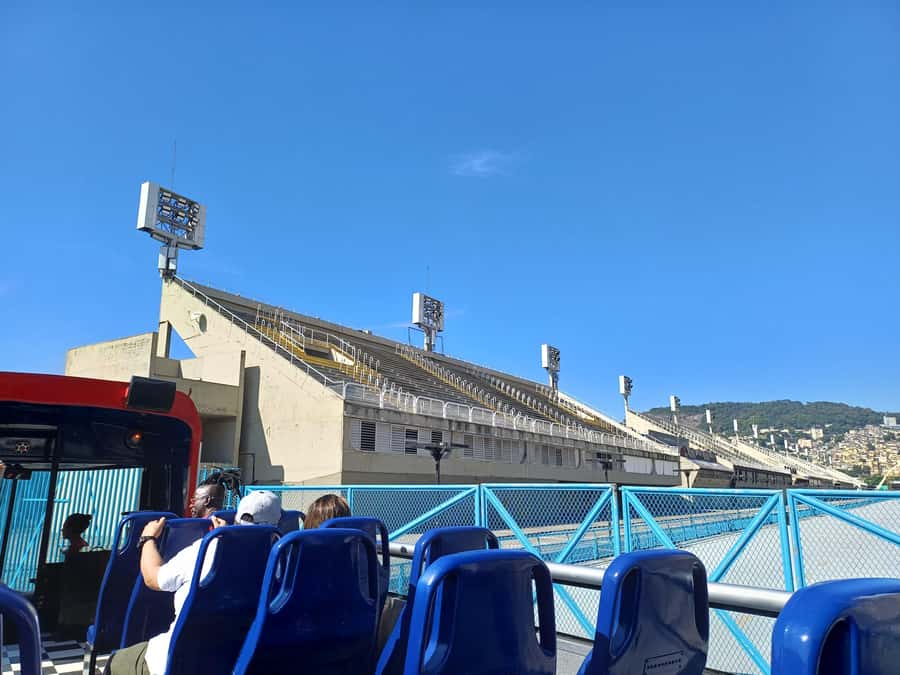
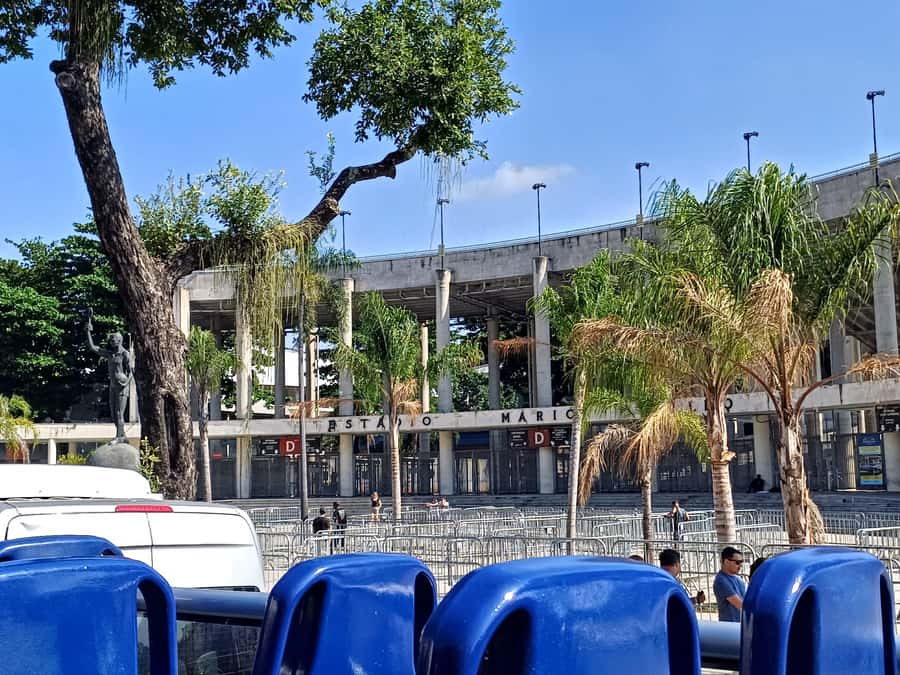
As you keep moving, the tour includes additional central and waterfront-adjacent stops. The outward route lists Aquarium / Yup Star Rio and Maracanã, while the return route lists Biopark and Sambadrome.
This part can be interesting for a simple reason: it shows Rio beyond the postcard views. You’re passing venues and districts tied to major events, and it’s a reminder that Rio’s culture isn’t just scenic. It’s social, scheduled, and built into real public spaces.
One practical caution: the route plan mentions Maracanã, but at least one rider felt the bus didn’t pass it. That doesn’t mean you should assume it’s skipped, but it does mean you should keep your expectations flexible if Maracanã is your must-do.
If you have a single “big event” target like Sambódromo, use it as a bonus photo stop rather than a guarantee appointment. That way, the rest of the day stays enjoyable even if the bus timing or exact passing differs.
Christ the Redeemer: the Corcovado train ride and the Tijuca Forest views

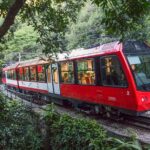
The centerpiece of the Rio Samba Bus experience is the Christ the Redeemer stop on the return route, described as a Corcovado Train to Christ the Redeemer experience. The route notes that the ride winds through Tijuca Forest, with views opening up as you climb.
This is where the tour stops feeling like a sightseeing loop and starts feeling like a real Rio moment. Even if you’ve seen the statue in photos, the approach with forest and changing angles does something your phone screens can’t. It also helps if you’re trying to plan around hills. This is one of the most efficient ways to get up there from the city without making it your entire day of logistics.
Again, tickets aren’t listed as included. So treat the train-as-a-must as something you should confirm and budget for. If you’d rather not manage a separate ticket, you could still use the bus to get to the general area, but your full Christ experience will depend on that access.
Onboard Brazilian music: MPB, Samba, and the vibe on the road

One of the standout features here is the music. The tour description calls for onboard musical experiences, and the highlights explicitly mention sing-alongs and rhythms like MPB and Samba.
That said, real-life experiences can vary. Some riders report that the advertised music program didn’t show up as expected. So I treat onboard music as a bonus, not a guarantee. Even when the music is just part of the atmosphere, it can make the ride feel more like a cultural introduction than a checklist.
If music is a big deal for you, it’s worth planning your mindset that the bus itself is already a cultural intro: guides in multiple languages, local trivia, and a route that moves through neighborhoods where music and movement are part of daily life.
When the hop-on hop-off part gets messy: how to protect your time
This is the section that saves your day.
The most common problem isn’t the route. It’s what happens when real schedules meet real streets. Some riders describe big waiting times and that the bus doesn’t always match the times you hope for. Others mention difficulty finding the correct stop because stop markers can be unclear, even with small stop maps.
Here’s how you reduce stress:
- Take a screenshot of the stop list before you go, and keep it visible when you’re waiting.
- Plan to arrive at your chosen stop a bit early rather than right on the minute.
- If you have a hard deadline, don’t bet everything on a perfect bus connection. Have a backup plan for getting to your next sight.
- If your day depends on starting on time from the correct departure point, double-check your meeting location and give yourself extra buffer.
This kind of tour works best when you treat it as flexible. If you treat it like a timed shuttle you must catch without friction, you’ll feel the friction.
Food, drinks, and comfort: what to plan for on a bus day
The tour includes free Wi-Fi on board, which is more helpful than it sounds in Rio. You can check your next stop or look up short details when you’re ready to get off.
Food and drinks aren’t included. The description says food is available for purchase at attractions, and drinks can be purchased on the boat (so the bus experience includes at least some onboard purchasing). That means you can keep moving without committing to a full sit-down meal between stops.
Comfort depends on the vehicle type. Some rides may be on closed trucks with air-conditioning, while others may be open. If you tend to get heat-sensitive, try to choose the most comfortable vehicle option when you board.
Price and value: is $31 a smart deal for Rio first-timers?
For $31, Rio Samba Bus makes financial sense if you want a guided overview that covers a lot of territory. You’re paying for:
- Transport across multiple Rio zones
- Live guide commentary in Portuguese, English, and Spanish
- A hop-on hop-off structure with 24 stops
- Onboard entertainment (with the understanding it may not always match the ad perfectly)
- Free Wi-Fi
It’s not automatically the best deal if you already have your own transportation plan and you only care about one or two sights. In that case, paying separate admission and using public transport might suit you better.
It also isn’t the ideal match if your schedule is extremely tight. Hop-on hop-off tours live and die by real traffic, real passenger timing, and real-world stop navigation. If you can handle that, you’ll get a lot of Rio in a short time.
Who this tour fits best
This is a great fit if you:
- Are in Rio for a short visit and want a big-picture tour first
- Want to visit Christ the Redeemer and Sugarloaf without doing all the planning alone
- Prefer a guided route with commentary, trivia, and cultural context
- Like the idea of music on the move and a less formal, more social bus experience
It’s a tougher fit if you:
- Need strict timed connections between sights
- Get frustrated easily by waiting
- Are navigating stops on foot for the first time and don’t have a plan for where to stand
Should you book Rio Samba Bus?
I’d book Rio Samba Bus if your goal is to see Rio’s highlights in one organized sweep, while still giving you flexibility to linger at the places that grab you. It’s a good “first-day” or “first-half” kind of tour, especially if you want the bus to do the heavy lifting across Copacabana, downtown, and up to Christ the Redeemer.
I wouldn’t rely on it as your only transport plan if you have strict timing. Bring extra patience. Keep your stop list handy. Treat the music as a bonus. If you do those things, the $31 price starts to feel fair for what you gain: a guided, multi-zone introduction with enough stops to shape the day to your interests.
FAQ
How much does the Rio Samba Bus tour cost?
The price is $31 per person.
How long is the Rio Samba Bus experience?
The duration is 2 hours.
Is it hop-on hop-off, and how many stops do you get?
Yes, it’s hop-on hop-off, with access to 24 stops.
Where does the tour start?
The tour starts in the Copacabana area, with stops such as Copacabana Beach Station 5, 4, 3, and 2, plus other nearby boarding points.
Does the route include Christ the Redeemer?
Yes. The return route includes the Corcovado Train To Christ The Redeemer, described as reaching the top of Christ the Redeemer via the train.
Does it include Sugarloaf Mountain?
Yes. There’s a stop at the Sugarloaf Cable Car Park.
Are attraction tickets included in the price?
No. Tickets to the attractions are not included.
What’s included on board besides the bus ride?
A professional tour guide provides live commentary in Portuguese, English, and Spanish, plus musical performances on board and free Wi-Fi on board.
What departure times are available?
Departure times listed include 9:15 am, 10 am, 10:45 am, 11:30 am, 12:15 pm, 1 pm, 1:45 pm, 2:30 pm, 3:15 pm, 4:15 pm, and 5:15 pm, depending on the day.