REVIEW · RIO DE JANEIRO
Walking tour of the bohemian neighborhoods of Santa Teresa and Lapa
Book on Viator →Operated by Good Guide In Rio · Bookable on Viator
Yellow tram, colorful steps, and real Rio charm. This Santa Teresa + Lapa route pairs hilltop views with classic Rio street scenes in about 3.5 hours, guided by locals like Edmundo (and others such as Lorena or Ivan) who seem to know everyone and how to make the neighborhoods feel personal. I love the panoramic ride up on the vintage yellow Bonde, and I love how the tour mixes architecture and street art with a human, story-driven pace. The main drawback: you’re walking up and down hills and steps, so plan for a workout even if the views make it worth it.
In a group of no more than 12, you get more than a checklist—you get context, quick answers, and smart stops (like where to pause for the best sightlines). If you’re in Rio for a first visit, this is a strong use of a half day, especially when you want both charm and the city’s famous angles.
In This Review
- Key highlights you’ll actually feel on the street
- Santa Teresa meets Lapa: why this walk makes sense
- Getting started in Copacabana and moving with the group
- Stop 1: Santa Teresa tram station and the yellow Bonde climb
- Stop 2: Largo dos Guimarães—old houses, views, and nightlife nearby
- Stop 3: Parque das Ruínas—Laurinda Santos Lobo’s viewpoint above Rio
- Stop 4: Escadaria Selarón—colorful steps with a long creative story
- Stop 5: Arcos da Lapa and the old aqueduct walls
- Stop 6: Cinelândia—Teatro Municipal, Biblioteca, and an operating Odeon
- Price and value: what you’re paying for at $72.09
- What you’ll learn from a guide in Santa Teresa and Lapa
- Who should book this tour (and who might want to rethink it)
- Should you book this Santa Teresa and Lapa walking tour?
- FAQ
- How long is the Santa Teresa and Lapa walking tour?
- Where does the tour start, and does it end there too?
- What’s included in the price?
- Are admission tickets needed for every stop?
- How big is the group?
- What if I need to cancel?
Key highlights you’ll actually feel on the street
- A scenic 30-minute Bonde tram ride that turns the Santa Teresa climb into part of the sightseeing
- Parque das Ruínas viewpoint with sightlines toward the Centro, the Christ statue area, Botafogo, and the Arcos
- Escadaria Selarón and its story, color, and symbolism as you work your way down to Lapa
- Arcos da Lapa + aqueduct history—and graffiti along the walls that keeps it feeling like living Rio
- Cinelândia’s monumental buildings plus the Teatro Odeon still operating in the square
- Small group energy (max 12), which helps you move faster and ask questions without feeling rushed
Santa Teresa meets Lapa: why this walk makes sense
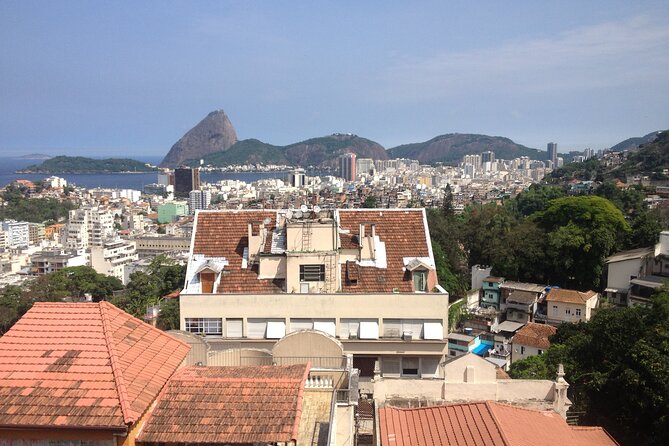
Santa Teresa and Lapa sit close on a map, but they feel totally different in real life. Santa Teresa is all slopes, old houses, and airy viewpoints—more artistic and old-world. Lapa is where Rio turns louder: arches, graffiti, and that can’t-miss stairway.
What I like most about combining them on one guided loop is efficiency. In one morning, you get the hill neighborhood experience, then you move into the iconic Rio “postcard” zones without spending your day hopping on and off transport. And because the pacing is built around short stops, you’re not just looking—you’re absorbing the stories behind what you see.
You can also read our reviews of more walking tours in Rio de Janeiro



Getting started in Copacabana and moving with the group
The tour starts at 9:00 am with the meeting point in the Copacabana area at Copacabana Palace (Av. Atlântica). It ends back at the meeting point, so you don’t have to figure out where to go next.
Expect to use public transportation as part of the plan—one reason this tour feels smooth for a first timer. You’re not locked into a private car ride that keeps you insulated from the city. You’ll connect by Metro and then take the famous tram up the hill, which is a very Rio way to travel: practical and scenic.
Group size matters here. With a maximum of 12 travelers, it’s easier for the guide to keep everyone together and still give you time at each viewpoint. If you’ve ever done a “group of 30” tour that felt like being carried along, this won’t feel like that.
Stop 1: Santa Teresa tram station and the yellow Bonde climb

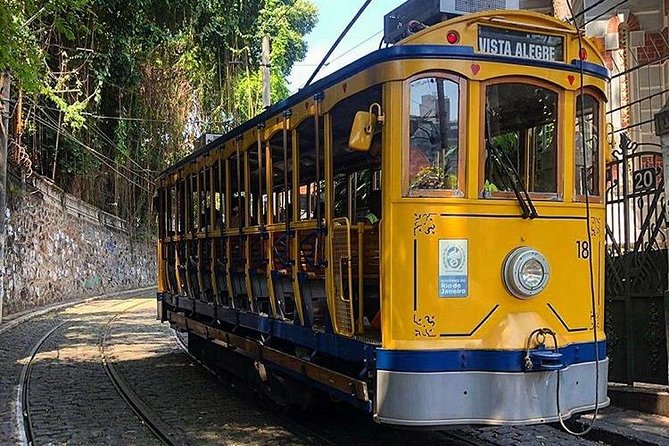
This is where the morning starts feeling special. You arrive at the Santa Teresa Tram station and ride the famous yellow Bonde (the vintage tram) up into Santa Teresa.
The ride is about 30 minutes and it’s more than a commute. It’s a panoramic climb where the city slowly opens up around you. As you go higher, the views change fast—rooflines, streets that look like they shouldn’t fit on steep hills, and that classic Rio sense of space between buildings.
Ticket-wise, this is one of the paid parts included in the experience, so you can focus on the ride instead of digging through ticket counters. If you care about photos, this is your “get the big view early” moment. Even if you don’t take many pictures, you’ll still feel your bearings shift in a good way.
Stop 2: Largo dos Guimarães—old houses, views, and nightlife nearby
From the tram area, you move into the heart of Santa Teresa around Largo dos Guimarães.
This stop is about atmosphere. You’ll walk the plaza area and surrounding streets, spotting houses from the late XIXth to early XXth century, plus the kind of viewpoints Santa Teresa does so well. It’s also where you’ll see why locals and visitors keep showing up for food and drinks—this neighborhood doesn’t feel like a museum district. Restaurants and bars are part of the scenery, not an afterthought.
This stop is about 45 minutes and admission is free, which means the value is 100% in the walking and the guide’s commentary. If you like neighborhoods that still feel lived-in, this is a highlight.
Practical note: the terrain here is hilly. You’ll be fine if you can walk at a steady pace, but wear shoes you trust. The streets can be uneven in Santa Teresa, and you’ll want your footing for the viewpoints.
Stop 3: Parque das Ruínas—Laurinda Santos Lobo’s viewpoint above Rio
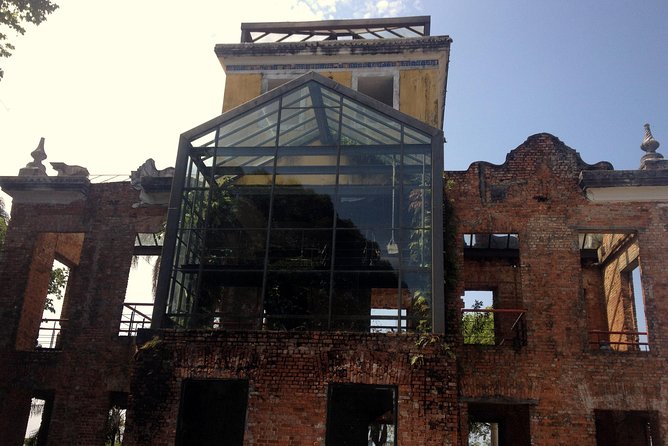
Next you reach Centro Cultural Municipal Parque das Ruínas, one of the iconic Santa Teresa stops.
This spot used to be the home of Laurinda Santos Lobo and has been transformed into a gazebo-like cultural viewpoint. The payoff is huge: from here you can see the Centro area, the Arches of Lapa, and on a clear day you also get views toward Christ and Botafogo.
You’ll spend about 30 minutes at this stop, and admission is free. I recommend using this moment intentionally. Don’t just look down the view; look across it. Notice how the city changes from hilltop textures to the dense urban grid below. Santa Teresa is often photographed for charm—this viewpoint shows why the neighborhood has that dramatic pull.
If your only goal today is to understand Rio’s geography, this is the place that helps the most.





Stop 4: Escadaria Selarón—colorful steps with a long creative story
Then comes the descent toward Lapa: the famous Escadaria Selarón.
You’ll pass by the multicolored staircase created by Chilean artist Jorge Selarón, a project that took him around twenty years to build. The steps are visually loud—in a good way—but the reason they matter is deeper than the color. They’re a Rio landmark created by an individual’s persistent work, and it shows how street art can become part of a neighborhood’s identity.
Plan about 30 minutes here. Since it’s free, the experience is about time on the steps: watching how people move along them, looking closely at the tiles, and understanding how the staircase functions as both art and public space.
Tip: if you’re there in stronger daylight, the colors pop. Still, if the crowd builds up, don’t force it—pause just long enough to absorb what’s in front of you, then keep moving with the group.
Stop 5: Arcos da Lapa and the old aqueduct walls
From the stairs, you continue your stroll to Arcos da Lapa, the old Rio aqueduct arches from the XVIII (18th) century.
The arches weren’t just decoration. They helped supply water to the city until the end of the XIX (19th) century, and you can still feel that historic purpose in the structure’s scale.
This stop takes about 20 minutes, admission is free, and the route includes walking through Lapa’s graffiti-filled walls. The art here isn’t separate from the architecture—it’s layered onto it. That’s what makes this feel like street life, not a staged “attraction.”
You’ll also learn a detail that makes the area feel even more connected: the tram passing through the aqueduct to access Santa Teresa. So you get a full-circle moment—your morning started with the climb, and the infrastructure that supports that climb still sits right here in the middle of the scene.
Photo tip: stand back and then step closer. From far away you get the arches in context; up close you see the textures and the art.
Stop 6: Cinelândia—Teatro Municipal, Biblioteca, and an operating Odeon
At the end, you reach Cinelândia, the big square where Rio flexes its monumental architecture.
You’ll get a short 20-minute overview of major sights around the plaza, including Teatro Municipal (the Rio opera house), Museu das Bellas Artes, the Câmara Municipal, the Biblioteca Nacional, and the Teatro Odeon, which is the only cinema in the square still operating.
This portion is free and acts like a “reset” after Santa Teresa and Lapa. You go from arts and streets to stone-and-sculpture grandeur, which helps you see Rio as a city of contrasts—not just neighborhoods with one vibe.
If you’re the type who likes architecture but doesn’t want a separate day for museums, this stop is a smart add-on. It gives you names to remember and buildings to recognize later, even if you don’t go inside.
Price and value: what you’re paying for at $72.09
The cost is $72.09 per person for roughly 3 hours 30 minutes. That might sound like a lot until you remember what’s included.
First, the tram experience up to Santa Teresa is part of it (admission ticket included for the tram portion). Second, the route is built around time efficiency: you’re not spending your morning figuring out connections and then doubling back. Third, the small group size (max 12) means you actually get personal guidance, which shows in how smoothly the day flows.
One review detail that lines up with the overall vibe: you also get Metro and tram tickets included, which helps keep your costs down and reduces hassle. Add in the fact that multiple major stops have free admission, and the price starts to feel less like paying for entry fees and more like paying for a guide who can connect the dots.
Also, this tour tends to book ahead. It’s commonly reserved about 21 days in advance, so if you’re traveling during a busy period, I’d lock it in earlier rather than gambling on last-minute availability.
What you’ll learn from a guide in Santa Teresa and Lapa
This is the difference between seeing landmarks and understanding them. With guides like Lorena, Ivan, and Edmundo, the tours lean into how the neighborhoods work—who lives there, why certain viewpoints matter, and how art and architecture grew together in these areas.
The guides also handle the real-world stuff: tight scheduling, neighborhood conditions, and the fact that Rio isn’t always predictable. That flexibility is worth more than you might think, because the city’s energy can affect timing on the street.
And yes, some guides bring a personal touch that feels like a friend showing you a place, not a lecture. When a guide knows the neighborhood socially as well as historically, you notice the difference in small moments—where you pause, what you point out, and what you stop to explain.
Who should book this tour (and who might want to rethink it)
This tour is ideal for you if:
- you want a first-time Rio morning that hits Santa Teresa viewpoints and Lapa icons
- you like street art and architecture in the same day
- you prefer small groups and a guided pace over wandering alone
It might be less ideal if:
- you’re sensitive to hills, uneven streets, and steps (this route includes the tram climb, the staircase area, and multiple uphill/downhill segments)
- you need a very low-walking itinerary
On the plus side, the experience states most travelers can participate, so this isn’t an extreme hike. It’s just not a couch-friendly stroll either. Plan for comfortable walking shoes.
Should you book this Santa Teresa and Lapa walking tour?
If you want one morning that gives you Santa Teresa’s charm and Lapa’s iconic Rio energy—without spending your day “figuring it out”—I think this is a strong booking. The included tram ride and the free-access stops make the cost feel fair, and the small group size keeps the experience personal.
I’d book it if you’re the kind of traveler who likes to return home with clearer mental maps: where the Centro sits relative to the hills, how the arches tie into the aqueduct story, and how Cinelândia changes the tone of the city.
Just be honest about your legs. If stairs and uneven surfaces are a problem for you, choose a gentler plan. If you’re good on your feet, this is one of those Rio half-day tours that helps the city click.
FAQ
How long is the Santa Teresa and Lapa walking tour?
It runs for about 3 hours 30 minutes (approx.).
Where does the tour start, and does it end there too?
It starts at Copacabana Palace (Av. Atlântica, 1702, Copacabana) at 9:00 am, and it ends back at the meeting point.
What’s included in the price?
The price is $72.09 per person, and the tram portion to go up to Santa Teresa includes an admission ticket. The tour also operates with nearby public transportation.
Are admission tickets needed for every stop?
No. Some key stops are free (including Largo dos Guimarães, Parque das Ruínas, Escadaria Selarón, Arcos da Lapa, and Cinelândia). The tram ticket for the ride up is included.
How big is the group?
The tour has a maximum of 12 travelers.
What if I need to cancel?
This experience is non-refundable and cannot be changed for any reason. If it’s canceled because the minimum number of travelers isn’t met, you’ll be offered a different date/experience or a full refund.