REVIEW · RIO DE JANEIRO
Tijuca National Park and all its wonders!
Book on GetYourGuide →Operated by Ecotu Rio · Bookable on GetYourGuide
Some parks feel like a movie set.
Tijuca National Park is closer to real life: waterfalls, natural pools, caves, and wild animals just a trip from Rio’s streets.
I especially like the mix of water and forest on this guided walk. You’ll get to see stops such as Taunay Waterfall and Cascata da Baronesa, then keep moving through dense Atlantic Forest where wildlife can show up when you slow down and look. One thing to keep in mind: this is a true hiking day, with a 6 to 12 km route on uneven, dense trails.
What I also like is how flexible the experience stays. The guide is set up for different skill levels, and the group can keep a comfortable pace instead of forcing a one-size-fits-all march. Still, it’s not for everyone: it’s not suitable for wheelchair users, people with mobility impairments, or anyone with certain health conditions.
In This Review
- Key highlights that make this Tijuca hike worth your time
- Tijuca National Park: a green escape that starts inside Rio
- Meeting Praça Afonso Viseu and starting with a real plan
- Thomas and the art of adapting your hike in Tijuca
- Taunay Waterfall: the sound of the park in one stop
- Cascata da Baronesa: more waterfall variety, less repetition
- Gruta dos Murcegos: cave stop and the wildlife-spotting mindset
- The historical circuit: coffee and livestock inside the forest
- 6 to 12 km in dense Atlantic Forest: how to handle the terrain
- What to bring (and what to skip) for a smooth forest day
- Price and value: is $51 per person fair for this 4-hour private hike?
- Who should book this Tijuca hike, and who should skip it
- Should you book Ecotu Rio’s Tijuca National Park experience?
- FAQ
- Where does the tour start and end?
- How long is the hike?
- What distance will I walk?
- Is this tour private?
- What are the main highlights on the route?
- What language options are available?
- What should I bring?
- What isn’t allowed during the tour?
Key highlights that make this Tijuca hike worth your time
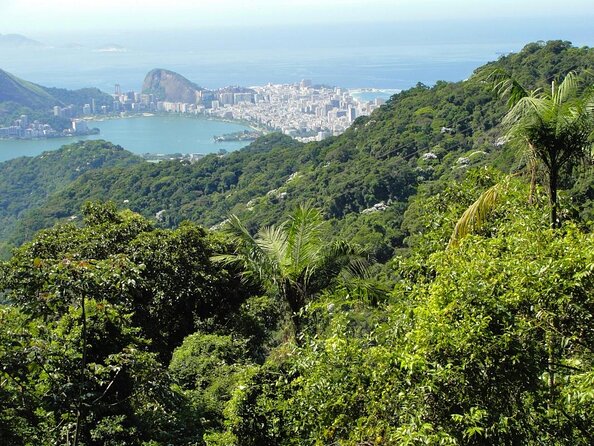
- Taunay Waterfall: a classic Tijuca stop with the sound of water doing the talking.
- Cascata da Baronesa: another strong waterfall moment that keeps the route varied.
- Gruta dos Murcegos: a cave stop with a bat-themed name, perfect for curious photo breaks.
- Historical circuit focus: coffee-growing and livestock-era stories inside the Atlantic Forest.
- Wildlife-spotting mindset: chances to see sloth, monkeys, coatis, and more when you watch quietly.
- Private group pacing: the plan can be adjusted for your hiking level over 4 hours.
Tijuca National Park: a green escape that starts inside Rio
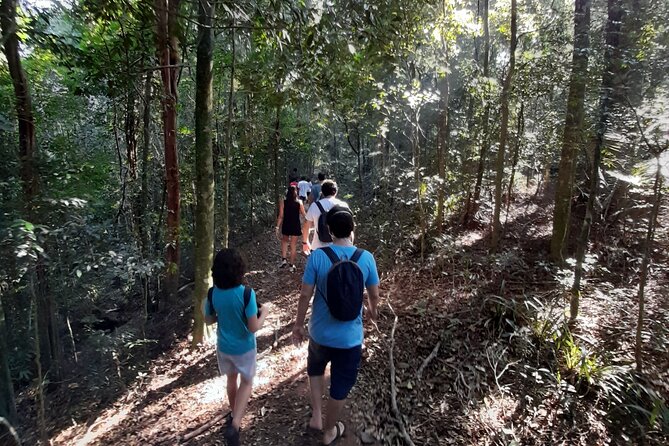
Tijuca National Park is what you want when Rio gives you heat, and you want to trade it for shade. This is the biggest urban park in the world, about 40 km², and it feels like a real jungle once you get under the canopy.
The park is known for variety. You’re not just walking past trees. You’re moving through a living ecosystem where you can find waterfalls, natural pools, and large cave areas, all while the forest smells like wet leaves and moss. And since it’s in the city’s orbit, you don’t need a full-day logistics headache to reach that feeling of “I’m way out here.”
The best part is that it’s not a passive sightseeing loop. The walk keeps you active, and that changes what you notice. Instead of snapping one photo and moving on, you start reading the environment—light through leaves, animal tracks, and the way the forest floor changes as you gain or lose elevation.
You can also read our reviews of more tours and experiences in Rio De Janeiro.


Meeting Praça Afonso Viseu and starting with a real plan
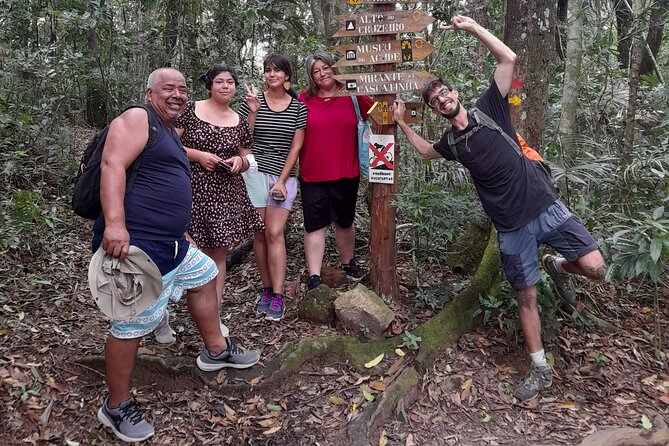
You begin at Praça Afonso Viseu, in a square with a big sign for Tijuca National Park. That matters more than it sounds. A clear meeting point reduces the “where are we?” stress before you even hit trail.
From there, your guide runs the day with a mix of hiking, wildlife viewing, and storytelling. This is set up as a guided experience, not just a walk where you figure everything out yourself. You’ll learn what to look for as you go: plant traits, animal habits, and how all of it ties into the forest’s ecosystem.
Because this is a private group, you’re not stuck with strangers moving at a speed that doesn’t match yours. If your group prefers slower stops for photos, it tends to work better here. If your group is fitter and wants more trail time, the route can fit that too.
Thomas and the art of adapting your hike in Tijuca
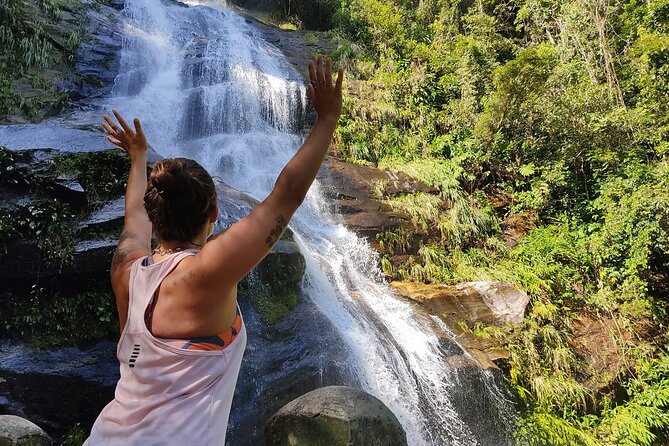
One of the most praised parts is the guide himself. Thomas has a reputation for being friendly, energetic, and quick to adjust to what a group needs. That shows up in two practical ways.
First, the pace stays human. Tijuca can feel intense under dense foliage, so your guide paying attention to how you’re doing makes a difference. Second, the information isn’t delivered like a lecture from a clipboard. It’s connected to what you’re seeing—plants, wildlife behavior, and the way the landscape works.
Your guide also supports multiple languages: Portuguese, English, and Spanish. That’s important here because the best moments in Tijuca often come from small details. If you can ask a quick question and get a clear answer, the whole experience levels up.
The day is also built for flexibility in distance: your hike can land anywhere between 6 and 12 km depending on skill level. That’s a big deal if you want a serious hike but not a “punishment” hike.
Taunay Waterfall: the sound of the park in one stop
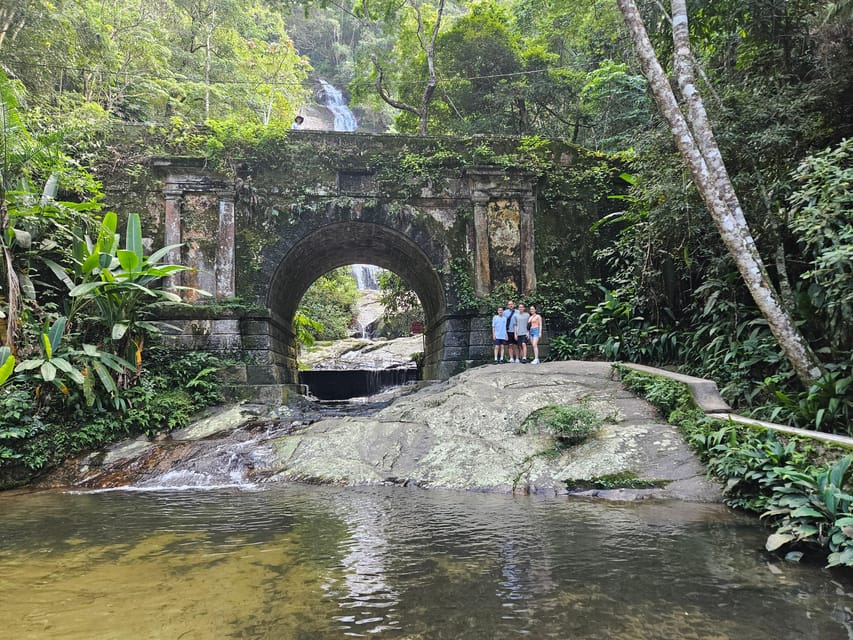
Waterfalls are the easiest way to understand why Tijuca gets under people’s skin. On this hike, you’ll visit Taunay Waterfall, and it’s exactly the kind of stop that changes your mood.
Before you reach it, you’re in forest mode—watching leaves, scanning for movement, and dealing with the “every step is slightly different” trail. Once the waterfall comes into view, everything shifts. The sound gets louder, the air feels cooler near the flow, and the whole area starts to feel more alive.
What to do here:
- Slow down and listen for where the noise is strongest.
- Watch for the small water-adjacent life—things that seem to prefer damp spots.
- Take photos, but don’t let your camera run the show. A quick look with your eyes first usually gives better pictures later.
A small consideration: waterfall stops can mean damp ground. Wear shoes you don’t mind getting a little dirty, and keep your footing steady. This isn’t a flat walkway.
Cascata da Baronesa: more waterfall variety, less repetition
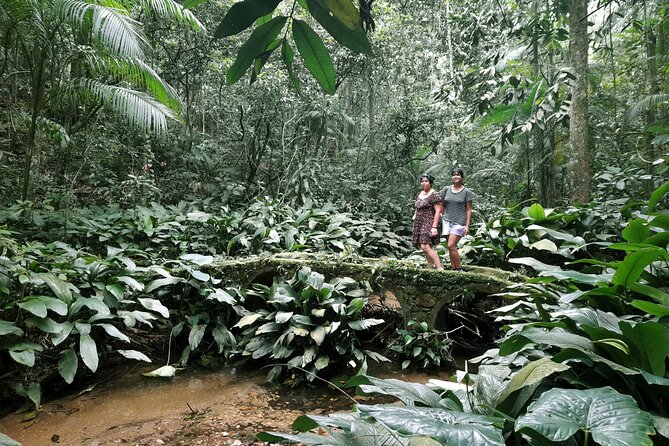
If Taunay is your “classic waterfall” moment, Cascata da Baronesa is the variety. Having more than one waterfall stop prevents the usual problem of a hike where everything feels like the same view repeated with different angles.
Baronesa also helps you learn how the forest shapes water. On one part of the walk, water might be in a narrower channel. On another, it could spread out and create mist. You’re not just walking to a destination; you’re experiencing how water behaves in the park.
Expect:
- Short pauses for viewing and photos.
- A shift in trail conditions around water areas.
- More opportunities to cool down if you’re hiking in warm weather.
This is the kind of stop that makes the 4 hours feel full, because it breaks up the “just trees” stretch with something that changes the sensory experience.

Gruta dos Murcegos: cave stop and the wildlife-spotting mindset
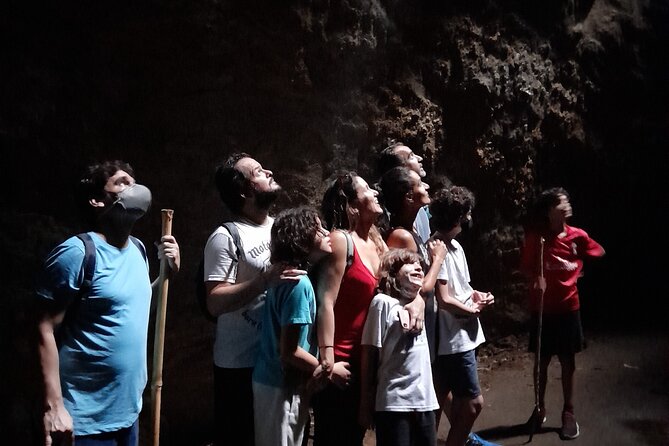
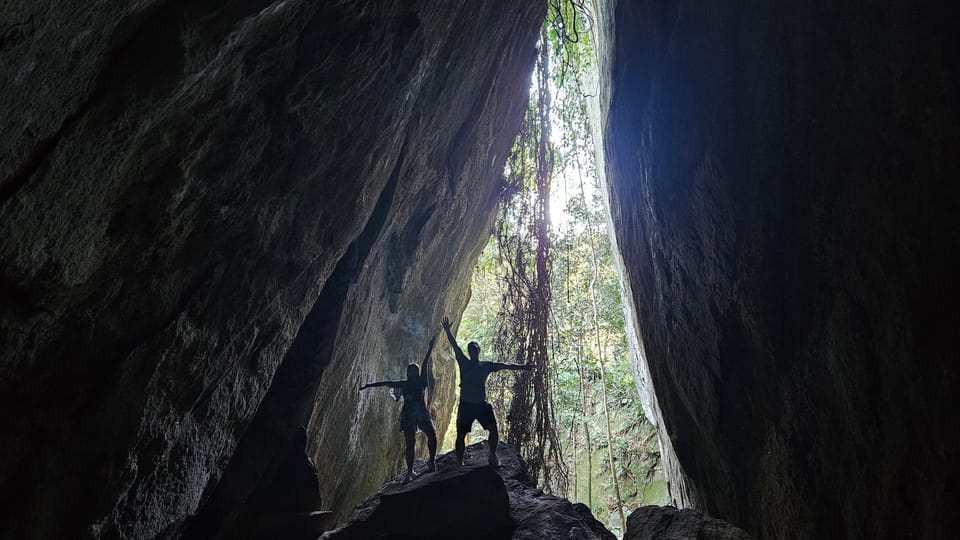
Then you reach Gruta dos Murcegos, a cave stop that gives the route a totally different feel. Even if you don’t go deep into cave territory (details depend on the exact walk conditions), caves in Tijuca bring in a distinct atmosphere—cooler air, different sounds, and often a different set of wildlife interactions.
The name matters, too. “Murcegos” refers to bats, so you’re likely to be paying attention to cave-related ecology during the stop. That works well on this hike because your guide isn’t just pointing. He’s connecting the ecology to what’s around you.
This is also where the wildlife-spotting approach becomes real. The park gives chances to spot larger animals such as sloth, monkeys, coatis, and more. You won’t see everything on every day, and that’s normal. But when you walk with a guide who knows what to look for, the odds get better because your eyes learn where to focus.
A practical tip: move your attention from “searching” to “waiting.” Animals often appear after a pause, not during constant stepping. Give the guide a minute or two to set the moment up, then watch.
The historical circuit: coffee and livestock inside the forest
Tijuca isn’t only scenery. It also has layers of human history, and this hike includes a historical circuit.
Along the route, you’ll hear about the past when Brazilians grew coffee and raised livestock in areas that now feel fully wild. That contrast is a big part of why this experience feels meaningful. You’re walking in the present, but the guide helps you understand what used to be there.
Why this matters:
- It changes your perspective on the landscape. You’re not just seeing nature; you’re seeing how nature and people interacted over time.
- It gives your brain something to organize. When you understand the background, the plants and forest details feel less random.
- It turns “hike time” into learning time without making it feel like school.
One more bonus: a historical focus can lead to better conversations at stops. You ask questions, your guide ties answers to what you’re currently seeing, and the walk stays lively.
6 to 12 km in dense Atlantic Forest: how to handle the terrain
This is where you should be honest with yourself before you book. Tijuca is a dense forest hike, and the route can run from 6 to 12 km depending on ability.
Dense forest means:
- You’ll spend time in shade, but that doesn’t mean the ground is easy.
- Trail surfaces can be uneven.
- You’ll want shoes with grip, not just comfort.
Your best bet is to wear hiking-ready footwear and bring a backup plan for getting sweaty and damp. Change of clothes is specifically recommended, and that’s a smart move if you’ll continue your Rio day after the park.
Also, note the “private group” style. It helps because your guide can calibrate pacing to match your group. But it still won’t turn a forest trail into a promenade.
What to bring (and what to skip) for a smooth forest day
For a hike like this, packing is about avoiding problems mid-trail. Here’s what to bring, based on the tour guidance:
Bring:
- Comfortable shoes and hiking shoes
- Outdoor clothing
- A camera
- Food and drinks
- A towel
- Change of clothes
- Biodegradable insect repellent
- Hiking support if you like the feel of extra stability (you’ll also have hiking sticks included)
Skip:
- High-heeled shoes
- Bare feet
- Alcohol and drugs
- Fireworks
- Fishing
Two practical notes I’d follow even if you’re a confident hiker:
- Bring enough water for your pace. The guide can adjust trail distance, but your body still needs hydration.
- Use the insect repellent. Dense forest conditions make bugs more persistent.
Price and value: is $51 per person fair for this 4-hour private hike?
The price is $51 per person for about 4 hours, and that’s the core value question.
Here’s why it can feel like good value:
- You’re paying for a professional tour guide with more than 10 years in the Parque Nacional da Tijuca.
- You get hiking sticks included, which is a small thing until you realize how much stability matters on uneven ground.
- It’s a private group setup, so the hike is not stuck to a rigid, impersonal group rhythm.
- The guide brings both practical observation and history. Waterfalls, cave stop, wildlife viewing, and the coffee-and-livestock circuit means you’re not just walking from point A to point B.
If you were to hire a guide for a short private hike in any major city-adjacent nature area, the cost often makes you think twice. This one is structured to pack a lot of variety into a half-day without requiring you to plan the whole day yourself.
If you want a true nature experience with context, the math usually works out.
Who should book this Tijuca hike, and who should skip it
This kind of trail is best for people who want active time in the forest and can comfortably handle uneven terrain.
It’s not suitable for:
- Pregnant women
- People with mobility impairments
- Wheelchair users
- People with respiratory issues
- People with epilepsy
- People over 80 years
- People over 75 years
- People with pre-existing medical conditions
- People with recent surgeries
- Babies under 1 year
If your group falls outside those limits, you’ll likely enjoy the private, guided style and the chance to learn while hiking.
If you’re unsure about fitness, think about one key thing: can you comfortably walk 6 to 12 km in dense forest, with stop-and-go viewing? If the answer is yes, this is a strong match.
Should you book Ecotu Rio’s Tijuca National Park experience?
I’d book it if you want a half-day that feels like a full story: waterfalls, cave atmosphere, wildlife-spotting energy, and a historical circuit that turns “pretty forest” into “I get what I’m seeing.”
It’s also a great choice if you like the idea of a guide who can adapt. Thomas has an enthusiastic style, and that matters on a trail where conditions can change and where the best moments often happen when you slow down and watch.
Skip it if you can’t handle dense forest hiking distances or if you’re in one of the listed health or mobility categories.
If you’re in Rio and you want green time that’s practical—not a long expedition—this is one of the better ways to do Tijuca with context and energy.
FAQ
Where does the tour start and end?
It starts and ends back at Praça Afonso Viseu, at the square with a BIG sign of the Tijuca National Park.
How long is the hike?
The activity lasts 4 hours.
What distance will I walk?
You’ll hike between 6 to 12 km, depending on your skills level.
Is this tour private?
Yes, it’s a private group experience.
What are the main highlights on the route?
Key stops include Taunay waterfall, Cascata da Baronesa, and Gruta dos Murcegos, along with a historical circuit related to coffee growing and livestock.
What language options are available?
The live guide offers Portuguese, English, and Spanish.
What should I bring?
Bring comfortable shoes (and hiking shoes), outdoor clothing, a towel, change of clothes, food and drinks, a camera, and biodegradable insect repellent.
What isn’t allowed during the tour?
High-heeled shoes, bare feet, fishing, alcohol and drugs, and fireworks are not allowed.