
REVIEW · RIO DE JANEIRO
Museum of Tomorrow Guided Tour, Admission & Transfer
Book on Viator →Operated by Rio Carioca Tour Ltda · Bookable on Viator
A spaceship museum makes Rio think ahead. You’ll get guided context from standouts like Jaqueline and see the museum’s interactive exhibits connect science, art, tech, culture, and the environment into real questions about our future choices. The one watch-out: if pickup is late or the guide’s language isn’t strong, your museum time can shrink.
This is a smart half-day plan if you want more than photos. In about 4 hours, you’ll ride in an air-conditioned vehicle to the Museum of Tomorrow, then stop for viewpoints and street art in Rio’s changing Porto Maravilha area, with no food included—so plan snacks and water on your own.
In This Review
- Quick takeaways
- Price and Logistics: What You’re Actually Paying For
- Museum of Tomorrow: A Calatrava Building That Has a Message
- Inside the Museum: Interactive Future Scenarios You Can’t Stop Thinking About
- A quick pacing tip
- Exterior time helps too
- Mauá Square: A View Over Guanabara Bay Plus a History Lesson
- What to watch for
- Boulevard Olímpico: Graffiti From a 2016 Olympic Legacy
- Best way to do this stop
- Porto Maravilha: Why This Neighborhood Pairing Makes the Tour Click
- Guide Quality: When the Explanation Makes the Exhibits Work
- Timing: How to Plan Your Afternoon Around a 4-Hour Window
- Is This Good Value at $58?
- Who Should Book This Tour
- Should You Book This Guided Museum of Tomorrow Tour?
- FAQ
- How long is the Museum of Tomorrow guided tour with transfer?
- What does the $58 ticket include?
- Where does the tour start, and what if I’m staying in Barra or Recreio?
- Is food included during the tour?
- What should I wear or bring?
- What happens if weather is bad or the minimum number of travelers isn’t met?
Quick takeaways
- Calatrava architecture outside and in: that spaceship-like building is part of the show.
- Interactive tech that puts future risks in numbers: ocean, political, and environmental scenarios get compared to today.
- Small-group pace: capped at 19 in a minivan, so you’re not lost in a crowd.
- Two free add-ons that make the area make sense: Mauá Square views and Boulevard Olímpico graffiti.
- Guide quality matters: several names come up often—Jaqueline, Renato, Marcos, and Christian.
- Bring comfortable shoes: you’ll walk around the museum and the nearby area.
Price and Logistics: What You’re Actually Paying For
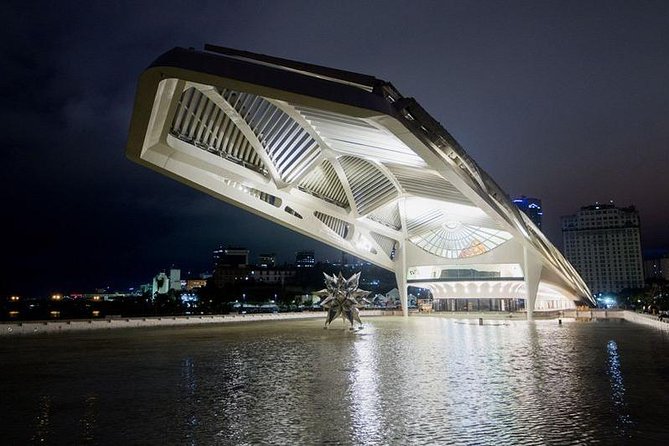
At $58 per person for about 4 hours, you’re paying for three things: museum entry, a guide’s running commentary, and transport that handles the “getting there” piece in Rio. Since food isn’t included, this doesn’t try to be a full-day tour with meals built in. Instead, it’s focused on a timed museum visit plus two short neighborhood stops.
Group size is limited (max 19 in a minivan), which usually makes a difference. You’ll have an easier time hearing the guide and asking questions. Also, the visit works best if you’re ready for some walking at the museum and around the exterior viewpoints.
Pickups depend on hotel location. The meeting point is Hotel Rio Othon Palace, Copacabana (Av. Atlântica, 3264), and the company contacts you to confirm the pickup time. If you’re staying in Barra/Recreio, there’s an additional $10 per person paid directly to the guide.
You can also read our reviews of more guided tours in Rio de Janeiro



Museum of Tomorrow: A Calatrava Building That Has a Message
The Museum of Tomorrow is famous for its shape—like a ship headed into the future—designed by architect Santiago Calatrava. Even before you go inside, the exterior sets the tone. The museum sits in Porto Maravilha, an area being reshaped, and the building is meant to be a centerpiece for that change.
What I like most is how the museum’s mission shows up in the design choices. The message is not just about saving the planet in a vague way. It frames sustainability as something that connects choices humans make now to outcomes that will land later—economically, politically, environmentally, and socially.
If you enjoy science-and-society thinking (without needing a lab background), this is a good fit. The exhibits are built to connect big ideas across technology, art, culture, and environmental risk, which is harder to do on your own in a way that feels coherent.
Inside the Museum: Interactive Future Scenarios You Can’t Stop Thinking About
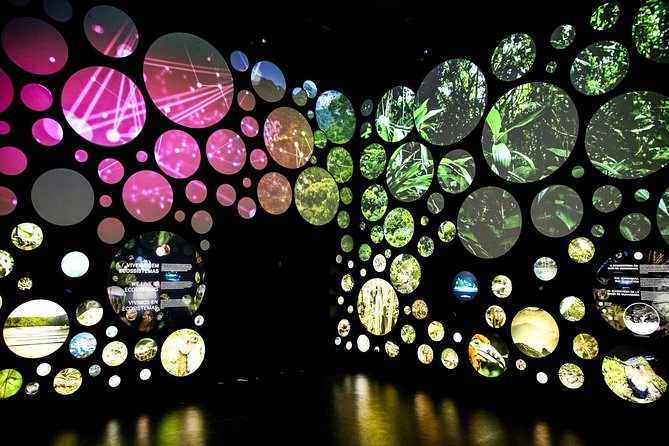
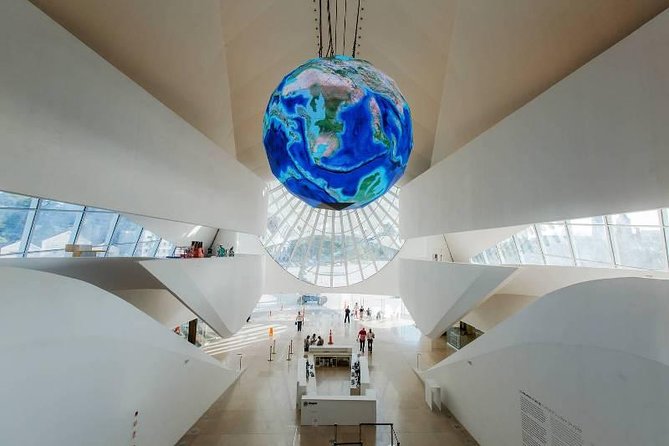
This tour gives you about 3 hours at the Museum of Tomorrow, and that time matters. The exhibits are designed to be hands-on and to trigger questions, not just passive looking. You’ll see a lot of visual and interactive elements that treat the future like something you can reason about.
One thing I found especially compelling (and it’s a theme people bring up again and again) is the way the museum uses current technology to explain risks. The scenarios can include ocean-related concerns, political tensions, and environmental problems. Some parts are presented with numbers and comparisons—how conditions today relate to what could happen if patterns continue.
There’s also a strong cinematic/video component tied to the planet and how resources get used. Expect the museum to guide your thinking step by step: what we do now, what it can lead to, and how design and decisions could change the outcome.
A quick pacing tip
Plan to slow down. The museum can feel like several mini-exhibits in one place. If your pickup runs late, you’ll feel it here because 3 hours goes fast. I’d rather you arrive with a little time to spare than walk in rushing.
Exterior time helps too
Even if you don’t do every single exhibit, you’ll still get value from what’s around the museum. There’s an exterior viewing area where you can take in the harbor and nearby cruise-terminal views.
You can also read our reviews of more museum experiences in Rio de Janeiro






Mauá Square: A View Over Guanabara Bay Plus a History Lesson
After the museum, the tour shifts gears for 30 minutes at Mauá Square. From here, you get a view over Guanabara Bay, which is a great contrast to the museum’s digital, futuristic tone. The bay view helps you remember the real-world setting behind all those future-thinking exhibits.
You’ll also see the statue of Barão de Mauá and learn why the square carries his name. Barão de Mauá is presented as a visionary figure—this stop turns the trip into more than just “future tech,” and it anchors the story in Rio’s own thinkers and ambitions.
What to watch for
This stop is short. Bring your camera, but don’t treat it like a two-minute photo loop. Even 30 minutes is enough to take in the bay angle and then listen to the explanation without rushing.
Boulevard Olímpico: Graffiti From a 2016 Olympic Legacy
Next up is Boulevard Olímpico for another 30 minutes. This stretch was created for the 2016 Olympic Games and has since attracted graffiti artists from around the world.
The main reason to come: the biggest graffiti artwork you’ll see on this route, the Mural das Etnias by Kobra. It’s a clear, colorful way to experience culture in public space. If the museum is about how humans shape the future through ideas and systems, the boulevard shows how humans shape the present through expression.
Best way to do this stop
Walk slowly and look up. Street art like this rewards distance and angles. Also, because it’s outdoors, you’ll want to dress for Rio weather and keep an eye on sun or sudden showers.
Porto Maravilha: Why This Neighborhood Pairing Makes the Tour Click
The tour isn’t just three random stops. It’s designed so the museum connects to the place around it.
Porto Maravilha is part of Rio’s ongoing regeneration story, and the museum is positioned as a centerpiece. That means your museum visit is happening in an area that’s literally being rebuilt and rebranded—new public spaces, new architecture, new layers of city life.
Then you connect the dots with what you see in Mauá Square and along the Olympic boulevard. You get a sense of how Rio balances big projects with public culture: grand buildings and major events, plus street-level art and waterfront views.
If you like tours that help you read a city—how one part relates to another—this pairing is a strong reason to book it.
Guide Quality: When the Explanation Makes the Exhibits Work
This is a guided tour, and the guide is the main difference between “seeing a museum” and actually getting what it’s saying.
In the feedback, names like Jaqueline, Renato, Marcos, and Christian come up with praise for clear explanation and strong organization. The common thread: guides help translate the museum’s themes into something you can connect across exhibits.
Language can be a factor. One experience report mentioned an English issue and limited guiding, and another mentioned a German-guide mismatch. If language is important for you, look at your comfort level with the tour language and be ready to ask questions if you don’t understand a section.
There’s also a good sign for mobility support: one guide, Marcos, is specifically noted as accommodating a mobility issue. If you have mobility needs, plan to communicate them ahead of time so the guide can pace the day better.
Timing: How to Plan Your Afternoon Around a 4-Hour Window
On paper, this is about 4 hours total. In practice, you’ll feel the schedule because Stop 1 is 3 hours inside the museum, and the other two stops are 30 minutes each.
That means the museum is the real core experience. The outside stops are there to support context and give you a break: a bay view, a statue story, then a quick hit of world-famous street art.
If you want time for shopping or a long sit-down meal afterward, I’d plan your schedule with a little breathing room. And remember: food and drinks aren’t included, so bring or buy water and a snack before you get hungry.
Is This Good Value at $58?
For $58, you’re getting:
- Museum of Tomorrow admission
- Guided visit
- Air-conditioned transport
- Two extra neighborhood stops that are free on-site
Value depends on how you like museums. If you’re the type who walks into a museum and thrives on self-guided discovery, you might be tempted to go on your own. But if you want the museum’s science/tech/ethics message made understandable—with someone pointing out the “why this matters” parts—then the guided structure justifies the price.
Also, transport is a hidden cost in Rio. If your day is otherwise busy, paying for transfer and timing can be a smart trade.
Who Should Book This Tour
This one fits best if you:
- want a focused half-day with a clear core stop
- enjoy exhibits about how human decisions impact the future
- like connecting technology, culture, and the environment
- prefer a small-group pace over a large bus
It’s less ideal if you:
- want a totally flexible, free-roaming museum experience
- need lots of time for every single room without a timed structure
- are very sensitive to any delay, since your museum time is the centerpiece
Should You Book This Guided Museum of Tomorrow Tour?
Yes, I’d book it if your goal is to leave with more than a few photos. The museum’s message is the point, and a guide helps you turn the interactive exhibits into real understanding. Add Mauá Square for the Guanabara Bay pause and Boulevard Olímpico for Kobra’s Mural das Etnias, and you get a smart mix of future-thinking plus Rio’s present-day culture.
Just go in with the right expectations: no included food, you’ll walk some, and the whole day depends on smooth pickup timing. If you show up ready, this tour is a very worthwhile way to experience Rio with purpose, not just movement.
FAQ
How long is the Museum of Tomorrow guided tour with transfer?
It runs for about 4 hours total, including around 3 hours inside the Museum of Tomorrow and two additional stops of about 30 minutes each.
What does the $58 ticket include?
Admission to the Museum of Tomorrow is included, along with air-conditioned vehicle transport for the tour.
Where does the tour start, and what if I’m staying in Barra or Recreio?
The meeting point is Hotel Rio Othon Palace in Copacabana. Pickup time is confirmed by message before the tour. If you need pickup in Barra/Recreio, there’s an extra $10 per person paid directly to the guide.
Is food included during the tour?
No. Food and drinks are not included, so you’ll want to plan your own snack or water.
What should I wear or bring?
Wear comfortable clothing and walking shoes. The tour includes time walking around the museum and outdoor stops.
What happens if weather is bad or the minimum number of travelers isn’t met?
The experience requires good weather. If it’s canceled due to weather, you’ll be offered a different date or a full refund. It also requires a minimum number of travelers; if that minimum isn’t met, you’ll be offered a different date/experience or a full refund.