REVIEW · RIO DE JANEIRO
Rio: Tijuca Forest Small Group Hike to Caves and Waterfalls
Book on GetYourGuide →Operated by Jungle Me · Bookable on GetYourGuide
Rio’s rainforest feels close to the city. This Tijuca Forest hike mixes waterfalls, caves, and coffee-plantation history in a single half-day outing. You’ll walk about 6.2 km (3.8 mi) on rainforest trails while learning how Rio’s largest replanted urban forest came back.
What I like most is the payoff at Cascatinha Taunay and Baronesa Cascade, including a refreshing waterfall shower feel. I also love how the stops aren’t just scenic—Mayrink Chapel and coffee-era remains give the forest a human story. One consideration: wildlife isn’t guaranteed, so go for the plants, geology, and water, not a guaranteed zoo day.
You’ll also appreciate the setup. With hotel pickup and drop-off in Rio’s South Zone, the day is mostly hike time, not logistics time, and the small-group format keeps the pace friendly on the uphill sections. If you’re tall, you may find the van seating a bit tight for the drive.
In This Review
- Key Points Before You Go
- Why Tijuca Forest in Rio Feels Special
- Your Workout: 6.2 km, 448 m Gain, and Rough Trail Reality
- Hotel Pickup in Rio’s South Zone: The Day Starts Easy
- Cascatinha Taunay and Baronesa Cascade: Waterfall Time With Real Relief
- Mayrink Chapel (1850), Coffee-Era Trails, and the Human Side of the Forest
- Cova da Onça Suspension Bridge and the Eucalyptus Forest Connection
- Morcego’s Grotto (Bat Cave): When the Cave Stop Becomes a Lesson in Expectations
- The Return Loop: Esquilos, Richard Wallace, and Scenic View Stops
- Price and Value: Why Around $69 Can Make Sense Here
- Who This Hike Fits Best (And Who Should Skip)
- Practical Tips That Make the Day Easier
- Should You Book This Tijuca Caves and Waterfalls Hike?
- FAQ
- How long is the Tijuca Forest Small Group Hike to Caves and Waterfalls?
- How long is the hike and how much elevation gain is there?
- Is pickup from my hotel included?
- What language will the guide speak?
- What’s included in the price?
- Is food or water included?
- What should I bring for the hike?
- Are pets or large bags allowed?
- Is this tour suitable for everyone physically?
- What info do I need to provide for insurance?
Key Points Before You Go
- Moderate 6.2 km hike with 448 m elevation gain that feels doable but not effortless on uneven rainforest paths
- Waterfall sequence featuring the park’s Cascatinha Taunay plus a later Baronesa Cascade cooling stop
- History stops beyond the usual viewpoints: Mayrink Chapel (1850), old plantation-era trails, and coffee-era ruins
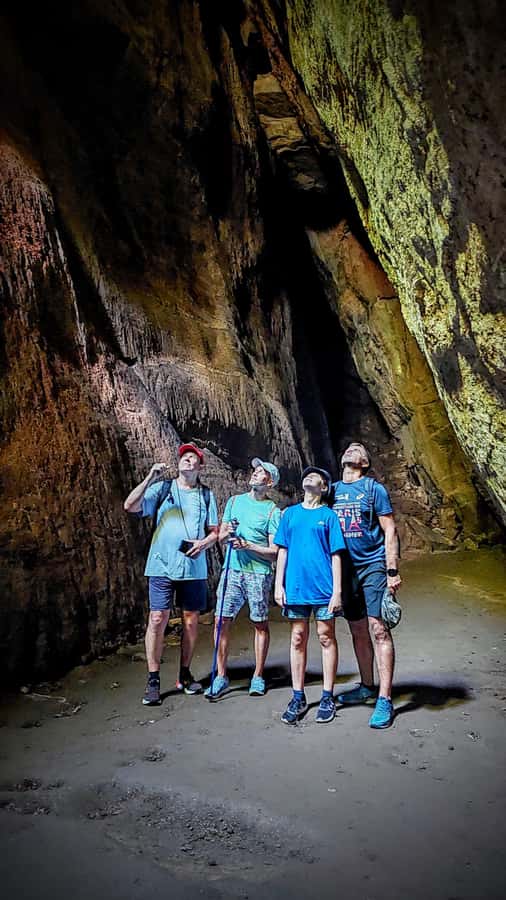
- Two cave encounters in spirit with a big one on the route: Morcego’s Grotto (Bat Cave)
- Hotel pickup in the South Zone (Copacabana, Ipanema, Leblon, and more), reducing stress before you even start walking
- Wildlife sightings are a bonus, not the main promise, so the tour still works if animals stay quiet
Why Tijuca Forest in Rio Feels Special
Tijuca National Park sits so close to Rio that it can fool you at first. One minute you’re thinking about traffic and beach plans, and the next minute you’re moving through thick green shade on old trails. That contrast is the magic: you get a rainforest experience without needing a multi-day trek.
I also like that this tour doesn’t treat the forest like a backdrop. You’ll get real context for what you’re walking through—how the park relates to Rio’s growth, why the vegetation came back, and what daily life looked like when this area was cut up for coffee production. It’s not just pretty. It’s meaningful.
And yes, the waterfalls help. In a park this wet, water is part of the rhythm. When you’re tired from the climb, the sound and cool air at the falls is a very practical reward.
You can also read our reviews of more hiking tours in Rio De Janeiro



Your Workout: 6.2 km, 448 m Gain, and Rough Trail Reality
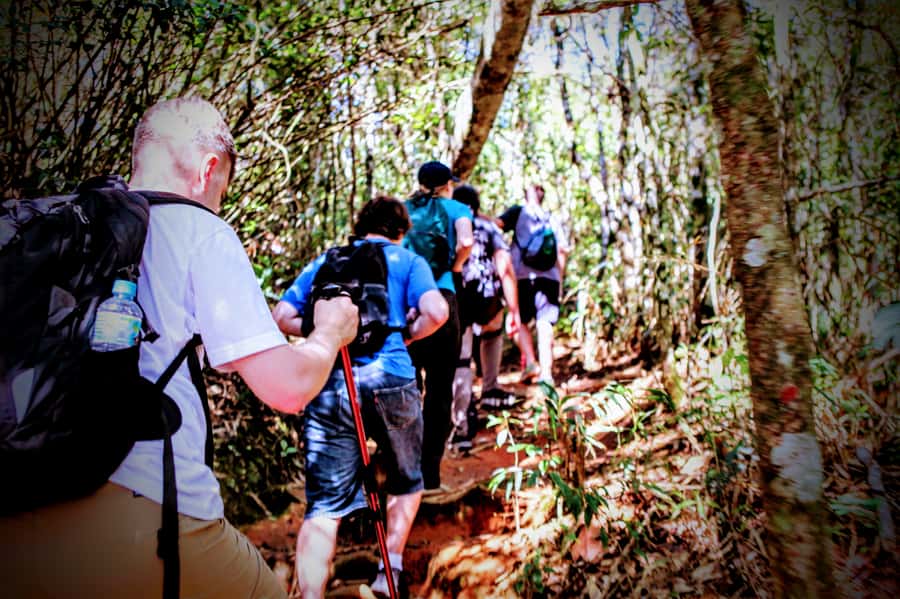
This is listed as a moderate hike, and that’s fair—if you respect the terrain. You’re walking roughly 2.5–3 hours on a 6.2 km (3.8 mi) route with about 448 m (1,469 ft) of elevation gain. That doesn’t sound extreme on paper, but in a rainforest, it’s the combination of incline, roots, and wet footing that slows you down.
The trails are described as rough with up-and-down sections. Translation: you’ll want shoes with good grip and a steady pace. If you rush, you’ll feel it in your legs faster than you’d expect.
I’d also plan your expectations. Reviews and experiences around this route point out that the effort can vary depending on weather and trail conditions. If it rained recently, the day may feel more challenging. Bring the energy for steady climbing, not sprinting.
Hotel Pickup in Rio’s South Zone: The Day Starts Easy
A lot of Rio tours fail on logistics—long waits, extra transfers, or pickup that turns into a scavenger hunt. This one is simpler because it includes transportation from designated hotels in the South Zone.
Pickup covers neighborhoods like Copacabana, Ipanema, Leblon, Leme, Flamengo, Santa Teresa, Gloria, Catete, Urca, and Praia de Botafogo. If your exact hotel isn’t on the list, a nearby meeting point is provided (so you’re not stranded out in the wrong area).
The practical upside: you can show up with your shoes and snacks, then get moving. The practical downside: van seating can be snug, especially if you’re taller, and the drive can feel cramped for that reason. It’s not a deal breaker, just something to plan around.
Cascatinha Taunay and Baronesa Cascade: Waterfall Time With Real Relief
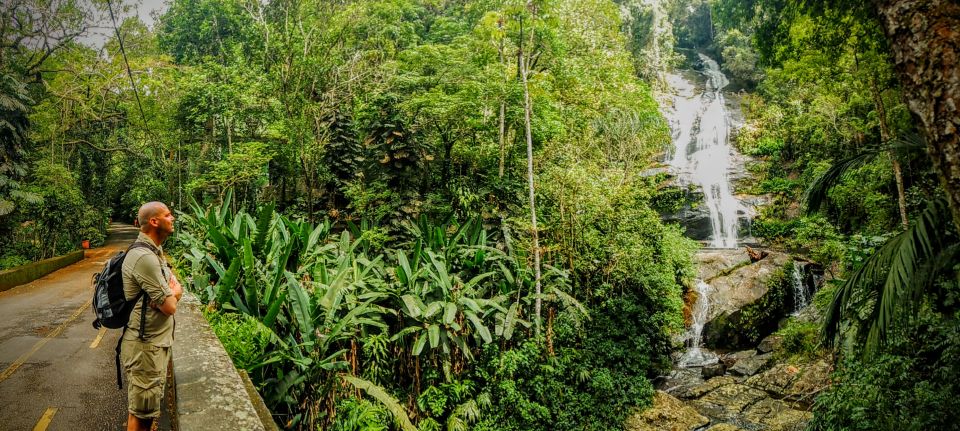
The tour builds toward water in a way that feels natural. You start with a circuit that includes Cascatinha Taunay, described as the largest waterfall in the national park. Expect a short guided visit and sightseeing time here—enough to feel the scale without turning the day into a slow crawl.
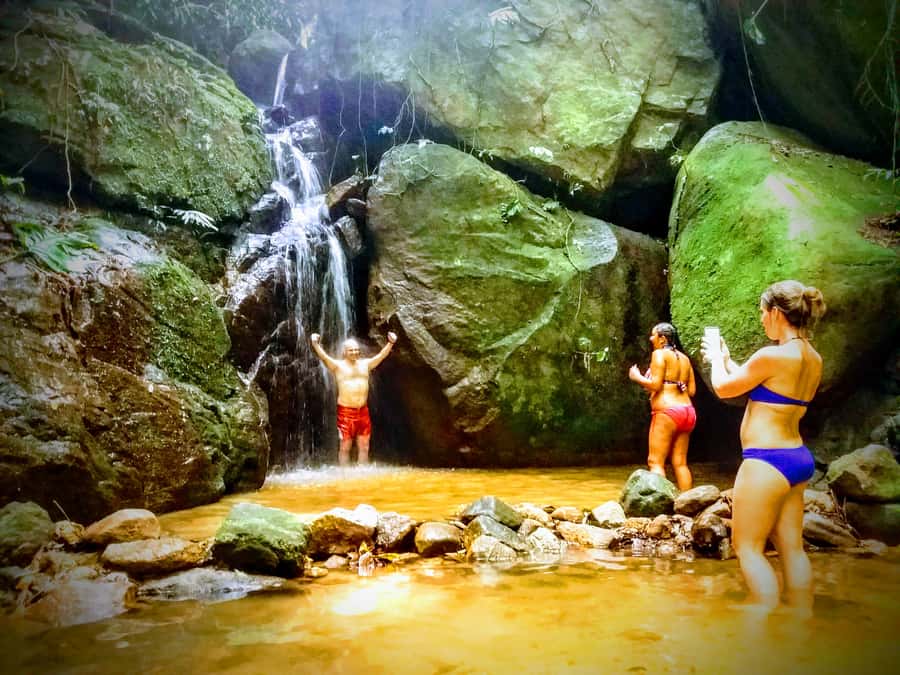
Later, you cool off at Baronesa Cascade. This is the stop people remember because the experience shifts from looking to feeling. The day description even frames it as a waterfall shower, and that’s exactly how it can feel when mist and spray hit you after hiking.
If you’re deciding between doing this tour and skipping waterfalls elsewhere in the city, consider the value here. You get waterfall time on foot, with a rainforest setting, not just a quick photo stop in a crowded viewpoint.
One more tip: even if the weather is clear when you start, don’t assume it stays that way. Rain changes footing and how hard you work uphill, but it can also make the waterfalls more dramatic.
Mayrink Chapel (1850), Coffee-Era Trails, and the Human Side of the Forest
This is where the tour becomes more than exercise. The route follows trails made in the 19th century, a period when this part of Rio was occupied by coffee plantations. Walking those routes gives you a sense of how the land used to be used, long before the forest was restored.
You’ll visit Capela Mayrink, dating to 1850. It’s a brief stop, but it matters. A small chapel in the rainforest makes the whole place feel layered—spiritual, agricultural, and ecological all at once.
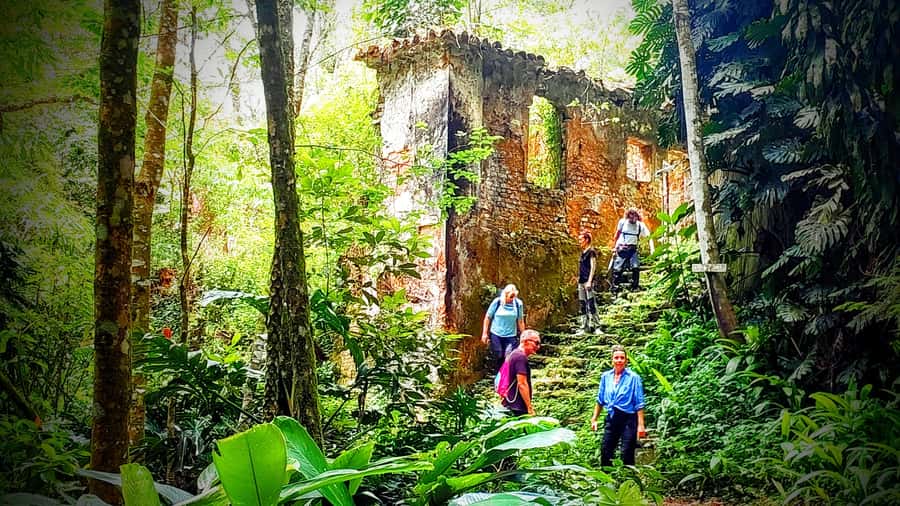
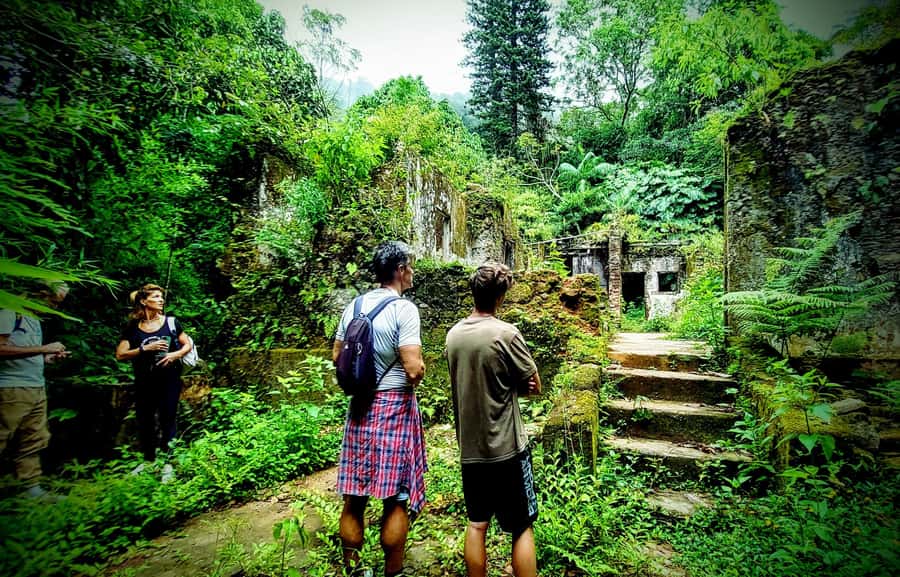
You’ll also see remnants tied to plantation life, including coffee farm ruins. The tour is trying to show you that Tijuca is not just a wall of trees—it’s an evolving story of extraction, recovery, and the way Rio grew around it.
If you enjoy geology and history together, this section is a big win. It helps you understand why the park exists in its current form and what it took to rebuild the forest in an urban region.





Cova da Onça Suspension Bridge and the Eucalyptus Forest Connection
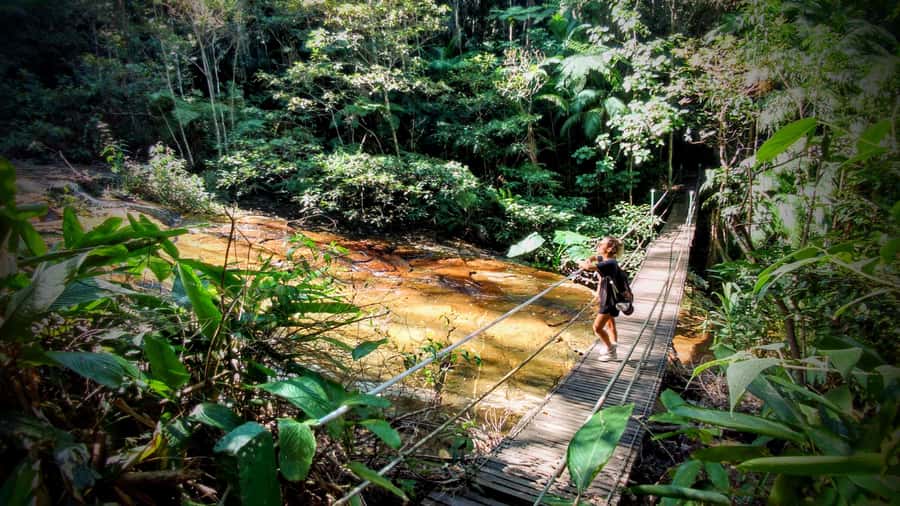
A standout part of this day is the shift between dramatic viewpoints and smaller, quieter details. The Cova da Onça Suspension Bridge is one of those moments where you’re likely to stop and look—partly for the scenery, partly because suspension bridges in dense rainforest create that slightly eerie, cinematic feeling.
Then comes the Eucalyptus Forest, which includes an old slave cemetery. That stop changes the tone of the walk in a necessary way. It’s a reminder that this landscape’s past includes human suffering and forced labor. You don’t need to be an expert to feel that weight; it’s built into the stop itself.
The practical effect for you: these moments slow the pace for a reason. They turn the hike into a guided education, not just a route of attractions.
Morcego’s Grotto (Bat Cave): When the Cave Stop Becomes a Lesson in Expectations
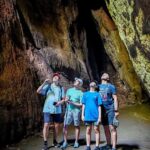
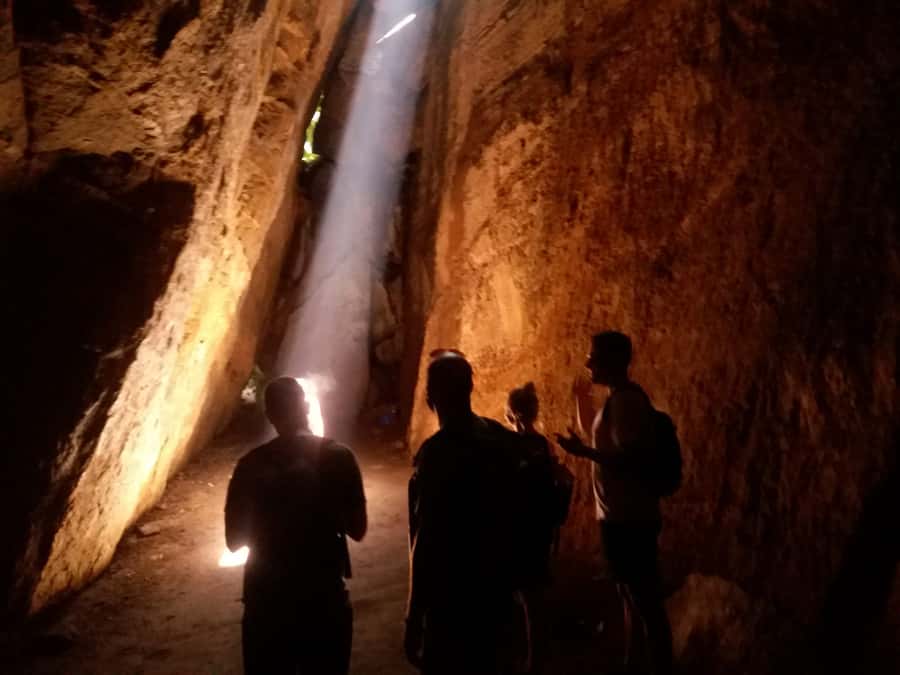
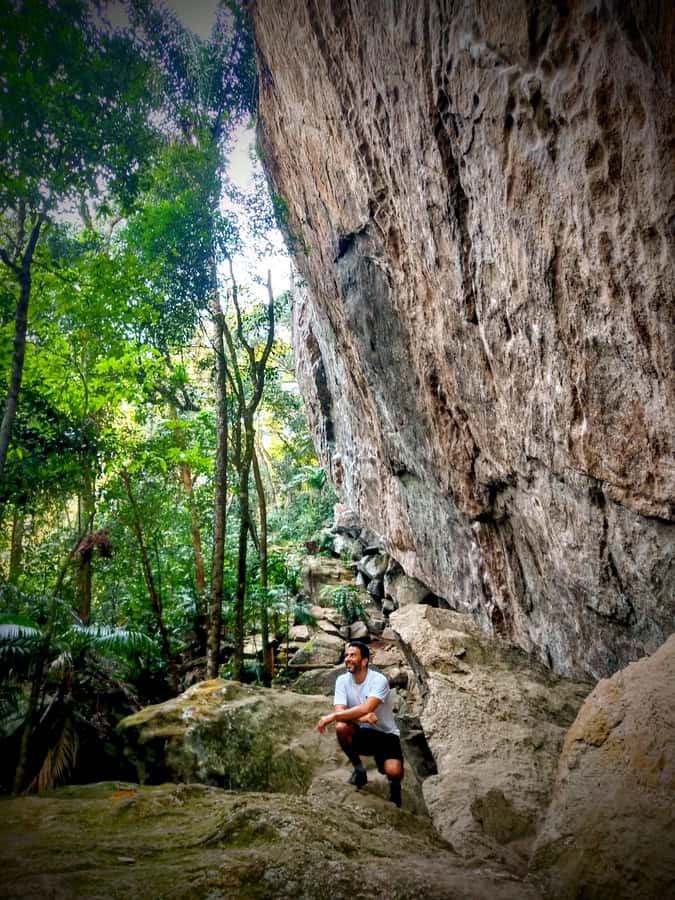
The route includes Morcego’s Grotto, described as the largest gneiss cave in Brazil. A cave in the middle of a rainforest stop is a very different kind of thrill than a waterfall overlook—cool air, rock texture, and that sense of hidden space.
Here’s the expectation check that helps you enjoy the stop more: bat sightings aren’t guaranteed. One day might be quiet, another might feel alive, and in some conditions bats can be hibernating. So if you’re hoping for a full-on bat swarm, temper that hope.
What keeps the cave stop valuable is the context your guide provides—how the geology forms, what gneiss means in practical terms, and why this cave sits where it does. If you treat it like an educational pause rather than an animal show, you’ll get more out of it.
Even the timing helps: you get a guided visit and hiking time that fits into the rest of the circuit without turning the day into one long waiting period.
The Return Loop: Esquilos, Richard Wallace, and Scenic View Stops
After the main hiking and waterfall moments, the day comes back down to a series of smaller stops that help tie the whole park picture together.
You’ll pass the former residence of Barão d’Escragnolle, formerly a park manager and now associated with The Esquilos restaurant. It’s one of those pieces that adds continuity—people managed and made decisions here, and those management choices shaped how the park developed over time.
You’ll also see the Wallace Fountain, gifted by Richard Wallace, an English philanthropist. The description notes it represents goodness, charity, sobriety, and simplicity, and the fountain was produced in France in 1870. It’s a neat moment because it links Rio’s urban world to the park’s restored nature in one visible object.
Along the way, there are scenic photo/view stops such as Mirante da Palmira and a viewpoint stop late in the route. These aren’t long breaks, but they’re useful if you want a few clean angles over the rainforest canopy before you head back.
Price and Value: Why Around $69 Can Make Sense Here
At $69 per person for a 6-hour small-group hike, the value depends on what you’re trying to buy. This price isn’t just for walking.
You’re getting:
- a bilingual guide (English and Portuguese)
- hotel pickup and drop-off within the South Zone
- insurance
- transportation included as part of the experience
Food and water aren’t included, so you’ll still pay for snacks or bring your own. Still, the structure matters: you avoid spending half your day figuring out transit to a rainforest that isn’t exactly next door.
Compared with a generic nature walk, what makes this worth it is the mix of waterfalls + caves + history stops, plus guided explanations that connect ecology, geography, and Brazil/Rio context. If you already know the city’s big sights and you want one day that feels like you escaped it, this has the right shape.
Who This Hike Fits Best (And Who Should Skip)
This tour fits best if you want a guided rainforest day that includes history and physical movement. It’s especially good for people who like:
- moderate hikes with real elevation, not just flat strolling
- photo stops with purpose
- learning about Rio’s geography and rainforest ecology
It’s not suitable for people with heart problems and it’s not for wheelchair users. Also, you’ll need the basics: good sports shoes and a daypack.
If you’re traveling with limited time in Rio, this tour can be a smart choice because it’s only about half a day and still hits multiple kinds of sights—falls, caves, and plantation history.
Practical Tips That Make the Day Easier
Do these things and your hike will feel smoother.
Bring snacks and water. Food and drinks aren’t included, and you’ll hike for hours in humid conditions.
Pack sunscreen and insect repellent. It’s rainforest territory, so protection matters.
Wear sports shoes with grip. The trails are rough and uneven. Bare feet are not allowed.
Use a daypack and keep it light. You can carry what you need, but the tour doesn’t want luggage or large bags.
Expect the weather to change the feel of the hike. If rain comes through, footing can get harder. If it’s sunny, you’ll work harder on climbs.
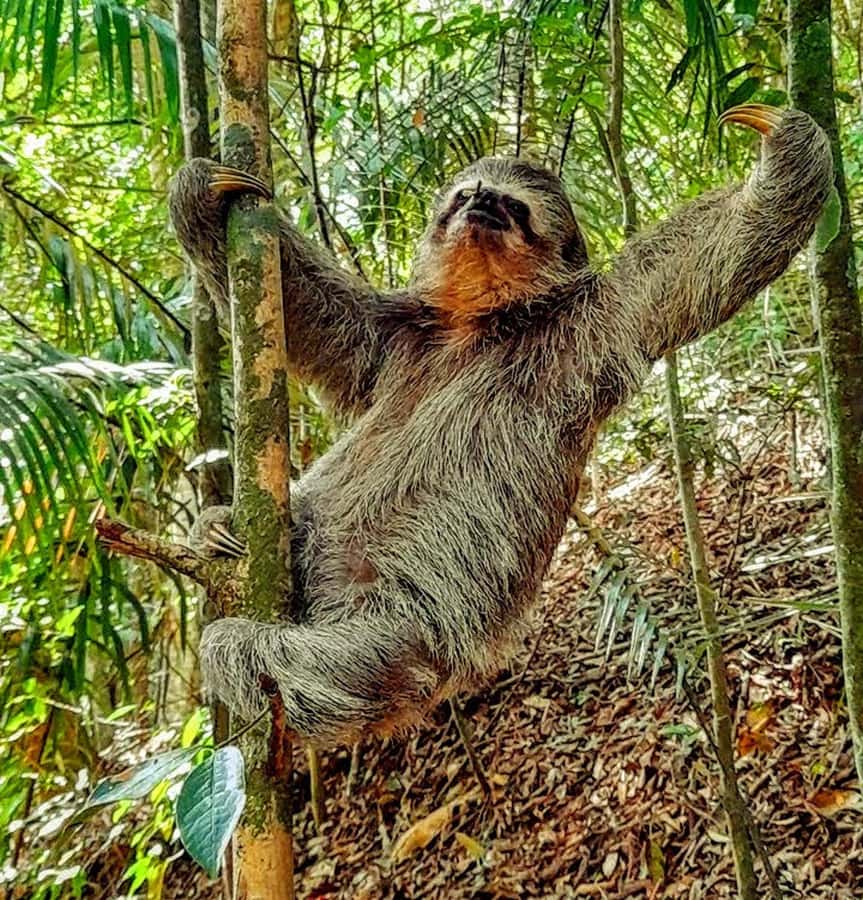
Finally, if you’re hoping to see wildlife, you should keep hopes flexible. Some people have had luck spotting animals like coatis and capuchin monkeys or even a sloth, but sightings aren’t guaranteed. The forest works as an experience even when animals stay hidden.
Should You Book This Tijuca Caves and Waterfalls Hike?
I’d book it if you want a single, well-rounded morning/afternoon in Tijuca that mixes waterfall relief, cave geology, and coffee-era history—with pickup so you can spend energy on hiking instead of transport.
Skip it or choose a different option if:
- you’re not comfortable with a moderate hike that includes steep uphill sections
- you have a heart condition
- you need wheelchair accessibility
If you’re the type who enjoys learning while moving—especially when the guide brings stories like the Wallace Fountain (1870) context or the Mayrink Chapel (1850) stop—this is a strong fit. At this price, it’s not just a walk in the trees. It’s a guided day that explains why the forest is here and what it endured to become what you see today.
FAQ
How long is the Tijuca Forest Small Group Hike to Caves and Waterfalls?
The tour lasts about 6 hours.
How long is the hike and how much elevation gain is there?
You’ll hike around 6.2 km (3.8 mi) with about 448 m (1,469 ft) of elevation gain, taking roughly 2.5–3 hours.
Is pickup from my hotel included?
Pickup is included from designated hotels in Rio’s South Zone, including areas like Copacabana, Ipanema, Leblon, Leme, Flamengo, Santa Teresa, Gloria, Catete, Urca, and Praia de Botafogo. If your hotel isn’t in the pickup area, you’ll be given a nearby meeting point.
What language will the guide speak?
The tour is guided in English and Portuguese.
What’s included in the price?
Included items are a bilingual tour guide (English and Portuguese), insurance, and transportation from designated hotels in the South Zone.
Is food or water included?
No. Food and water (plus drinks) are not included, so you’ll need to bring or buy them.
What should I bring for the hike?
Bring food and drinks, snacks, sunscreen, water, insect repellent, sports shoes, sportswear, and a daypack.
Are pets or large bags allowed?
No pets are allowed. Luggage or large bags are also not allowed.
Is this tour suitable for everyone physically?
It requires moderate fitness and involves rough rainforest terrain with up and downhill sections. It is not suitable for people with heart problems or for wheelchair users.
What info do I need to provide for insurance?
You must provide your passport number, birth date, and full name for insurance.