REVIEW · RIO DE JANEIRO
Pedra do Telégrafo Hike and Beach Full-Day Tour
Book on GetYourGuide →Operated by S2 Rio - Tours Rio de Janeiro · Bookable on GetYourGuide
Rio rewards early starts. Pedra do Telégrafo delivers huge views for a relatively short hike, and I love the way the early arrival is built in so you can take photos without getting stuck waiting. I also like that you get an on-the-ground guide—people mention guides like Dayvison and Nicolas for being patient, organized, and willing to work with your pace.
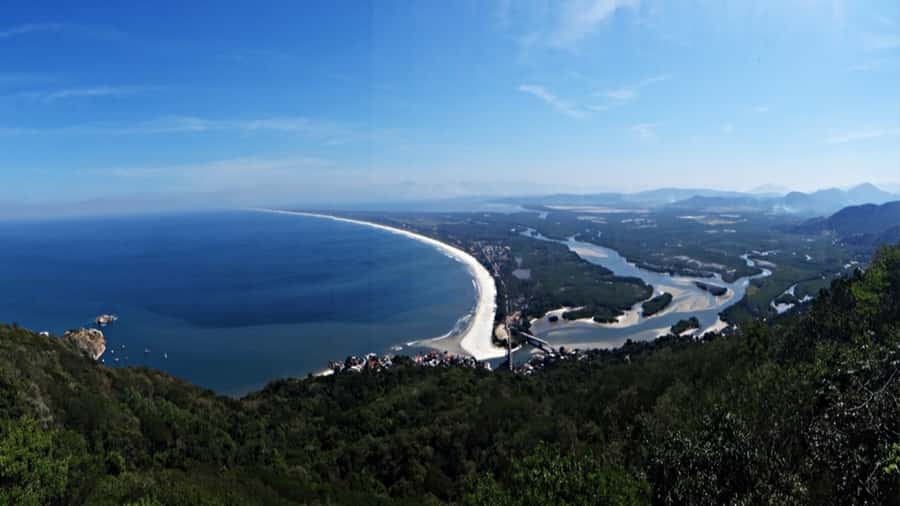
You’ll feel the payoff quickly. The route climbs from Guaratiba Beach to the top of Guaratiba Hill (about 350 meters), with classic viewpoints along the way—especially the rock called Pedra da Bigorna. Once you reach the summit, the panorama spreads across wild Rio beaches and sandbanks, and it’s a satisfying moment even if your calves are arguing with you.
One drawback to plan for: this is a steep, uphill hike. If you’re not comfortable with humidity or pushing your pace for about an hour of ascent, you’ll want to go in with good shoes, water, and realistic expectations.
In This Review
- Key things I’d plan around
- What this tour really is: a hard climb plus a calm beach finish
- The climb from Guaratiba Beach: what the hour uphill feels like
- Summit time at Pedra do Telégrafo: what you should actually look for
- Grumari or Prainha: the best part after your legs stop burning
- Tour length and timing: why early matters more than you think
- What’s included (and what you’ll pay for on your own)
- Who this hike suits best (and who should rethink it)
- Packing checklist that actually helps on the day
- How the guides make the difference
- Is it worth $56? The value math for most people
- Should you book Pedra do Telégrafo + Grumari/Prainha?
- FAQ
- How long is the tour?
- How long is the hike to the summit?
- What elevation is Pedra do Telégrafo?
- Where do we hike, and where do we finish?
- Are meals or drinks included?
- What pickup areas are available?
- What should I bring?
- Is it okay to wear open-toed shoes?
- Is this tour wheelchair accessible?
- What languages are the guides?
Key things I’d plan around
- Early photo strategy: You prioritize arriving when the summit is less crowded, so pictures happen sooner.
- Steep but straightforward hiking: No climbing tricks—just a solid uphill effort with viewpoints to break it up.
- Iconic rock spotting: You’ll pass the famous Pedra da Bigorna on the way up.
- Big summit payoff: Look for views including Grumari Beach and surrounding wild coasts.
- Beach reset after the climb: You finish by relaxing at Grumari or Prainha instead of rushing back immediately.
- Guide + photo support: Many guides help with pacing and photos at the top, so you’re not left to figure it out.
What this tour really is: a hard climb plus a calm beach finish
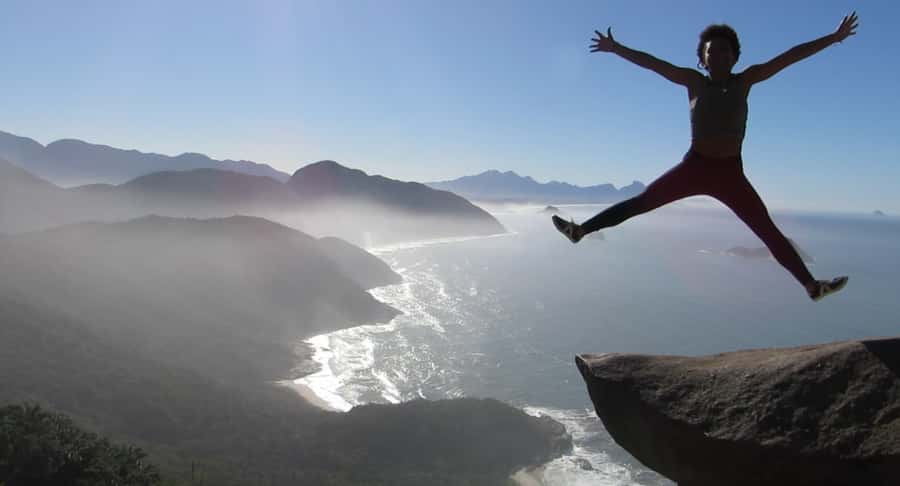
This is a full-day energy switch: you trade the city for a steep hike inside Pedra Branca State Park, then you cool down at a beach that feels like a break from the main Rio crowd. The main goal is Pedra do Telégrafo, a rocky viewpoint at the top of Guaratiba Hill, where the effort turns into a view that makes the hike feel worth it.
The reason this tour works so well is the structure. You start with the climb while the day is still fresh, then you end with a beach—so you’re not just exercising for the sake of it. And because the summit is a photo magnet, the tour’s insistence on going early matters more than it sounds. In Rio, timing is everything.
Price-wise, it’s $56 per person. That cost is mainly paying for air-conditioned transport, an accredited guide, and a planned “no-stress” flow: start early, climb with support, hit the photo spot before the worst lines, then relax. Meals aren’t included, so you’re still responsible for snacks and lunch at the beach area, but you’re not paying extra for the core logistics.
You can also read our reviews of more hiking tours in Rio De Janeiro



The climb from Guaratiba Beach: what the hour uphill feels like
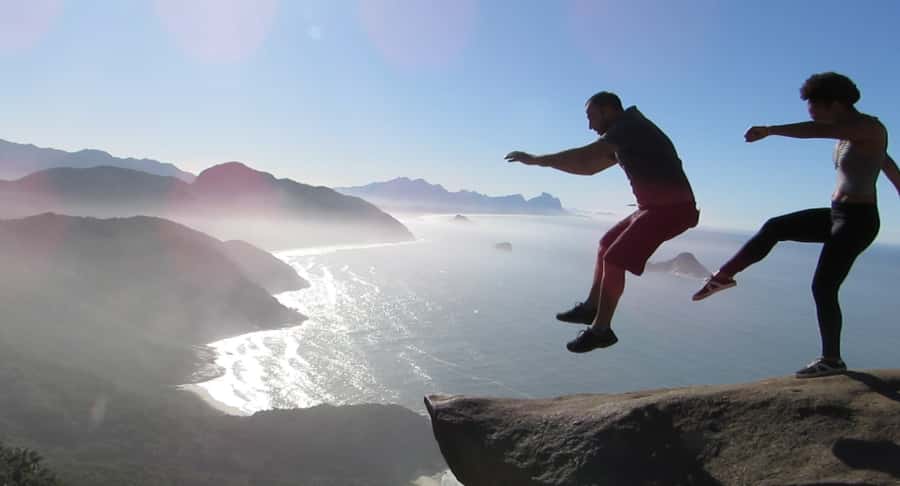
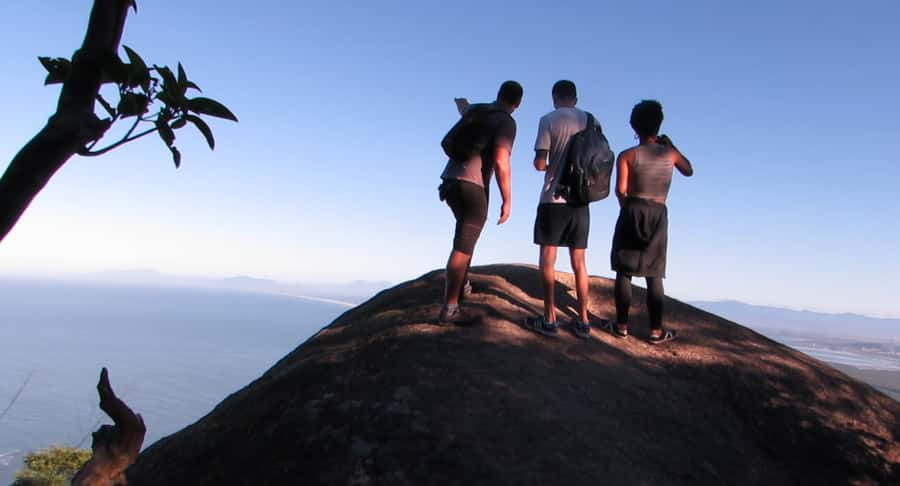
Your ascent begins at Guaratiba Beach. From there, you follow the trail up toward Pedra do Telégrafo, reaching the summit after about an hour of climbing. That hour is where you should adjust expectations. It’s not a long hike on distance—it’s a long hike on your legs. Expect a steep incline and steady effort.
The trail also gives you natural checkpoints. There are several viewpoints along the way. The highlight you’ll hear about is Pedra da Bigorna, a large, sharp rock that’s known as one of the most memorable stops before the summit. Even if you’re pushing through, you’ll get those small moments where you can look out, catch your breath, and reset.
Humidity can turn a “manageable” hike into a workout. That’s why the basic packing list matters: water, sunscreen, a hat, and hiking shoes with grip. Open-toed shoes aren’t allowed, and that rule is there for a reason—trailed steps and uneven ground don’t care about flip-flops.
A nice benefit: guides typically manage pacing. People mention how guides like Mauricio, Erick, Felipe, and Leonel helped keep groups comfortable and moving without rushing anyone. That means if you need breaks, you usually won’t get left behind.
Summit time at Pedra do Telégrafo: what you should actually look for
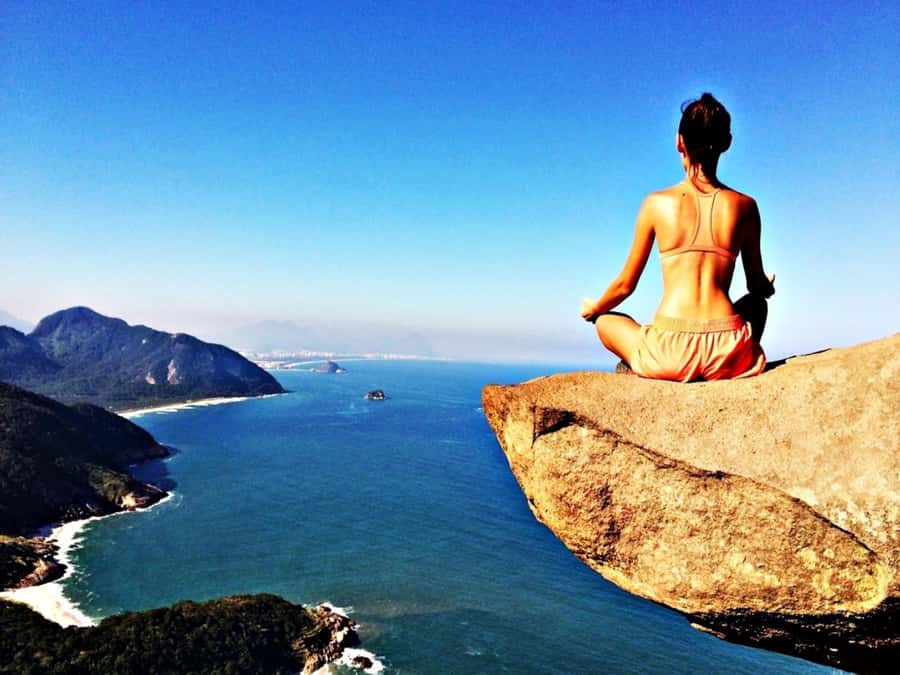
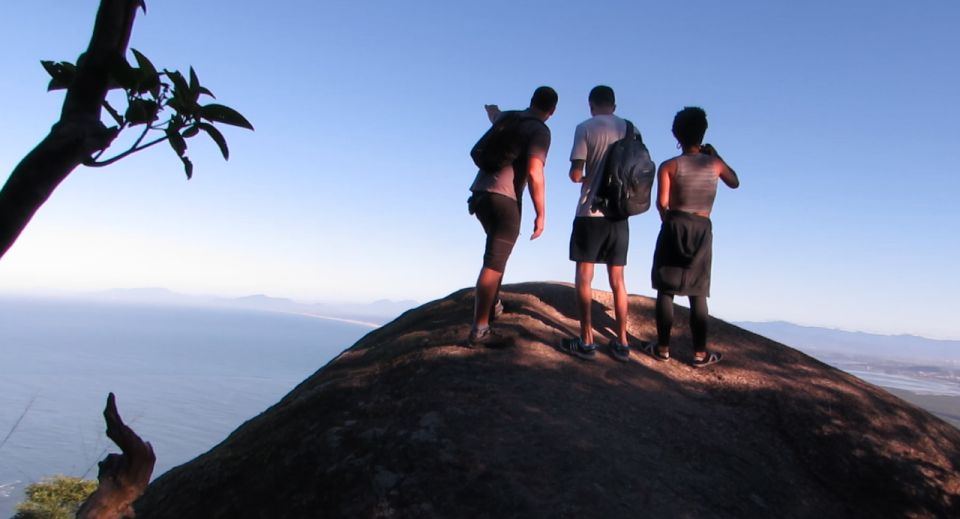
The summit is the payoff: Pedra do Telégrafo sits at about 350 meters, and when you step out at the top, the views open up across Rio’s coastline. From there, you should look for:
- Restinga da Marambaia sandbank
- Wild beaches of Rio (the coastline gets less “developed” the farther you look)
- Pedra do Pontal
- Grumari Beach
This is one of those viewpoints where orientation helps. Before you lift your camera, take 30 seconds and scan. Find Grumari first, then compare what you see on each side of the bay. The panorama is wide, and the details pop once you’ve got your bearings.
Also, plan for photos. The tour’s boarding timing is flexible, but the goal stays consistent: arrive early enough so you spend less time waiting for a shot at the main rock. People repeatedly mention that arriving early makes a visible difference. Some guides also take photos for you along the way, so you’re not stuck juggling your phone, your bag, and sweaty hands.
There’s even mention of a professional photographer at the top in some experiences. If that option is available on your day, it can be an easy way to get clean summit photos without posing for yourself. Just remember meals and drinks aren’t included, so you’ll want cash or a plan for your own purchases after.
Grumari or Prainha: the best part after your legs stop burning
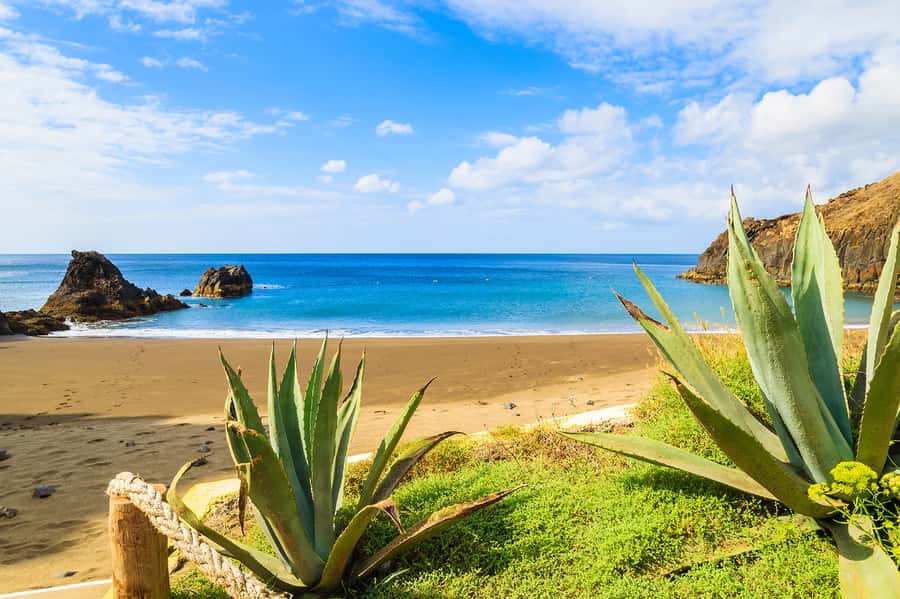
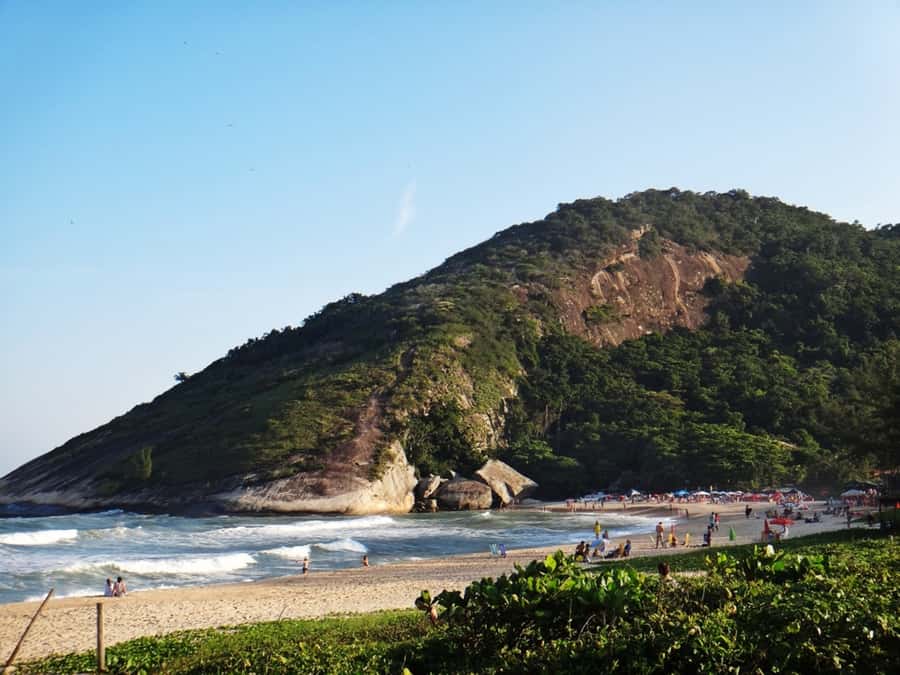
After the hike, you head to the beach to relax. Depending on timing and the day’s plan, it’s Grumari or Prainha. These beaches are both part of the reward for doing the climb early. You get a contrast: steep uphill effort, then calmer shoreline time where you can finally breathe and soak your feet if you want.
This is also where you’ll appreciate having a change of clothes and a towel. The tour packing list is practical: bring what you need so you can actually switch gears and enjoy the water. A lot of people end the hike wanting a quiet reset, and choosing a less chaotic beach matters.
Just keep your expectations realistic about food. The tour doesn’t include meals and drinks, so if you want a full meal, you’ll buy it on your own at the beach area. Some guides may suggest stops like coconut water or açaí depending on the route and time, but you shouldn’t count on a specific restaurant. Think of this portion as time to recover, swim, and snack your way through the day.
Tour length and timing: why early matters more than you think
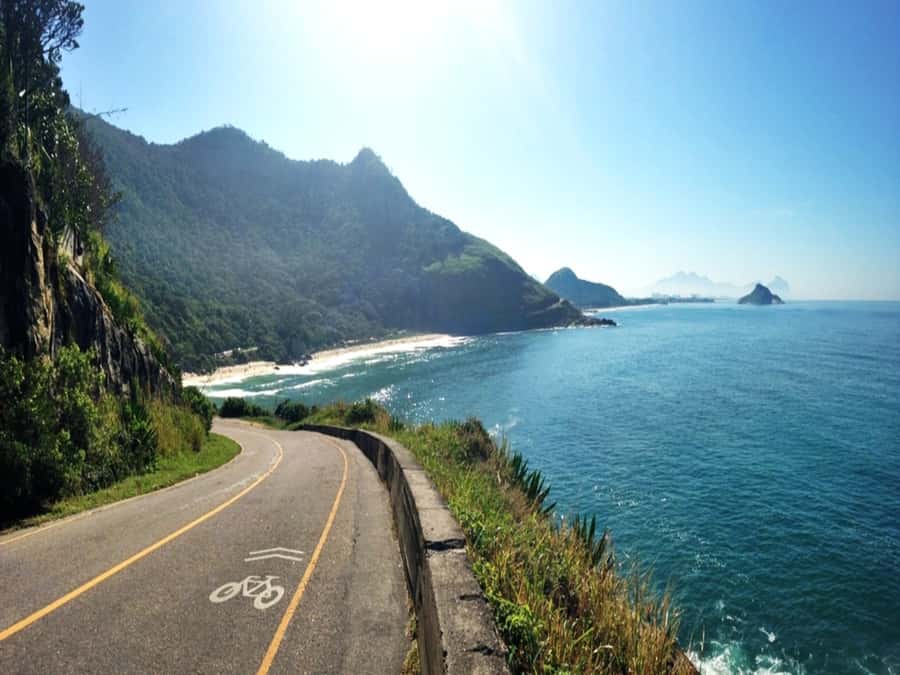
The tour runs 4 hours to 390 minutes depending on pickup time, traffic, and pace. That range is big enough that you should plan a flexible day. In other words: don’t schedule something tight right after.
Pickup is optional and covers several areas, including Downtown spots like Lapa and Cinelândia, neighborhoods such as Catete, Flamengo, and Botafogo Praia Shopping, plus Copacabana, Ipanema, and Barra da Tijuca seafront. But Rio’s streets can be narrow, so access to your exact hotel can sometimes be tricky. If the transport can’t reach you, you’ll get a closer meeting point instead.
The reason timing is worth paying attention to is simple: the summit is a popular photo spot, and the tour specifically prioritizes getting there early. People mention fewer lines for photos when the group arrives ahead of the rush, and that’s exactly the kind of quality-of-life advantage that makes a tour feel smooth.
You can also read our reviews of more tours and experiences in Rio De Janeiro


What’s included (and what you’ll pay for on your own)
Included:
- Air-conditioned transportation
- Accredited tour guide
- Personal accident insurance
Not included:
- Meals and drinks
So yes, you pay for the structure. But you also need to self-manage the “energy basics” part. That means snacks, water, and anything you want to eat or drink at the beach after the hike.
If you want the day to feel easy, come prepared:
- snacks (especially if you get hungry after exercise)
- water
- sunscreen and insect repellent
- flip-flops and a towel for beach time
Who this hike suits best (and who should rethink it)
This is ideal for you if you want classic Rio views without doing a complicated multi-day trek. It’s a good match if:
- you can handle a steep uphill for about an hour
- you like viewpoints more than long-distance hiking
- you want a guided experience that slows down for pacing and photos
It may not suit you if:
- you struggle with steep stairs or sustained uphill effort
- you’re traveling with mobility limitations
- you need wheelchair access (this tour is not suitable for wheelchair users)
It’s also a good tour for first-time Rio visitors who want something nature-focused that still feels connected to the city’s geography. The climb gives you a different perspective than the usual beaches, and then you end by returning to the sand.
Packing checklist that actually helps on the day
Based on the tour requirements, this is what you should bring:
- Sunglasses and sunscreen
- Sun hat
- Hiking shoes with good grip
- Water and snacks
- Insect repellent
- Towel, swimwear, and flip-flops
- A change of clothes
- Light layers if you tend to get chilly after swimming
Not allowed:
- Pets
- Oversize luggage / large bags
- Open-toed shoes
That last one matters. Even if you’re planning to wear sandals at the beach, you need proper shoes for the hike itself. Think of it as one day where you pack for the workout, then pack for comfort.
How the guides make the difference
The single most repeated theme is guide support—especially around pacing and photos. People talk about guides who are patient when the climb gets tough and who take the time to help the group enjoy the views instead of treating the summit like a quick photo drop-off.
Names that come up often include Dayvison, Erick, Nicolas, Felipe, Leonel, and Renan. You won’t control which guide you get, but you can control your approach: let the guide know your pace early. If you ask for breaks, most groups report that the guide works with you.
Also pay attention to how the guide handles summit photos. Early arrival helps, but the guide’s timing and photo suggestions can help you get better angles and less stress. If there’s an option for a professional photographer at the top on your day, you’ll already be set up for a clean shot because you’re not rushing.
Is it worth $56? The value math for most people
At $56 per person, this isn’t a budget “walk around a neighborhood” tour. You’re paying for a managed day in a protected area plus transport out of central Rio. The guide and accident insurance are also part of that price—useful when you’re hiking in uneven terrain.
For value, you should ask yourself one question: do you want the viewpoint badly enough to justify paying for logistics? If yes, this tour makes sense because it handles:
- transportation by air-conditioned vehicle
- an organized early start for the summit photo moment
- guided pacing so you can enjoy rather than suffer
If you were to DIY it, you’d still need a plan for transport, trail navigation, and timing. Here, that’s done for you. Meals aren’t included, but you’re already packing snacks and planning a beach finish—so your extra spending is usually limited to food and drinks.
Should you book Pedra do Telégrafo + Grumari/Prainha?
I’d book it if you want a day that feels like Rio at its best: city-adjacent nature, big views, and a beach landing pad. The early start strategy is the selling point, because fewer photo-line hassles means you enjoy the summit instead of racing it.
Skip it (or be cautious) if the words steep hike make you nervous. This isn’t a gentle stroll. It’s a workout with a reward, and you’ll feel it in your legs.
If you’re comfortable with the climb and you pack properly—especially hiking shoes, water, and sunscreen—this is one of those Rio tours that tends to deliver a clear “worth it” feeling by the time you’re sitting on the sand after the top.
FAQ
How long is the tour?
The tour duration is listed as 4 hours to 390 minutes, depending on pickup time, timing, and pace.
How long is the hike to the summit?
The ascent begins at Guaratiba Beach and takes about one hour to reach Pedra do Telégrafo’s summit.
What elevation is Pedra do Telégrafo?
Pedra do Telégrafo is at about 350 meters elevation.
Where do we hike, and where do we finish?
The hike is in Pedra Branca State Park. Afterward, you relax at Grumari or Prainha Beach.
Are meals or drinks included?
No. Meals and drinks are not included, so bring snacks and plan to buy food if you want lunch.
What pickup areas are available?
Pickup is optional from hotels in Downtown (Lapa and Cinelândia), Catete, Flamengo, Botafogo Praia Shopping, Copacabana, Ipanema, and at Barra da Tijuca seafront. If the vehicle can’t access your street, you’ll be directed to the closest meeting point.
What should I bring?
Bring water, sunscreen, a sun hat, sunglasses, hiking shoes with good grip, insect repellent, snacks, plus beach items like a towel, swimwear, and flip-flops, and a change of clothes.
Is it okay to wear open-toed shoes?
No. Open-toed shoes are not allowed on the hike.
Is this tour wheelchair accessible?
No. This tour is not suitable for wheelchair users.
What languages are the guides?
The live guide is available in Spanish, English, and Portuguese.