REVIEW · RIO DE JANEIRO
Centro Historico and Lapa – Santa Teresa Walking, Historical and Bohemian Tour
Book on Viator →Operated by Good Guide In Rio · Bookable on Viator
Rio’s history is best on foot. This Centro Historico and Lapa to Santa Teresa walking tour strings together grand squares, churches, and street art with great panoramic breaks.
I especially love how the walk turns big landmarks into clear stories, from Cinelandia’s major institutions to the Mosteiro de São Bento. And I like the small-group feel (up to 12 people), with Ivan as a guide who makes the day move like a good conversation instead of a lecture.
The main drawback is simple: it’s a long 7 to 8 hours with plenty of walking and hills in Santa Teresa, and there’s no lunch built into the plan.
In This Review
- Key highlights you won’t get on a quick pass
- Why this walk works: Centro, Lapa, and Santa Teresa in one day
- The 9:00am start from Copacabana Palace (and why it’s convenient)
- Cinelandia’s major square stops: where institutions define the mood
- The Metropolitan Cathedral of Saint Sebastian: stained glass with a story
- Largo da Carioca and two baroque churches side by side
- Centro’s pedestrian lanes and Confeitaria Colombo’s art deco charm
- Praça Quinze de Novembro: the Republic square with river connections
- Praça Pio X and key cultural landmarks before you head upward
- São Bento Monastery: a church stop that feels like a centerpiece
- Mauá Square and the view logic: Museum of Tomorrow without the detour
- Eduardo Kobra’s Etnias mural: street art with a scale you can’t ignore
- Santa Teresa Tram time: the famous yellow ride and why it matters
- Largo dos Guimarães: Santa Teresa’s neighborhood feel
- Parque das Ruínas: the gazebo viewpoint with classic Rio angles
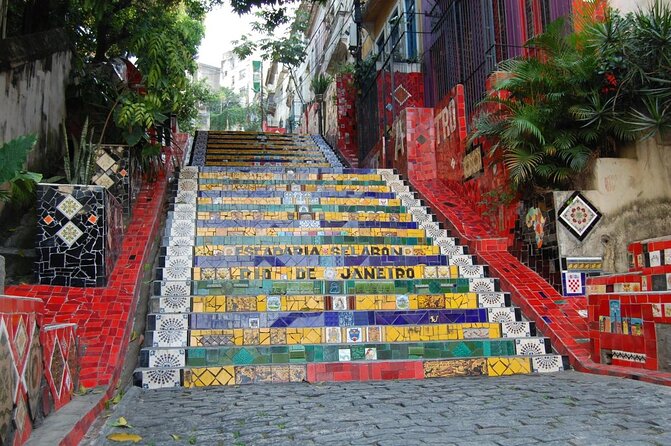
- Selarón’s Escadaria: the multicolor staircase story
- Arcos da Lapa: aqueduct arches and the graffiti that lives on the walls
- Price and included extras: does $137.80 feel fair?
- Best for you if you like cities that read like stories
- Should you book this Centro to Santa Teresa walking tour?
- FAQ
- FAQ
- How long is the Centro Historico and Lapa to Santa Teresa walking tour?
- What time does the tour start, and where does it meet?
- Is pickup included?
- Is lunch included?
- Are entrance tickets included?
- What drinks are included during the tour?
- How many people are in the group?
- Do you ride the yellow tram in Santa Teresa?
- What if the minimum number of travelers isn’t met?
- Can I get a refund if I cancel?
Key highlights you won’t get on a quick pass
- Small group (max 12), so you can actually ask Ivan questions as you go
- Cinelandia + big cathedral architecture, plus monumental stained-glass windows
- Santa Teresa views from multiple viewpoints, capped with the terrace at Parque das Ruinas
- Selarón staircase and the reason it became famous worldwide
- Eduardo Kobra’s Etnias mural, billed as the largest of its kind
- Yellow tram (Bonde) ride for a scenic, charming hill climb
Why this walk works: Centro, Lapa, and Santa Teresa in one day
This tour is built around the way Rio shows itself best: not in one museum, but as a sequence. You start in the formal, official Rio of squares and grand buildings. Then you drift into the older street level of Centro. After that, you climb toward Santa Teresa, where the city turns more artsy and the views do half the explaining for you.
That pacing matters. If you’ve only got a day (or you don’t want to keep switching neighborhoods), this is a smart way to get orientation fast. You’ll see how the city’s power centers, religious architecture, and bohemian side all fit into the same map—just with different moods.
You’re also walking through places where the details are the point: stained glass, baroque churches, street-level art, and historic aqueducts. If you like to understand what you’re looking at, this kind of route has real value.
You can also read our reviews of more walking tours in Rio de Janeiro



The 9:00am start from Copacabana Palace (and why it’s convenient)
The tour begins at Copacabana Palace, A Belmond Hotel at Av. Atlântica 1702. The start time is 9:00am, which is a big deal in Rio. Morning keeps the heat and crowds from turning the day into a shuffle. And it gives you time to reach Santa Teresa before the afternoon slows everything down.
A pickup is included, and the meeting area is near public transportation, so you’re not stuck guessing how to get there. Once you’re set, the day becomes a guided route with stops spaced for a real look, not just a quick photo.
Also, the group size is limited to 12 travelers. On a walking day, that’s what keeps it comfortable. Your guide can regroup people without turning the streets into a bottleneck.
Cinelandia’s major square stops: where institutions define the mood
You begin in Cinelandia, a square that reads like Rio’s civic and cultural center. This is where you’ll get your first set of anchors: the Teatro Municipal (Rio’s opera house), the Museu de Belas Artes, and the municipal and national-level institutions in the surrounding area. There’s also Le Teatro Odeon, noted as the only cinema in the square still in operation.
This stop is short—about 20 minutes—but it’s designed to help you recognize the “bones” of the neighborhood. Instead of being lost in architecture you can’t place, you’re given a quick map of what matters and why. You’re not asked to memorize everything. You just walk away with enough context to notice the patterns.
Good shoes help here. Even though the stops are time-managed, you’ll still be out and about. Rio’s streets are part of the experience, so plan to move.
The Metropolitan Cathedral of Saint Sebastian: stained glass with a story
Next comes the Metropolitan Cathedral of Saint Sebastian, where you step inside for an architecture and history presentation, plus time focused on the monumental stained-glass windows. The ticket here is free, so you’re getting a real included interior moment without extra planning.
A cathedral like this works best with a guide. From street level, it’s easy to see “big building.” Inside, it becomes about materials, design choices, and why it has the visual impact it does. The short stop of about 15 minutes won’t make you a specialist, but it will give you the key ideas to look smarter.
If you’re the type who likes to understand what you’re seeing before you photograph it, this is one of the stops that delivers.
Largo da Carioca and two baroque churches side by side
You then pass Largo da Carioca, with time to focus on nearby religious highlights: the São Antonio church and São Francisco da Penitência, described as one of the most beautiful baroque churches in Brazil. The plan also includes panoramic views from a terrace shared by these two churches, so you’re not just reading history—you’re taking in the city view that helps the neighborhood make sense.
This stop is about 25 minutes, and the admission/ticket is marked as included. That’s important for value: you’re paying for a guided day, and here you also get a paid access component worked into the route.
For practical timing: terrace views are the kind of moment where you want to pause and actually look, not just snap. A short guided window keeps you from wasting time, but you still get a payoff.
You can also read our reviews of more historical tours in Rio de Janeiro






Centro’s pedestrian lanes and Confeitaria Colombo’s art deco charm
From there, you head through the pedestrian streets of old Rio to Confeitaria Colombo, one of the oldest cafes in the Centro. The star here is its art deco style, which makes it an iconic stop that feels like part shopfront, part city landmark.
This is a quick 10-minute pass, with the ticket marked free. It’s not a long sit-down. Think of it as a visual reset: the day shifts from architecture and terraces into something lighter and more street-level.
Even if you don’t buy anything, you’ll still notice the “why” behind the fame. If you do want a snack afterward, you’ll likely know where the iconic stop is, so you can make a clean plan for the rest of your day.
Praça Quinze de Novembro: the Republic square with river connections
You continue to Praça Quinze de Novembro (the 15th of November square, tied to the proclamation of the Republic). Here, the guide points out several major references: the Church of Our Lady of the Carmelites, the Paço Imperial, the Equestrian Statue of General Osorio, Tax Island, and the ferry pier to Niteroi and Paquetá in Guanabara Bay.
This stop is about 20 minutes and includes a free entrance/ticket. The value is in the way it broadens what you think Centro is for. It isn’t only churches and old buildings. It’s also about how the city relates to the bay and to travel connections.
If you’re a first-time visitor, this square gives you a mental “big picture” anchor. If you’ve been before, it’s still worth it because it sets the context for what comes next.
Praça Pio X and key cultural landmarks before you head upward
Next you reach Praça Pio X, again in pedestrian streets, with a short 15-minute stop. You’ll see Candelária church, the Olympic boulevard, the Centro Cultural do Banco do Brasil, and Casa França-Brasil.
The ticket here is free. This feels like a mid-route calibration point: you’ve already taken in heavy architecture, and now you get more cultural institutions tied to Rio’s identity.
In terms of stamina, this kind of stop is useful. You get a quick guided look without losing too much momentum before you start shifting toward Lapa and then Santa Teresa.
São Bento Monastery: a church stop that feels like a centerpiece
You then go to the Mosteiro de São Bento. The tour highlights it as one of the most beautiful churches in Rio to visit, and the guide shares its history. The stop is about 15 minutes, and again marked free.
This is one of those moments where a guided explanation is what turns a photo opportunity into a real stop. Even when time is tight, you can get enough to understand why the place matters and what to pay attention to while you’re there.
If you’re trying to “do Rio efficiently,” this monastery is worth prioritizing inside the day’s schedule.
Mauá Square and the view logic: Museum of Tomorrow without the detour
You reach Mauá Square, an important cultural hub. The plan doesn’t include visiting the Museu de Amanha (Museum of Tomorrow), but it notes the architecture as something you should still notice. You also get a pass-by focus on the Art Museum of Rio, with its panoramic terrace on the top floor.
The terrace is the key for the big skyline effect: views are described for Mauá Square, the Niteroi Bridge, and the Museum of Tomorrow area. The stop is about 20 minutes and marked free.
This is a clever move in a long walking day. Instead of cramming one more interior visit, the tour gives you a viewpoint moment that helps you connect what you saw earlier to what’s around the bay. If you’re the type who hates being indoors too long, this works well.
Eduardo Kobra’s Etnias mural: street art with a scale you can’t ignore
After that, you head to Etnias – Mural de Graffiti (Estúdio Kobra). It’s described as the largest mural in the world, representing five ethnic groups, created by Eduardo Kobra for the Olympic Games.
This is about 15 minutes and admission/ticket is free. It’s short, but it’s also a stop with impact. Large-scale public art like this changes how you think about the city’s identity. It’s not background decoration. It’s a statement you can read quickly because the meaning is explained.
If you’re wondering whether street art belongs on your “major sights” list, this stop answers that for you—because it’s not a random mural. It’s a commissioned work tied to a global event.
Santa Teresa Tram time: the famous yellow ride and why it matters
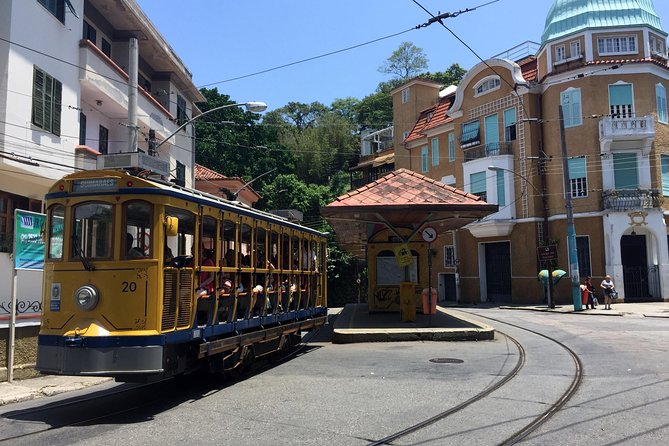
Now comes the most fun part: you return to the Santa Teresa Tram station and take the famous yellow Bonde tram upward. The tram ride is a panoramic walk of about 30 minutes, and the admission is marked included.
This is not just transportation. In a city with steep climbs, it’s a treat. The ride breaks up the day and gives your legs a breather while still keeping the views rolling. You also get the sense of how Santa Teresa connects to the rest of Rio through the tram line.
If you’re traveling with older kids or you’re just trying to keep the day enjoyable, the tram is a built-in relief valve.
Largo dos Guimarães: Santa Teresa’s neighborhood feel
Once you arrive in Santa Teresa, you walk around Largo dos Guimarães. The tour gives you about 45 minutes to explore the area’s houses from the late 19th century and early 20th century, along with the neighborhood views, restaurants, and bars that make Santa Teresa popular.
This is one of the “slow down” segments. It’s longer than many stops, which helps you absorb the atmosphere. You’re also at the point in the day where you’re more likely to want a drink or a bite—though lunch isn’t included later, so think of this as your cue to plan.
If you want photos, this is where you’ll find plenty of angles—especially with the hillside layout.
Parque das Ruínas: the gazebo viewpoint with classic Rio angles
Next you head to Centro Cultural Municipal Parque das Ruínas, described as an iconic point in Santa Teresa. The former home of Laurinda Santos Lobo is transformed into a gazebo with a view that ties together Centro, the Arches of Lapa, Christ, and Botafogo.
You get about 30 minutes, and the ticket is free. This stop is all about the viewpoint. You’re not just looking—you’re getting a stitched-together view of where you’ve been and where you’re headed next.
This is one of those moments where even if you’re tired, the city seems to reset your energy. Rio views do that.
Selarón’s Escadaria: the multicolor staircase story
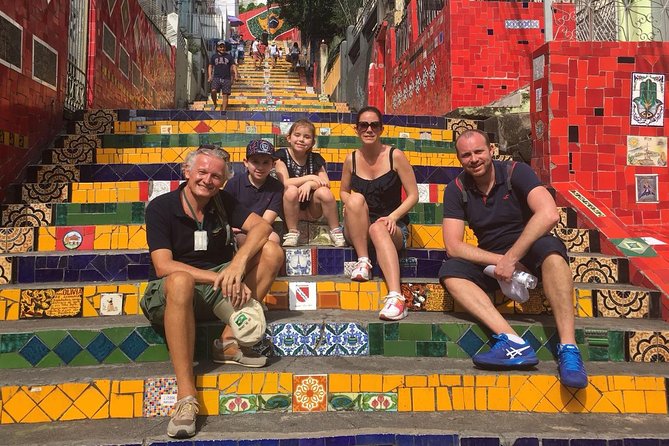
Then you travel down from Santa Teresa toward Lapa, passing the famous Escadaria Selaron, a multicolored staircase created by Chilean artist George Selaron over about 20 years.
It’s about 30 minutes. The best way to do this is to walk it in stages. First, look from a distance to understand the full visual impact. Then get closer for the detail. The colors and patterns feel chaotic until someone explains the intent, and the guide’s route makes sure you get that explanation without dragging you.
It’s also one of those stops that works even if you’re not normally a street-art fan, because the craft and scale are right in front of you.
Arcos da Lapa: aqueduct arches and the graffiti that lives on the walls
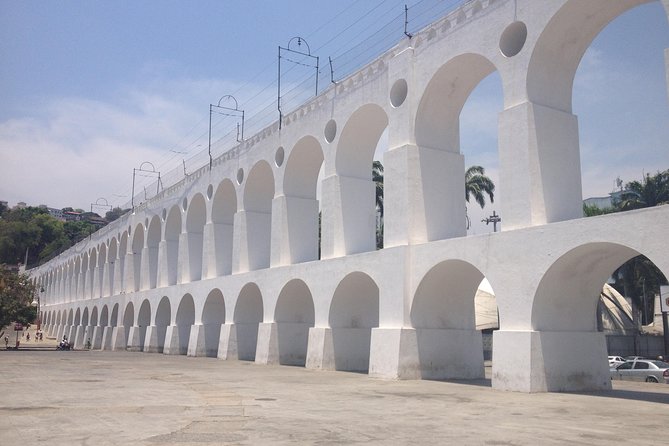
Finally, you reach Arcos da Lapa, with time to stroll among the district’s graffiti and then focus on the arches themselves. The arches are described as an old Rio aqueduct dating from the 18th century, supplying water to the city until the end of the 19th century. The tram passes through the aqueduct to access Santa Teresa.
This is about 20 minutes and ticket is free. The tour wraps the day with a landmark that ties the whole story together: Rio’s infrastructure, its artistic surface, and Santa Teresa’s link to the rest of the city.
If you remember one “why it matters” detail from the day, it’s this: the arches aren’t just pretty. They’re functional history you can still see.
Price and included extras: does $137.80 feel fair?
At $137.80 per person for about 7 to 8 hours, the value comes from what’s bundled and what’s not. You get a guided route across multiple neighborhoods, with multiple stops marked as free admissions and two key “paid moments” folded in: the Largo da Carioca stop and the Santa Teresa tram.
On top of that, drinks are included. The tour mentions caipirinha, beer, soda, fruit juice, or water during the day. That’s not just a perk. It helps you pace yourself on a walking schedule. It can also soften the no-lunch situation.
The big thing not included is lunch. Plan for that. If you go hungry, you’ll feel it during the long Santa Teresa and Lapa segments. If you’re the type who likes to eat early, you’ll likely do fine. If you need a full midday meal, build that into your plan before or after the tour.
Finally, the group limit of 12 keeps the experience from turning into a herd. For this kind of day, that matters.
Best for you if you like cities that read like stories
This tour is a great fit if you want to understand Rio rather than just tick off famous names. It works well for first-timers who need orientation. It also suits repeat visitors who want a guided explanation of how Centro, Lapa, and Santa Teresa connect.
You’ll probably enjoy it most if you like:
- architecture and religious landmarks explained in plain terms
- street art with context (like the Etnias mural)
- viewpoint moments that give you “where am I?” clarity
- a break from walking with the yellow tram ride
You might want a different plan if you hate long walks, struggle with hills, or prefer fully meal-planned days. The Santa Teresa part is uphill in feel, even with the tram helping. And the day doesn’t include lunch.
Should you book this Centro to Santa Teresa walking tour?
I’d book it if you want a single-day route that covers Centro Historico, Lapa, and Santa Teresa with clear guidance and built-in visual variety. The stop selection is practical: big squares for orientation, churches and interiors for meaning, then views and street art for energy, ending with Arcos da Lapa as a historic anchor.
If you’re sensitive to walking time or you need a guaranteed lunch, consider eating before the tour and planning a solid meal afterward. Also, keep in mind the tour is non-refundable and cannot be changed, so book only when your day is truly locked.
FAQ
FAQ
How long is the Centro Historico and Lapa to Santa Teresa walking tour?
It runs about 7 to 8 hours.
What time does the tour start, and where does it meet?
It starts at 9:00am and meets at Copacabana Palace, A Belmond Hotel on Av. Atlântica 1702, Copacabana.
Is pickup included?
Yes, pickup (Pegar) is included.
Is lunch included?
No, lunch is not included.
Are entrance tickets included?
Many stops are listed as free, and the tour also includes admission where noted, such as Largo da Carioca and the Santa Teresa tram.
What drinks are included during the tour?
The tour includes a choice of caipirinha, beer, soda, fruit juice, or water.
How many people are in the group?
The tour has a maximum of 12 travelers.
Do you ride the yellow tram in Santa Teresa?
Yes. You take the famous yellow Bonde from the Santa Teresa tram station, with the ride marked as included.
What if the minimum number of travelers isn’t met?
If the tour is canceled because the minimum isn’t met, you’ll be offered a different date/experience or a full refund.
Can I get a refund if I cancel?
No. This experience is listed as non-refundable and cannot be changed for any reason.