REVIEW · RIO DE JANEIRO
Rio de Janeiro: Hiking and Rappelling at Tijuca Forest
Book on GetYourGuide →Operated by Nattrip Ecotourism and Adventure · Bookable on GetYourGuide
Rio feels different in the trees.
You trade traffic noise for the Tijuca National Park jungle, hike up to Bico do Papagaio, and cap it with a proper rappel from near the summit. I love the mix of forest trails plus that big worked-for view over Rio. One heads-up: this is not a stroll. It’s steep, rocky in spots, and it isn’t a good fit for people with heart, back, or mobility issues, or anyone who gets uncomfortable with heights.
The day runs with a professional guide who speaks Spanish, English, and Portuguese, and the forest is a UNESCO World Heritage Site—an urban escape that still feels wild. You’ll get a guided stop at the visitor center and park museum, plus a break at Cachoeira das Almas for a natural shower. If you’re the type who likes control and clear instructions, small groups (and the certified gear) help a lot.
In This Review
- Key things to know before you go
- Tijuca Forest: Rio’s wild surprise just beyond the streets
- Getting started: the park entrance, visitor center, and museum stop
- The waterfall break at Cachoeira das Almas (and why it matters)
- The climb to Bico do Papagaio: steep, rugged, and built for real hikers
- The rappel at the summit: controlled adrenaline with certified gear
- Views over Rio: why the summit moment lasts
- How long is the day really, and what to pack
- Price and value: $59 for guide time, gear, and a real activity
- Who this tour suits best (and who should skip it)
- Should you book this Tijuca hike-and-rappel day?
- FAQ
- How long is the hike-and-rappel tour?
- Where does the tour start and end?
- What languages are the guides?
- Is hotel pickup included?
- What should I bring?
- Is the tour suitable for everyone?
Key things to know before you go
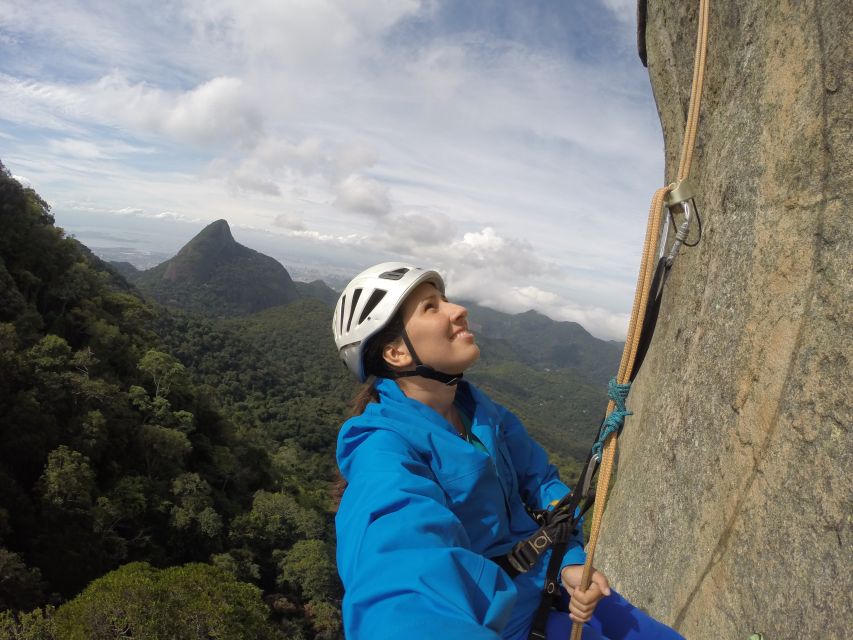
- Bico do Papagaio rappel happens at the summit area, with certified local climbing gear
- Cachoeira das Almas is built into the plan, and yes, you can rinse off there
- Trails go through Mata Atlântica forest, with a museum/visitor-center stop along the way
- The hike is steep and physical; bring shoes with strong grip and real endurance
- Hotel pickup is optional, but only from supported hotels in the tourist zone
- It’s flexible if weather turns, since the order of sights can shift on the day
Tijuca Forest: Rio’s wild surprise just beyond the streets
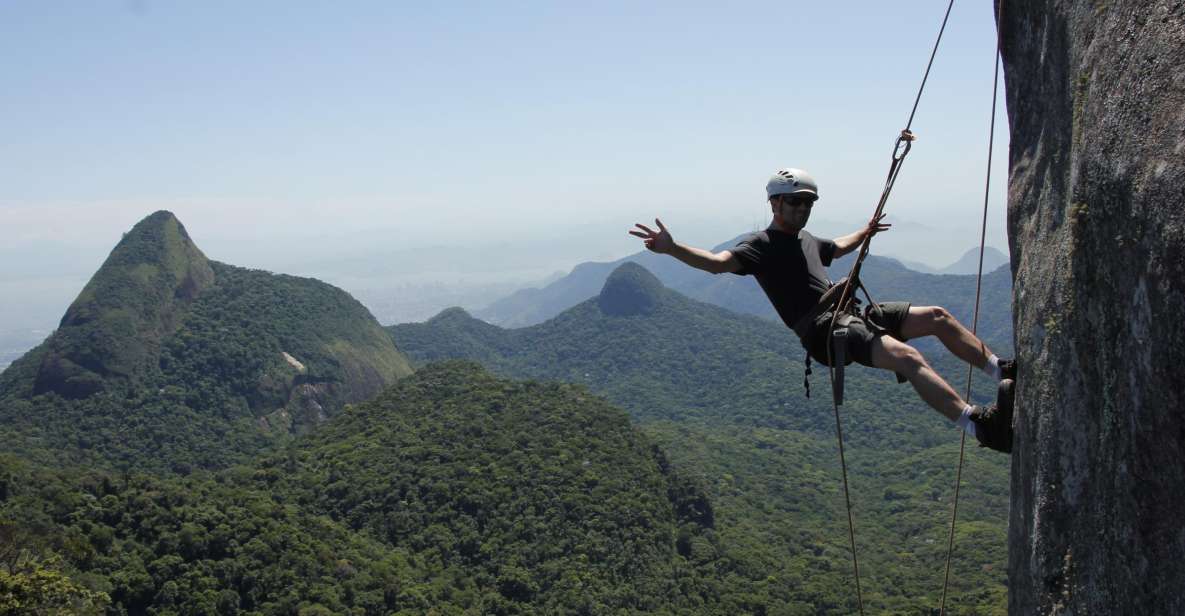
Tijuca Forest is one of those places that makes you understand why people talk about Rio as more than beaches and mountains. It’s a huge slice of green right inside the city limits, and it’s recognized as a UNESCO World Heritage Site. The effect is simple: you start the day in Rio, then you move into shade, thick forest air, and trail sounds you can’t fake.
What I like most is how the tour gives you both the nature and the context. You’re not just hiking to a single viewpoint; you learn why this forest matters and what the area protects. And because you’re heading toward Bico do Papagaio, you get the payoff views over Rio’s main peaks.
The flip side is that the forest doesn’t care about your schedule. Weather can change things, and the hike includes steeper climbs and rougher ground toward the end. If you’re hoping for mostly flat walking, manage expectations from the start.
You can also read our reviews of more hiking tours in Rio De Janeiro



Getting started: the park entrance, visitor center, and museum stop
Your day begins at Praça Afonso Viseu, 104 in Alto da Boa Vista. If you chose pickup, you’ll likely be collected from a supported hotel in the tourist zone, then brought to the start point. From there, the hike route begins at the Tijuca National Park entrance gate, which is important because it sets the tone: you’re entering as participants, not as spectators.
Before you go full uphill, the tour includes a guided visit through the visitor center and the park museum. This part is more than waiting in a building. It helps you connect what you’re seeing—forest layers, local ecology, and the protected area—to the bigger story of the Tijuca region. You’ll get a guided tour experience in the middle of the hike day, which also gives your legs a chance to reset.
Then it’s back to walking through Mata Atlântica forest. This is where the tour earns its “eco-tourism” label. The trail stays in the trees, so the city heat fades, and you feel like you’re moving through a living system instead of just climbing a mountain.
The waterfall break at Cachoeira das Almas (and why it matters)
One of the best parts of this adventure is the stop at Cachoeira das Almas. The tour includes it as a natural shower moment, so you’re not just taking photos—you can actually rinse off when conditions allow. It’s a great payoff after hours of climbing, because your body usually wants water and cool air by then.
Practically, it’s also a mental break. The day has a lot going on: forest walking, a museum/visitor-center stop, then a steeper push toward Bico do Papagaio, and finally rappelling. A waterfall stop gives you a natural checkpoint. You eat something small, drink water, and refocus.
Small caution: you’ll still need sturdy footwear and good grip even near slick areas. This is forest terrain, not a paved walkway. If you’ve ever seen someone slip on mossy rocks in Brazil, you already know why you should stay focused.
The climb to Bico do Papagaio: steep, rugged, and built for real hikers
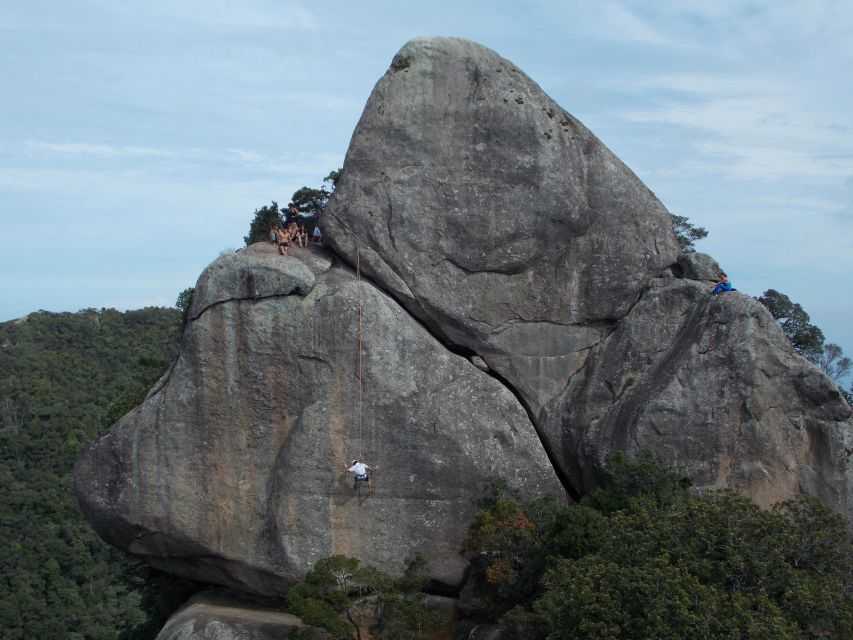
The tour’s main goal is reaching Bico do Papagaio, described as the second highest peak in the Tijuca Forest. The trek takes you along several trails inside the park, and it goes farther than a quick viewpoint stop. You’ll work up to the base of the mountain, where the terrain turns more rugged, and the climb becomes more steep.
Expect a mix of trail types. You’ll likely hit sections with rocky footing and boulder-like obstacles, and the path can feel more demanding late in the day. The guides manage the route, but you’re still the one moving uphill for hours. This is why the tour strongly favors people in good to decent shape.
If you want a tip that improves the entire day: pace yourself early. Start steady, not fast. When you feel like your lungs are working hard, settle into a rhythm and take the guide’s cues. The better your pacing, the more fun the rappel will be later, since you won’t be fighting exhaustion.
The rappel at the summit: controlled adrenaline with certified gear
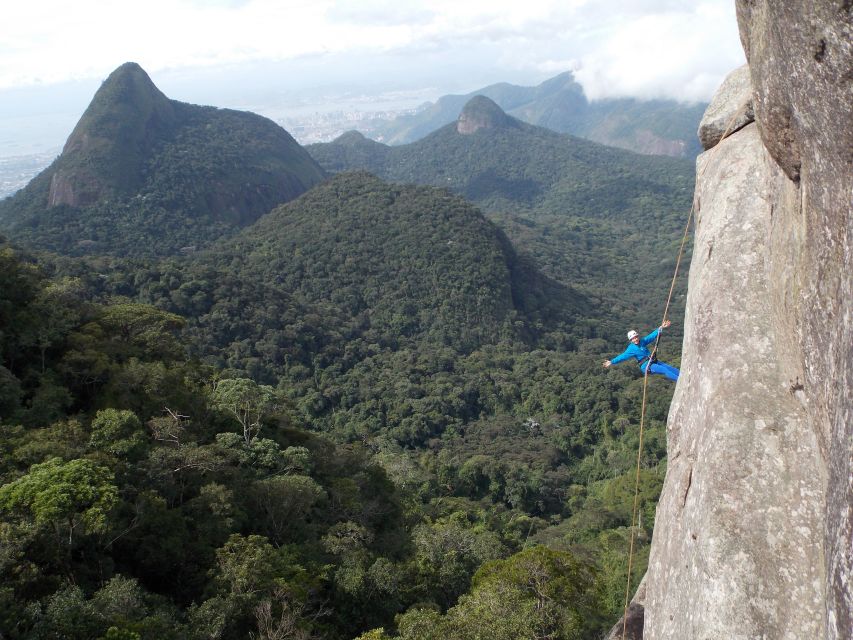
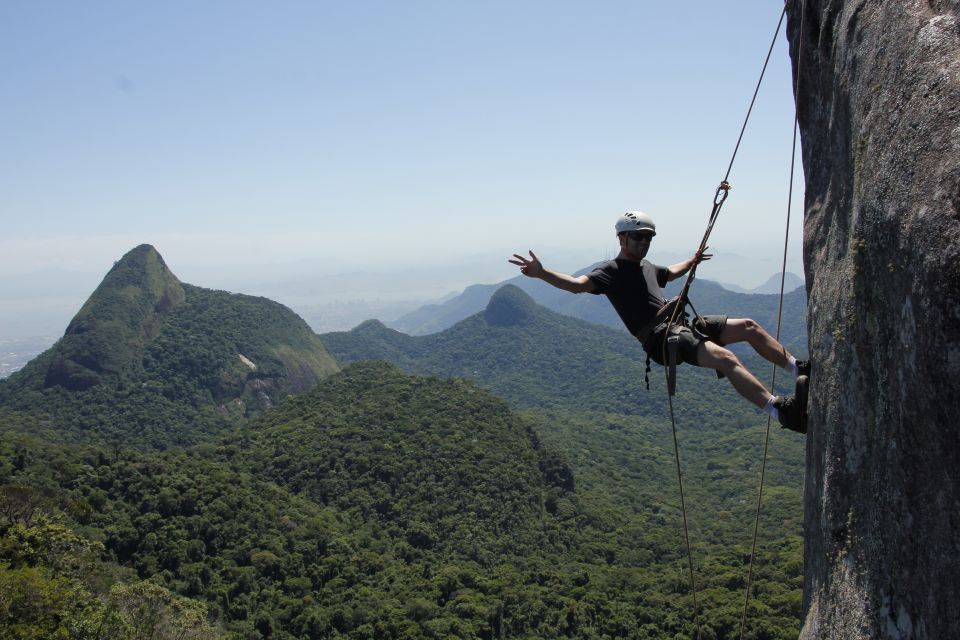
Now for the moment you came for. The rappel (abseiling) is done at the summit of Bico do Papagaio area. That detail matters: you’re not doing a beginner demo near the trailhead. The setup is higher and more serious, and the point is to let you experience the thrill with professional handling.
The good news is that the tour includes certified climbing equipment for local use, plus a professional guide with bilingual support. That combination is what turns this from a risky idea into a structured activity. You get hands-on guidance on how to use the gear and what to do during the descent.
If it’s your first time rappelling, think less about speed and more about calm technique: keep your body positions controlled, listen closely to the guide, and move only when instructed. The forest around you stays loud in your ears, and the height brings a real adrenaline spike. That’s normal. A good guide helps you convert nerves into focus.
Also: the tour is not recommended for people with serious medical conditions, and it’s not suitable for pregnant women. Heights and physical exertion aren’t worth gambling with on safety.






Views over Rio: why the summit moment lasts
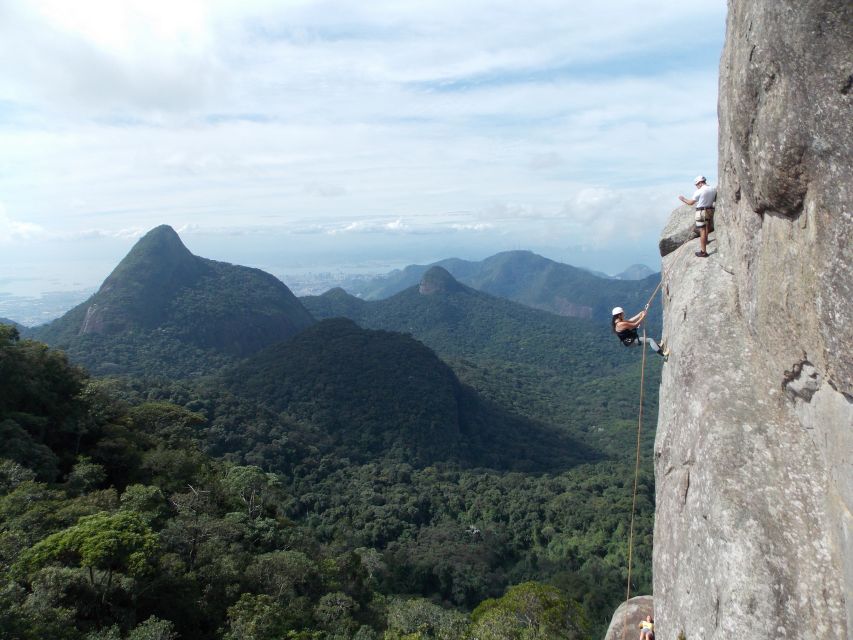
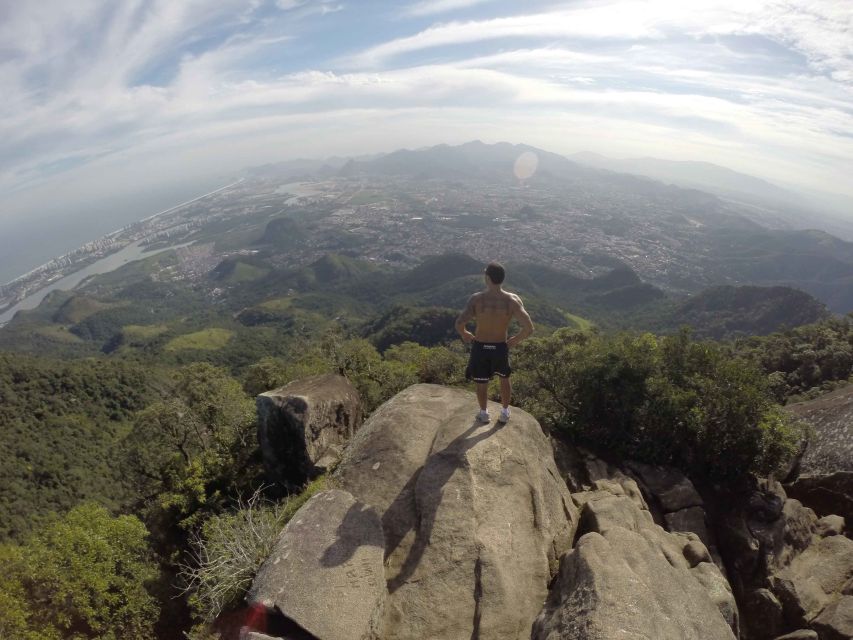
From the top of Bico do Papagaio, you can see some of Tijuca National Park’s major peaks, including Pico da Tijuca, Pedra do Conde, Cocanha, Pedra Bonita, and Pedra da Gávea. You’ll also catch Sumaré, plus a small part of Corcovado and Cristo Redentor.
This is where the long climb earns its keep. The view isn’t just scenic—it’s navigational. You can look at the shapes of mountains around Rio and understand how the city sits against the terrain. It also makes your later Rio sightseeing make more sense, because you’ll recognize what you’re seeing.
What I like about this kind of viewpoint is that it’s not only about distance. You’re seeing ridgelines, valleys, and forest cover as an interconnected whole. The city is still down there, but you’re looking from inside the natural system.
Just remember the practical side: you’re high, it can feel cooler or windier, and you’re spending time outdoors for hours. Bring sunscreen and drink water before you feel thirsty.
How long is the day really, and what to pack
The tour lists an estimated duration of 8 hours, with starting times depending on availability. It’s a full-day commitment, not a quick half-day excursion, so plan your Rio schedule accordingly. You’ll be walking, stopping, and then doing a physical activity (rappel), which adds time even when everything runs smoothly.
The basics you should bring:
- Water (the recommendation is 3 liters)
- Daypack
- Light snack
- Sunscreen
- Comfortable footwear with good grip
And please don’t show up in sandals or flip-flops. The park rules are clear, and your safety depends on traction. Also, the tour does not allow pets, luggage or large bags, and it prohibits intoxication. Drug use or alcohol before or during the activity isn’t allowed, and weapons of any kind are also prohibited.
One more pacing thought: if you want energy for both hike and rappel, eat a small snack before you’re totally hungry. People often wait too long when they’re climbing.
Price and value: $59 for guide time, gear, and a real activity
At about $59 per person, this isn’t priced like a luxury day, and it doesn’t try to be. You’re paying for a guided hike through multiple trails, a visit to the park museum/visitor center, professional bilingual guidance, and certified equipment for the rappel. You also get personal accident insurance included.
The value is highest if you truly want the full package: forest hike plus the controlled descent experience. If you only want the views, you might find cheaper scenic options. But if you want an actual adventure with vertical skills, the price starts making more sense.
What also affects value is the guide-to-you experience. The tour supports private or small groups, and that matters on a steep trail and during the rappel. Less chaos means you get clearer instructions and you spend less time waiting around.
My practical advice: treat this as an 8-hour physical activity with a skills component. If that matches your style, you’ll feel like the money was well spent.
Who this tour suits best (and who should skip it)
This is a great match if you want:
- A guided hike through Tijuca National Park
- A higher-peak challenge than a casual stroll
- Hands-on adventure with a guided rappel
- Real photo opportunities from the Bico do Papagaio summit area
- A natural shower stop at Cachoeira das Almas
It’s not suitable for:
- Pregnant women
- People with back problems
- People with heart complaints or other serious medical conditions
- People with mobility impairments, including wheelchair users
It also isn’t set up for people who need to carry luggage or travel with pets.
If you’re generally fit and you like clear instruction, you’ll likely enjoy it a lot. If you know your body tends to struggle with steep climbs, be honest with yourself early. The best decision here is the one that keeps the day fun instead of stressful.
Should you book this Tijuca hike-and-rappel day?
I’d book this if you want a Rio day that feels like a real outdoors experience, not just a viewpoint tour. The combination of Mata Atlântica trails, museum/visitor-center context, the waterfall shower stop, and the rappel at Bico do Papagaio gives you several types of satisfaction in one long day.
Don’t book it if you want easy walking, or if heights and exertion are off-limits for you medically. Also, if you’re tempted to wing it with basic footwear or not enough water, skip this and choose something gentler. This tour expects you to show up ready.
If you’re comfortable with an eight-hour hike that gets steep and rocky, this is one of those rare activities in Rio where the adrenaline is matched by the scenery—and the guide makes the difference between scary and controlled.
FAQ
How long is the hike-and-rappel tour?
The tour duration is listed as about 8 hours, and starting times depend on availability.
Where does the tour start and end?
It starts at Praça Afonso Viseu, 104 – Alto da Boa Vista, Rio de Janeiro, and it ends back at the meeting point.
What languages are the guides?
Guides offer live tour support in Spanish, English, and Portuguese.
Is hotel pickup included?
Hotel pickup is optional, and it’s only available for hotels in the tourist zone of Rio de Janeiro that are supported by the activity.
What should I bring?
You should bring water (3 liters is recommended), a daypack, and a light snack. Sunscreen is also recommended, and you need comfortable footwear with good grip.
Is the tour suitable for everyone?
No. It is not recommended for people with heart complaints or other serious medical conditions, and it is not suitable for pregnant women, people with back problems, people with mobility impairments, or wheelchair users.