REVIEW · RIO DE JANEIRO
Rio de Janeiro: Afrobrazilian Heritage & Black History Walk
Book on GetYourGuide →Operated by Rio Encantos Experiences · Bookable on GetYourGuide
Rio’s story can hurt, then heal. This Heritage & Black History walk turns Valongo Wharf into something you can actually understand, not just read about. I love how it connects the Portuguese-run slave trade to the lived culture that grew from it, with an expert guide from Rio sharing the perspective firsthand. I also love the way the route lands you in the heart of today’s Afro-Brazilian culture, especially around Pedra do Sal.
The only real consideration is that it’s a rain-or-shine outdoor walk, so you’ll want good weather gear and comfortable shoes for the city sidewalks.
In This Review
- Key moments that make this walk worth your time
- Where this walk fits in Rio’s bigger story
- Valongo Wharf and Praça Mauá: the UNESCO stop that changes how you see Rio
- Saúde to the downtown streets: a guided route that keeps you oriented
- Pedra do Sal: samba’s origins and why the neighborhood still carries them
- Afro-Brazilian religions: candomblé, umbanda, and the syncretism story
- Etnias mural and downtown landmarks: identity in public space
- Practical logistics: meeting points, timing, and what to pack
- Price and value: what you’re really paying for
- Who should book this walk
- Should you book this Rio walk?
- FAQ
- Where is the meeting point for the tour?
- How long is the walk?
- What languages are available for the guide?
- Is the tour held rain or shine?
- What should I bring with me?
- Is there an entrance fee included for museums?
- Is food included?
- Is the tour wheelchair accessible?
- Are pets allowed?
- Can I cancel and get a full refund?
Key moments that make this walk worth your time
- UNESCO at Valongo Wharf: the transatlantic slave trade brought to life with clear context
- Pedra do Sal and Little Africa: samba history tied to the street where it was born
- Afro-Brazilian religions explained: candomblé, umbanda, and religious syncretism
- Gods and nature spirits: orishas deities alongside nkisis and voduns
- Cultural stops in downtown Rio: Largo São Francisco da Prainha and Praça Mauá area landmarks
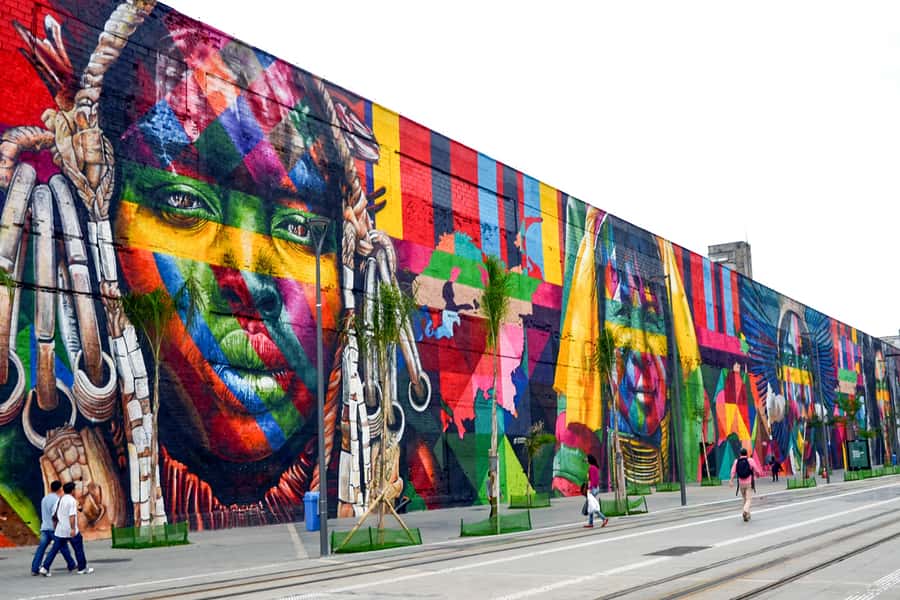
- A mural moment: Etnias (Estúdio Kobra) shows how identity keeps moving forward
Where this walk fits in Rio’s bigger story
Rio can look like pure party mode from a distance. But the city’s pulse is also history, forced migration, survival, and creativity. This walk takes you through the downtown area where African descendants built community, music, and spiritual life after centuries of enslavement.
You start near Praça Mauá, with the MAR Museum area as your anchor point. From there, you move through important landmarks linked to arrival, settlement, and cultural formation in Rio. The tone matters: the guide doesn’t treat slavery as a distant academic topic. Instead, the tour focuses on what people endured and how that endurance turned into lasting cultural legacies.
What makes the experience especially useful is the mix of physical places and cultural concepts. You’re not only told what happened at the Valongo Warf, a UNESCO World Heritage Site connected to the transatlantic slave trade. You also learn why places like Pedra do Sal still matter, because samba and Afro-Brazilian religious traditions didn’t just survive. They became the city’s voice.
There’s also a practical upside for first-time visitors. Downtown Rio is where you can easily get lost in the scenery. This tour gives you a line to follow, plus enough context to make the streets feel meaningful instead of random.
You can also read our reviews of more walking tours in Rio De Janeiro



Valongo Wharf and Praça Mauá: the UNESCO stop that changes how you see Rio
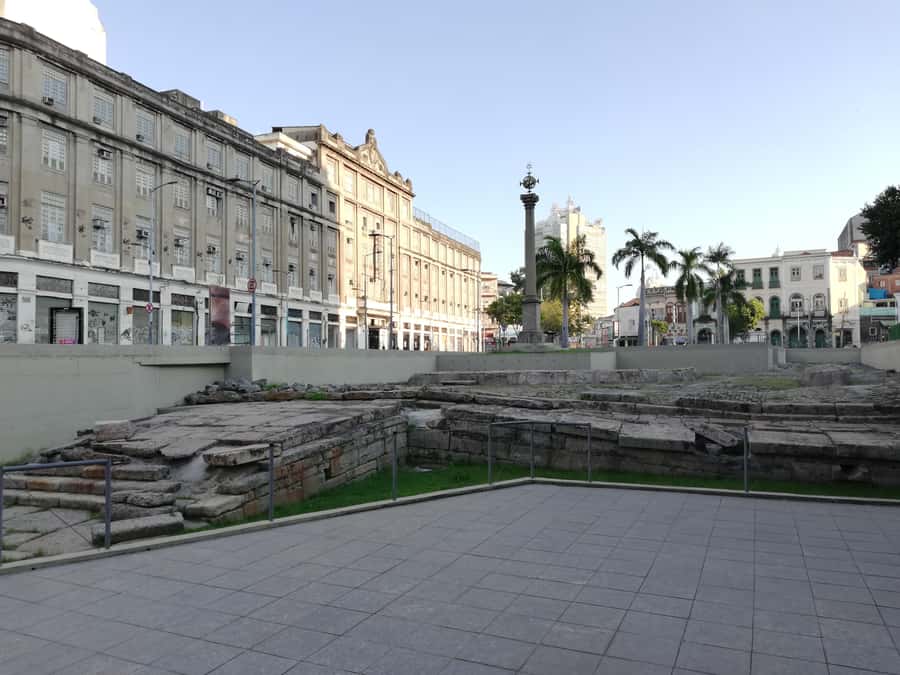
If you do only one heritage stop in Rio, make it this one. The walk includes a visit to the Valongo Warf UNESCO World Heritage Site, tied to the memory of the transatlantic slave trade. Even if you’ve read general history before, this location forces you to picture scale: the arrival of people brought across the ocean, then processed through the slave system that operated for centuries.
The guide also explains the Portuguese role in human trafficking over an extended period. That’s not an abstract claim in this tour. It’s paired with what you can observe in the surrounding downtown geography and with the stories of where arrivals were directed after landing.
Why this matters for you: when you later see Rio’s waterfront, museums, and historic neighborhoods, you won’t just see “old buildings.” You’ll see a map of how power worked, where commerce happened, and where Black communities had to create life under brutal conditions.
The tour also spends time around key downtown areas, including Praça Mauá and Largo São Francisco da Prainha. These stops give you a “street-level” understanding of where heritage sits in plain sight. And yes, you’ll get time to look around and notice details, not just pass through.
One more thing I appreciate: the tour is guided by an expert of African descent from Rio, and named guides like Kelly are specifically highlighted in the tour’s experiences. That matters because cultural history can sound like facts on a page, unless someone brings lived context to the telling.
Saúde to the downtown streets: a guided route that keeps you oriented
The walk includes brief “getting there” movement between areas. The tour lists two starting options, so you’re not stuck guessing where to begin: one option is at the Museu de Arte do area on R. Pedro Ernesto, and another starting point is in Saúde with a short guided walk.
In all cases, the meeting point is under the trees in front of the MAR Museum (Rio Art Museum), Praça Mauá. That’s helpful if you’re coming from other neighborhoods or want an easy landmark to find.
A practical tip: downtown Rio can be confusing under stress, especially when the streets curve and signs change. A guided route is a time-saver because it prevents the “walk in circles” problem. You don’t need to study a map as hard, and you can focus on what’s being said.
Also, the tour is only 150 minutes. That’s a workable time window for a first heritage walk without turning your day into a full-day slog. You’ll feel the pacing is designed to be tour-realistic: enough stops to absorb meaning, not so many you’re sprinting to keep up.
Pedra do Sal: samba’s origins and why the neighborhood still carries them
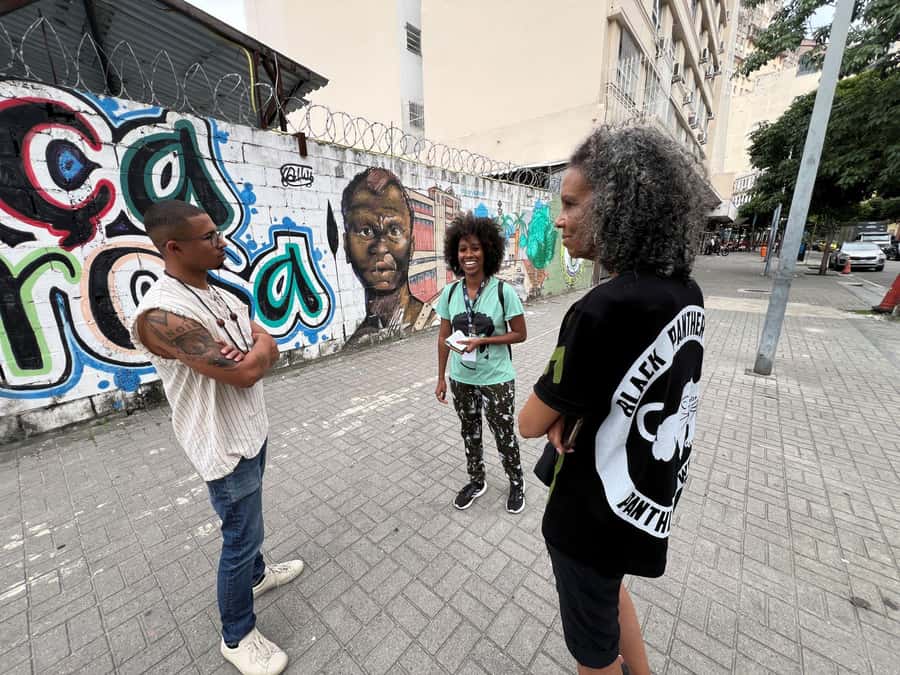
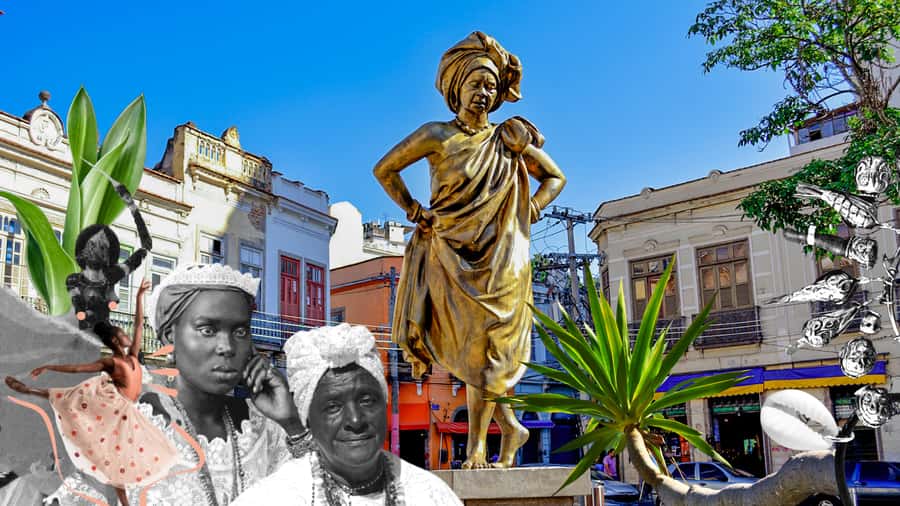
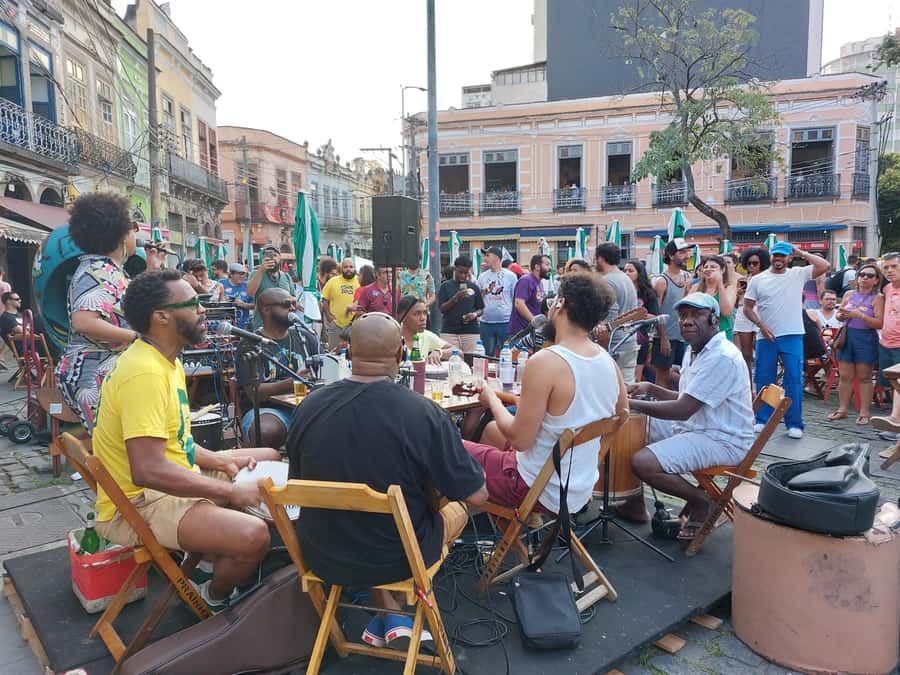
The heart of the tour’s cultural energy is Pedra do Sal. This area is described as the birthplace of samba, with musicians who would meet to sing and dance there. The tour frames Pedra do Sal as the center of Little Africa, where early Carnival bloco parties and parades took shape.
Here’s the key value for you: samba isn’t treated as a random entertainment tradition. You learn how it grew from community spaces, and how social life and music braided together in the face of oppression. That turns a “samba story” into a human story.
Pedra do Sal is also where the tour adds a food moment in the flow. Food isn’t listed as fully included, so plan on buying your own if you want a snack or meal. But even if you don’t eat on the spot, the stop is worth it for the context and atmosphere.
You’ll also connect the area to present-day tradition. The tour notes that rodas de sambas continue weekly, which means the neighborhood’s cultural rhythm isn’t frozen in the past. If your dates line up, you’ll get extra value by seeking out one of those gatherings after your walk.
When you leave Pedra do Sal, you’ll likely look at street corners and music in Rio differently. Samba becomes less of a performance you watch and more of a social practice you understand.
Afro-Brazilian religions: candomblé, umbanda, and the syncretism story
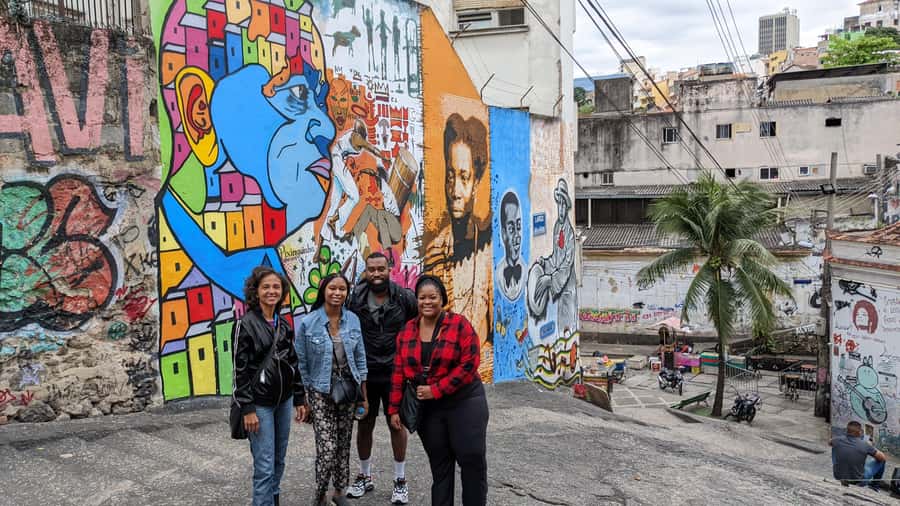
A big part of this walk is spiritual and cultural education. You learn about the origins of candomblé and umbanda, and you also learn how religious syncretism worked with Christian religions.
This is where the tour can feel especially powerful, because it addresses something people often treat like a “mystery.” Instead, you get language and structure for what you’re seeing: how different traditions interacted, how communities preserved identity, and how beliefs traveled and transformed under pressure.
The tour also covers ancestral gods and goddesses of nature, along with the legacy of orishas deities, nkisis, and voduns. Those aren’t random names dropped for decoration. The guide connects them to how Afro-Brazilian communities maintained meaning, memory, and moral structure through everyday life.
Why this section helps you while traveling: Rio is full of religious imagery, festivals, and spiritual references. If you have even a basic framework, you can stop treating it as visual noise. You start recognizing patterns: which traditions influence what you see, and why certain symbols are repeated.
The tour is guided in multiple languages, including English and Spanish, and Portuguese as well. So if you’re comfortable in one of those, you’ll be able to follow the ideas without losing nuance.
You can also read our reviews of more historical tours in Rio De Janeiro




Etnias mural and downtown landmarks: identity in public space
The route includes stops that show how modern Rio communicates identity through art and memory. One named stop is Etnias (Mural de Graffiti) from Estúdio Kobra. You get a moment to see how symbolism and representation live on walls, not just in museums.
The walk also includes Largo São Francisco da Prainha. This matters because it links the “history of the place” with the “daily reality of the place.” Downtown landmarks can be either intimidating or irrelevant if you don’t have context. With a guide, they become signposts.
You also visit Cais do Valongo. Think of this as a direct “you are here” connection to the UNESCO theme. It’s a way to anchor the story in physical geography, not only in spoken narrative.
If you like photography, this part helps because you’re capturing more than faces and buildings. You’re capturing context: art that reflects identity and places that reflect memory.
Practical logistics: meeting points, timing, and what to pack
This experience runs about 150 minutes. That’s long enough to make the story stick, but short enough to fit around the rest of your Rio plans.
You’ll want to be ready for outdoor conditions. The tour takes place rain or shine. Pack for that, not for wishful weather. The essentials listed are simple and smart:
- Reusable water bottle
- Comfortable clothes
- Hat
- Rain gear
Also bring your own travel insurance details if you use a policy you want to reference during travel. The guide notes it isn’t mandatory, but it’s definitely recommended so you’re prepared for outdoors situations.
The tour is wheelchair accessible, and you can bring an assistance dog. Pets aren’t allowed.
Language coverage is a plus. The guide provides English, Spanish, and Portuguese, so language isn’t an obstacle for most visitors.
One more logistical note for your day planning: transfers aren’t included, and the tour includes walking. If you’re trying to line this up with other activities, treat it like a real walking block, not a quick stroll.
Price and value: what you’re really paying for
At $64 per person for about 150 minutes, this tour sits in the “serious guided value” category rather than a quick add-on. Here’s why it feels fair.
You’re paying for more than sightseeing. The tour includes:
- A guided walking tour focused on Afro-Brazilian culture and Black history
- A visit to the Valongo Warf UNESCO World Heritage Site
- Explanations of samba origins
- Cultural learning around the legacy of orishas, nkisis, voduns, and candomblé
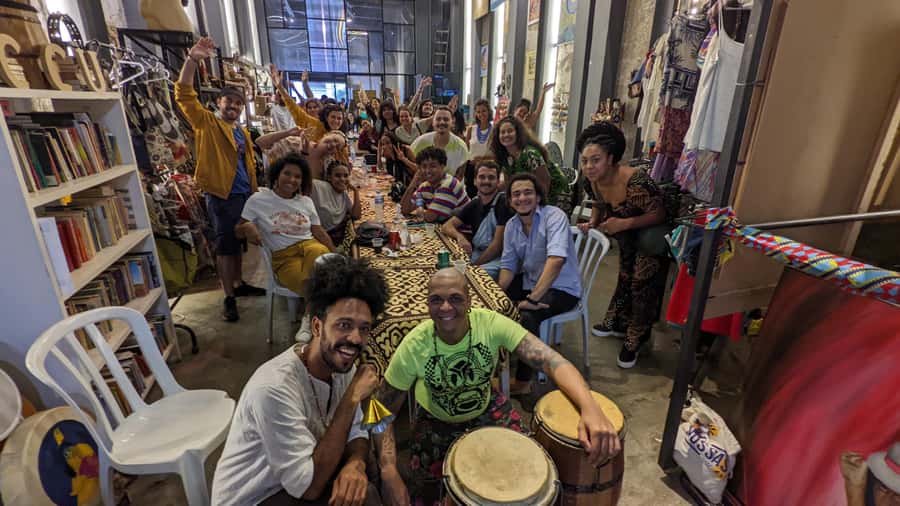
- Tips on local programming: music, art, museums, restaurants, and the local scene
That matters because you’re buying interpretation. In places tied to suffering and survival, interpretation is the difference between “I saw a location” and “I understand what I’m seeing.”
The guide’s background is also a big part of the value. Kelly is specifically named, and Jaisé is also highlighted as an excellent guide in the tour’s experience history. When the storytelling comes from someone who carries the culture personally, you get fewer generic facts and more grounded explanations.
Who should book this walk
This is a strong fit if:
- You want Rio beyond beaches and postcards
- You care about Black history, diaspora culture, and how it shaped modern Brazil
- You want cultural context for samba and Afro-Brazilian religions
- You prefer a guided route that makes downtown Rio easier to understand
You might choose another option if:
- You’re looking for a purely lighthearted, nightlife-style experience
- Rain-shine walking is a problem for you and you’d rather avoid it
If you’re visiting for the first time, this walk is also a great “context builder.” It doesn’t replace museums. It makes them easier to read later.
Should you book this Rio walk?
Yes, if your goal is to understand Rio’s African roots in a way that feels grounded and human. The combination of UNESCO at Valongo Warf plus the cultural anchor of Pedra do Sal, then the spiritual context of candomblé and umbanda, gives you a full picture in a short time.
Book it when you want meaning, not just motion. It’s also a smart choice if you’ll be spending the rest of your trip eating, listening to music, and visiting other historic spots. This walk helps all of that connect.
FAQ
Where is the meeting point for the tour?
Meet under the trees in front of the MAR Museum (Rio Art Museum) at Praça Mauá.
How long is the walk?
The tour duration is 150 minutes.
What languages are available for the guide?
The guide is available in English, Spanish, and Portuguese.
Is the tour held rain or shine?
Yes. The tour takes place rain or shine.
What should I bring with me?
Bring a reusable water bottle, comfortable clothes, a hat, and rain gear.
Is there an entrance fee included for museums?
Entrance to the Museum of Tomorrow and Rio Art Museum is not included.
Is food included?
Food is not listed as included. The route includes a stop connected to regional food, so plan on buying your own if you want to eat.
Is the tour wheelchair accessible?
Yes, the tour is wheelchair accessible.
Are pets allowed?
Pets are not allowed. Assistance dogs are allowed.
Can I cancel and get a full refund?
You can cancel up to 24 hours in advance for a full refund.