REVIEW · RIO DE JANEIRO
Surf lessons with local instructors in Copacabana/ipanema!
Book on GetYourGuide →Operated by Rio tours & activities · Bookable on GetYourGuide
One hour of surf feels like therapy. In Copacabana and Ipanema, you get local instructor coaching and a focused plan that starts on the sand and ends with you taking on waves in the best conditions they can find. What I like most is how the lesson stays practical (you learn what to do, not just watch), and how you’re taught to handle the sea safely, including what to do once you’re outside the break. The main thing to consider is that there’s an extra on-site payment of 200 reais per person for the teacher/equipment, so the bargain price online won’t be your full budget.
Before you even touch a board, you start with stretching and mind-body prep so you’re not stiff or panicky on the water. Then you move into the first steps: learning how to get positioned, how to strike for your first stand-up, and how to fall without turning it into a big deal. After that, the group goes together out toward the water where the sets start to matter, and the instructors put you on the waves with guidance on both timing and safety. This is a 1-hour surf lesson day that blends learning and fun, not “one demo and done.”
You can usually join as a group or do it privately, and the host can communicate in English, Portuguese, or Spanish. If you want extra memories, there’s also an option for photos and videos from class for an extra payment. Bring cash, biodegradable sunscreen, and a change of clothes, because Rio sun plus wet gear is not a combo you want to improvise.
In This Review
- Key things about this Copacabana/Ipanema surf lesson
- Why Copacabana and Ipanema work so well for first-time surfing
- The flow of your day: from sand drills to waves beyond the break
- 1) Stretching, body prep, and the first mental checklist
- 2) Learn the first steps: position, scanning, and getting up
- 3) Sea safety: inside the water versus outside the break
- 4) Heading out together, then riding on the best waves they can find
- 5) Options: group lesson or private session
- Equipment and instruction: why you should care about the details
- The on-site teacher payment you should budget
- What it feels like when you finally stand up (and why you shouldn’t fear falling)
- Price and value in Rio: what the lesson is really buying you
- What to bring to Copacabana/Ipanema so you’re not scrambling
- Who this surf lesson suits best (and who should skip it)
- The one thing that can make or break your session: connecting with the teacher
- Before you book: should you give this Rio surf lesson a shot?
- FAQ
- How long is the surf lesson?
- Where does the surfing take place?
- Is there equipment included?
- Do I pay extra beyond the listed price?
- Can I do this lesson in a group or privately?
- What languages are available?
- Should I message the instructor before the lesson?
- Are photos and videos included?
- What should I bring?
- Who is the activity not suitable for?
Key things about this Copacabana/Ipanema surf lesson
- Local-led coaching right where people actually surf in Rio de Janeiro
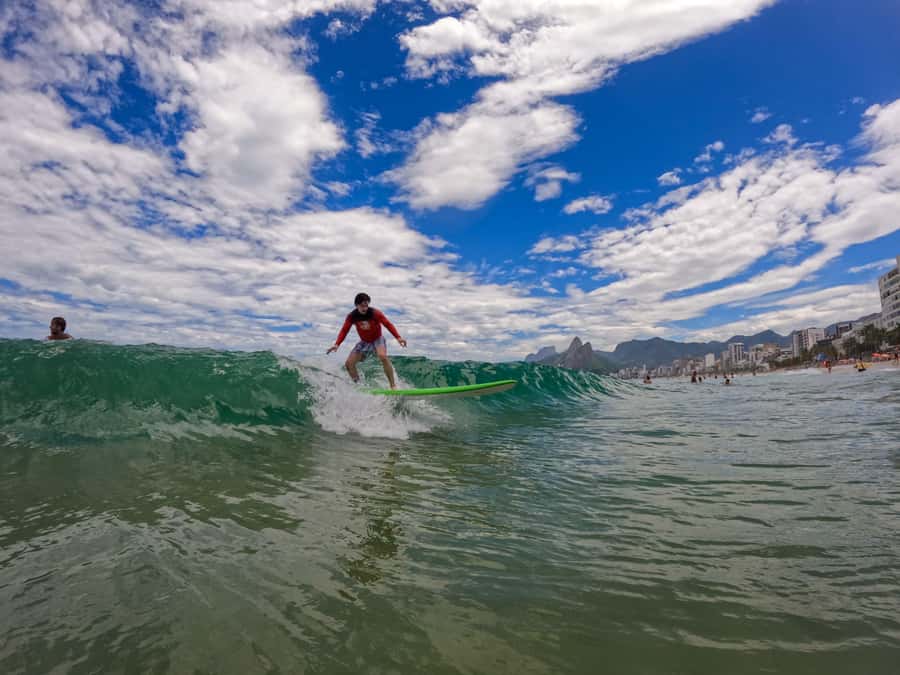
- A full learning sequence from stretching and pop-ups to getting out and back safely
- Practical safety habits for staying aware inside the sea and outside the break
- Small decisions that matter like timing, where you position, and how you return safely
- Budget for the 200 reais teacher payment at the meeting point
- Optional photo and video add-ons if you want extra proof you were there
Why Copacabana and Ipanema work so well for first-time surfing
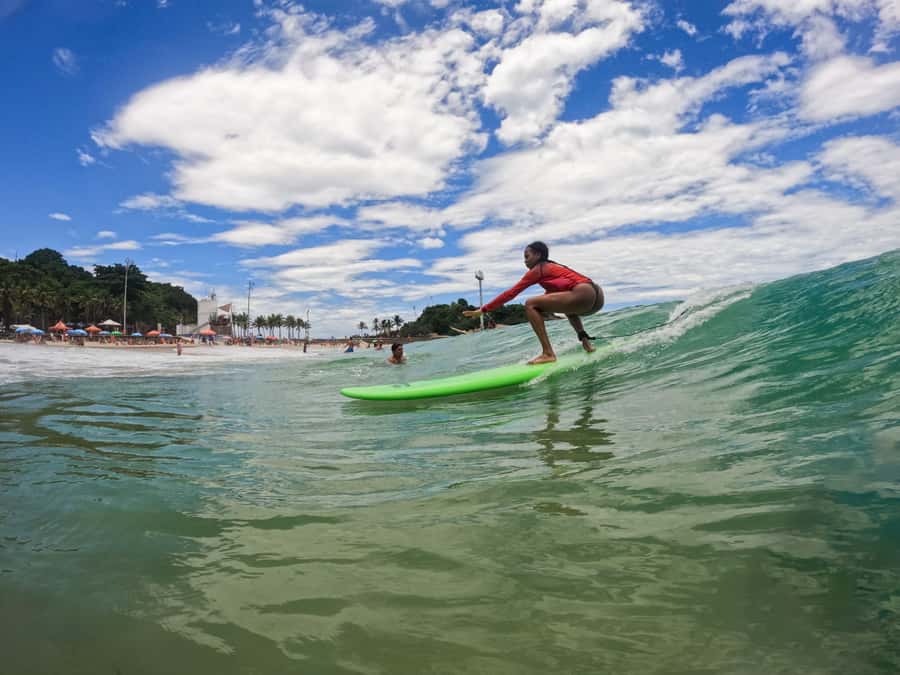
Copacabana and Ipanema are popular for a reason: the city funnels beginners and improvers into the same stretches of coast again and again. That matters, because a good first lesson isn’t just about catching any wave. It’s about learning on conditions that your instructors can manage, explain, and teach into.
In this lesson, you don’t just stay “close to shore forever.” You go together to the outside to reach the best waves, with safety coaching along the way. That’s a big deal for you if you’re new, because the experience can swing from frustrating to fun depending on whether you’re stuck in the wrong zone.
You’ll also notice how the instructors focus on the sea as a system: currents, where waves break, what happens between sets, and how to approach the water without feeling like you’re guessing. That kind of local logic is what makes the session feel real instead of theatrical.
You can also read our reviews of more tours and experiences in Rio De Janeiro



The flow of your day: from sand drills to waves beyond the break
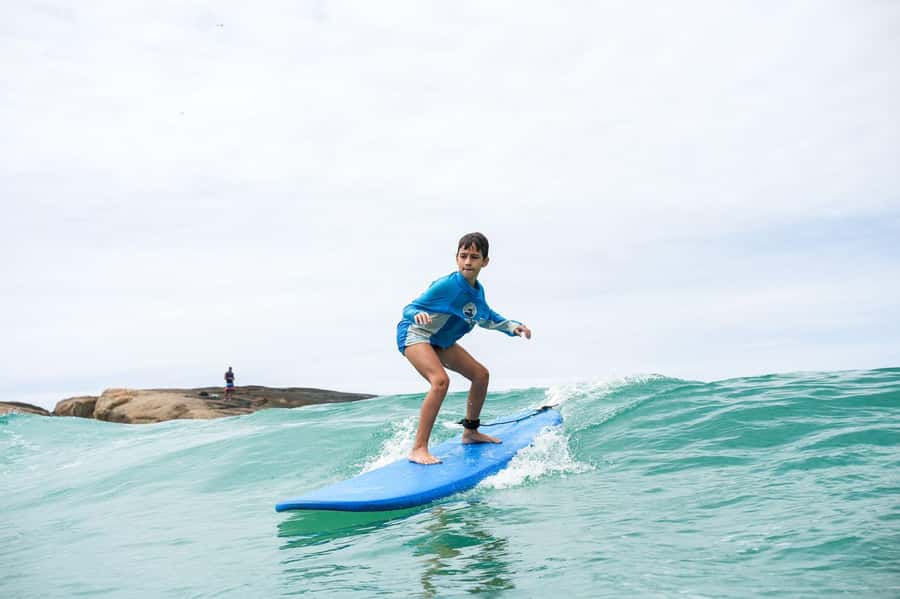
This is a one-day experience built around a clear progression. You’ll start with the basics, then move to the part that makes surfing feel like surfing.
1) Stretching, body prep, and the first mental checklist
You’ll begin with stretching and body/mind preparation. This is where you learn how to get ready for the board—how to move so your body doesn’t fight you, and how to calm the brain when you’re about to get in the water.
Even if you’re athletic, surfing asks for different timing than land sports. The prep helps you avoid that moment where you’re on the board but your feet and balance are doing completely different things.
2) Learn the first steps: position, scanning, and getting up
After the warm-up, you move into the core beginner skills:
- how to strap into the idea of riding instead of just holding on
- how to get up on the surfboard
- how to handle your first falls without panicking
The “getting up” part is the big one. In a good lesson, you practice the steps until your body understands the sequence. That means you’re not relying on luck, and you’re not spending the whole time waiting for one magical wave.
3) Sea safety: inside the water versus outside the break
One thing that makes this lesson feel complete is that it doesn’t treat safety like a lecture. You get coached on what to do inside the sea and what changes when you head outside to the break.
You’ll learn:
- how to take care while you’re in the water
- how to go outside to the breaking zone
- how to return in safety after you’ve surfed the waves
If you’ve ever tried a beach activity that was all action and no boundaries, this is the opposite. The instructors make the ocean feel less chaotic by giving you a routine.






4) Heading out together, then riding on the best waves they can find
After you’re comfortable with the fundamentals, the group goes out together. The idea is simple: you want the better set-up where waves are more likely to be rideable.
Once you’re out there, the instructors place you on the waves and teach you how to come back safely. That gives you two advantages:
1) you spend more time trying to ride
2) you don’t waste energy worrying about where you’re supposed to go next
5) Options: group lesson or private session
The lesson can be done in groups or privately. If you want a faster feedback loop—especially if you get stuck on popping up—private lessons can feel more efficient. If you prefer company and a shared learning pace, groups can be motivating.
Equipment and instruction: why you should care about the details
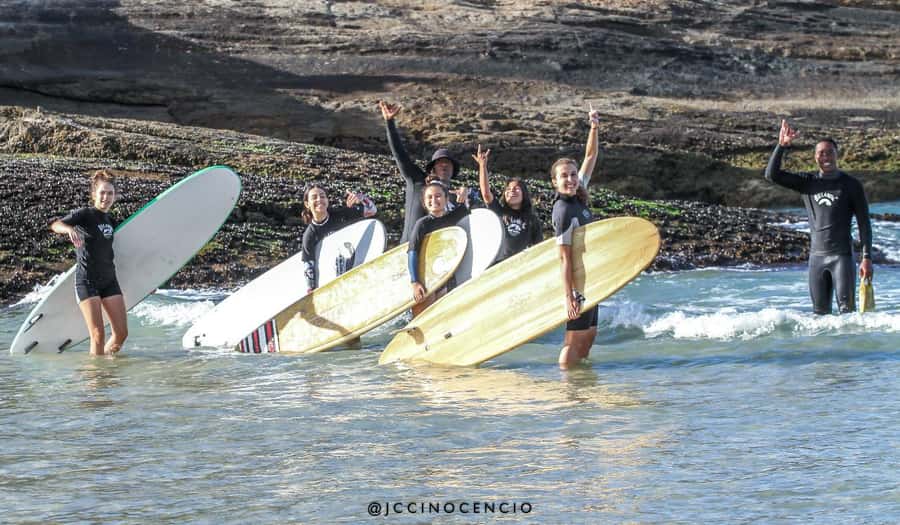
The good news: you don’t have to bring anything complicated. The lesson provides the surfboard and leash, plus the surf setup you need to learn without hunting for gear in Rio.
You also get:
- a stand-on-the-sand setup to store your bags
- instructors of surf
- lots of motivation during the class
That might sound small, but it’s the difference between spending the trip scrambling for gear versus focusing on learning. The leash matters too. For beginners, it’s one of the tools that helps you understand the board’s behavior and stay safer as you fall and reset.
The on-site teacher payment you should budget
Here’s the part you don’t want to misunderstand. You should expect to pay the teacher 200 reais per person at the meeting point before or as part of the lesson. Payment can be in cash in Reais or by card, and there may be an extra 5% if you pay by card.
So when you’re deciding if this is worth it, treat the listed $10 as your booking cost, and treat the 200 reais as the real lesson payment. That’s how you’ll avoid getting surprised on the beach.
What it feels like when you finally stand up (and why you shouldn’t fear falling)
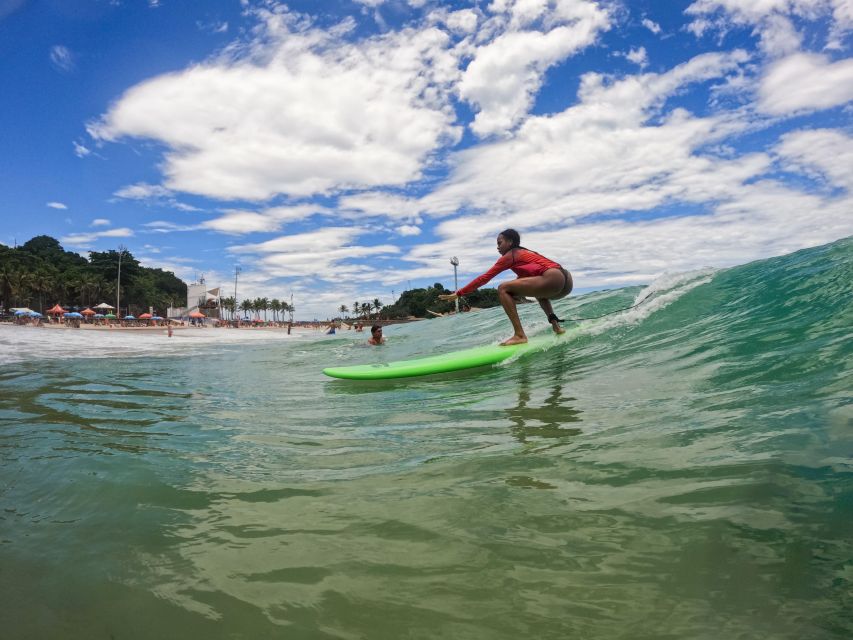
Surf lessons are only scary if you let them be. In this experience, the instructors coach you through the repeated loop: try, wobble, fall, reset, try again.
You’ll learn to see falling as part of the practice, not a failure. The instruction includes getting up and also the handling of what happens when you come off the board. That means you can stay playful even when it doesn’t go perfectly on the first attempts.
And since the session is designed around fun as much as learning, you’re likely to leave with that tired-but-smiling feeling: legs sore, hair salty, and your brain already running through the next thing you want to improve.
If you’re the type who gets frustrated easily, the best trick is to aim for one win during the hour. Maybe your win is standing for two breaths. Maybe it’s reading where to position before a wave hits. The lesson’s structure helps, because it gives you progress steps instead of just throwing you into chaos.
Price and value in Rio: what the lesson is really buying you
Let’s talk money clearly, because surfing is one of those activities where confusion is common.
You’re seeing a low price point (listed as $10 per person), but there’s an additional payment of 200 reais per person that you pay at the meeting point for the lesson/equipment/instructor. If you choose card, there may be a 5% add-on.
So is it good value?
It can be, if you want:
- real coaching from locals who teach beginners how to read the ocean
- a lesson that covers the full arc (not just board time)
- guidance on safety outside the break, and how to return
- the provided surf gear (board, leash, and related basics)
If you’d rather self-teach or you already know how to paddle out confidently, you might feel like you’re paying for coaching you don’t need. But if you’re new—or you’ve tried before and want a better structure—this lesson is built around giving you that structure in a short, concentrated burst.
Also worth noting: photos and videos are available if you want them, but they cost extra. If you like documenting experiences, factor that in. If you don’t, you can skip it and still get the learning.
What to bring to Copacabana/Ipanema so you’re not scrambling
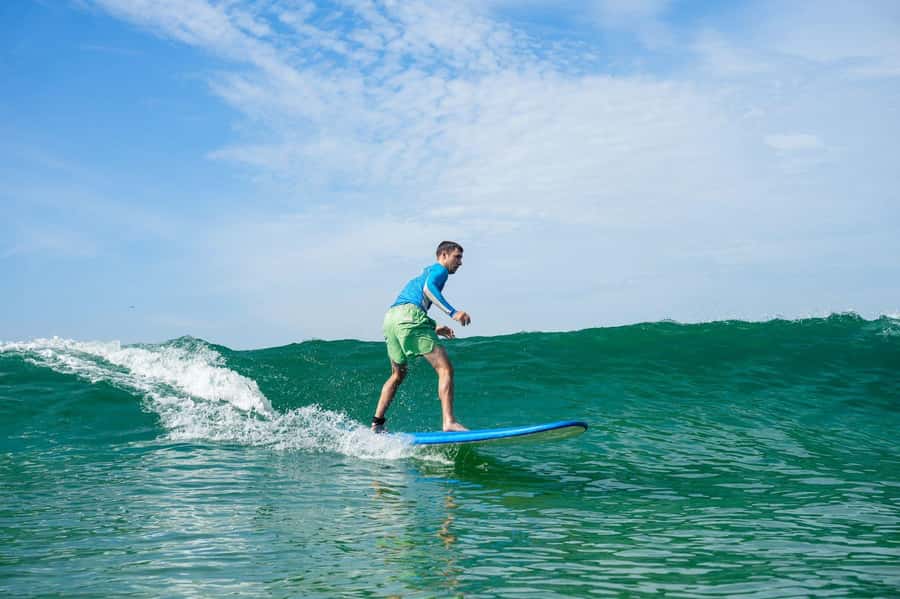
Bring a simple setup. You don’t want to waste energy before you’re on the board.
You should pack:
- change of clothes
- biodegradable sunscreen
- beachwear
- cash
The cash piece matters because of the 200 reais on-site payment. Even if you plan to pay by card, having cash can reduce stress if card readers or approvals become a problem.
Sunscreen is also practical advice, not just a beach suggestion. You’re outside, you’re learning, and you’ll likely be in and out of water multiple times.
Who this surf lesson suits best (and who should skip it)
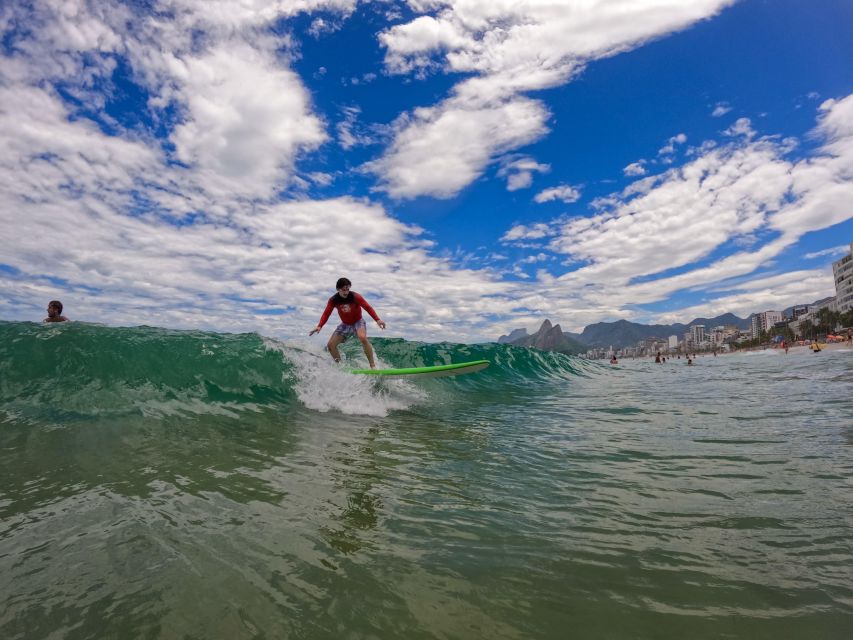
This is best for you if:
- you’re a beginner or early beginner who wants instruction that starts on land
- you want to learn how to handle the sea, not just “catch waves”
- you prefer local coaching in Copacabana/Ipanema with a safety-first approach
- you like group energy or you want the option of private instruction
It’s not suitable for babies under 1 year, based on the information provided.
If you already surf regularly and want a heavy performance session, this may feel more like fundamentals than a high-intensity surf day. But if your goal is to feel confident and safe while learning, it fits the purpose.
The one thing that can make or break your session: connecting with the teacher
The experience includes a key step: you should message the instructor on WhatsApp one day before your class to confirm the time.
That’s important because surf days depend on timing and matching you with the right group and meeting point. If you show up without that confirmation, you risk delays and extra hassle while everyone tries to figure out logistics.
If you do only one prep step, make it this: send the WhatsApp message the day before and arrive at the meeting point ready to start on time.
Before you book: should you give this Rio surf lesson a shot?

I’d book it if you’re aiming for a beginner-friendly surf lesson in Copacabana/Ipanema with actual coaching, not just a board rental. The strongest reasons are the step-by-step learning plan—stretching, getting up, inside/outside sea safety—and the fact that you go out together for the waves where you’ll stand a better chance of riding.
I’d think twice if you hate surprise costs. You should budget the 200 reais per person teacher payment up front, and you should be ready with cash (or accept the possible card fee). And if you don’t like communication, remember that WhatsApp the day before is part of the process.
If you want a short, structured day that turns Rio beach time into a real skill, this lesson is a solid bet.
FAQ
How long is the surf lesson?
It lasts 1 day and includes a 1-hour surf lesson.
Where does the surfing take place?
It focuses on the Copacabana/Ipanema area in Rio de Janeiro, with the class going out to the outside to reach the best waves.
Is there equipment included?
Yes. The experience includes the surfboard and leash, plus other surf equipment basics needed for the class.
Do I pay extra beyond the listed price?
Yes. You should pay the teacher 200 reais per person for the lesson (equipment and instructor) at the meeting point. Card may include an additional 5%.
Can I do this lesson in a group or privately?
Yes. Lessons are available in groups or private.
What languages are available?
The host or greeter can communicate in English, Portuguese, and Spanish.
Should I message the instructor before the lesson?
Yes. You’re asked to send a WhatsApp message to the teacher one day before the date of the lesson to confirm the time.
Are photos and videos included?
Photos and videos are available as an extra payment if you want them.
What should I bring?
Bring a change of clothes, biodegradable sunscreen, beachwear, and cash.
Who is the activity not suitable for?
It is not suitable for babies under 1 year.