REVIEW · RIO DE JANEIRO
3-Hour Urban Arts Walking Tour
Book on GetYourGuide →Operated by LOCAL55 TRAVEL · Bookable on GetYourGuide
Rio’s walls talk back. This 3-hour urban arts walking tour pairs an art-focused guide with a tram ride so you can read the city’s street-art language, from big mural moments to smaller painted details. I like the way you’re guided through the why behind the images, not just what you’re seeing.
What I really like most is the mural scale. You’ll get a prime look at the world’s largest street mural on Olimpic Boulevard, and you’ll also see how Rio’s downtown streets can feel like a meeting point for old and new ideas. One thing to consider: you’ll be outside for a while, so on hot days you may want to slow down, sip water often, and be ready for a quicker walking pace with fewer shady pauses.
In This Review
- Key things I’d circle on your map
- Street art with a guide, not a scavenger hunt
- Cinelândia meetup at 13:30: where the story starts
- The VLT tram ride: saving steps and linking eras
- Olimpic Boulevard and the world’s largest street mural
- Walking the art street logic: more than murals
- Finish at the Museum of Tomorrow: easy exit, less stress
- Price and what makes it feel worth $45
- What the guides seem to do best
- Timing, heat, and comfort tips for a 3-hour walk
- Who should book this tour?
- Should you book the 3-hour Rio Urban Arts Walking Tour?
- FAQ
- Where is the meeting point?
- How long is the tour, and what time does it start?
- What languages are available?
- Is food or drinks included?
- What should I bring?
- Can I get a refund if my plans change?
Key things I’d circle on your map
- Meet downtown, start with context: You begin in Cinelândia in front of the Municipal Theatre, then get a quick briefing.
- Ride Rio’s Olympic-era tram: You’ll use the VLT (tram) and get off at the Olympic Boulevard stop.
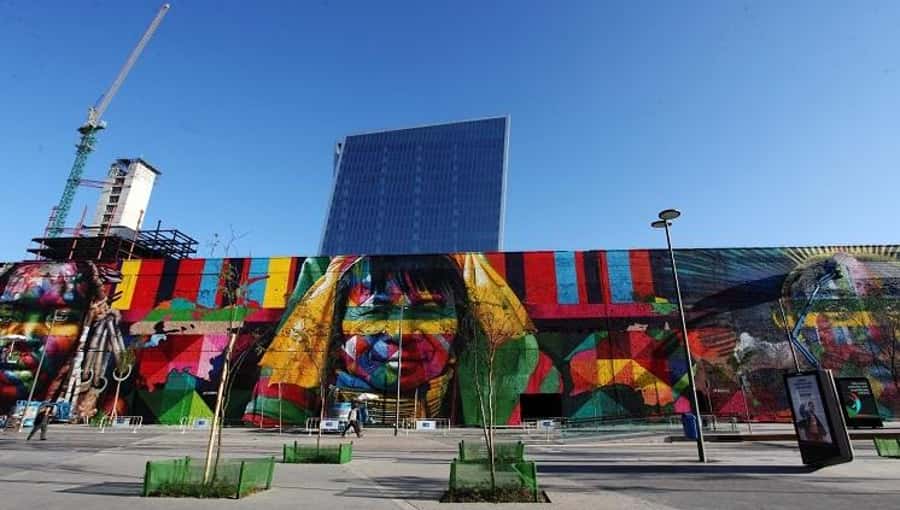
- World’s largest street mural stop: Olimpic Boulevard is the big visual payoff.
- Mural names you can remember: You’ll hear about works such as The Ethnicities and other painted titles.
- Urban art beyond graffiti: Expect related visual culture like paintings and other street-adjacent artwork.
- Finish at a major landmark: You end at the Museum of Tomorrow with help to get back.
Street art with a guide, not a scavenger hunt
This tour works when you want more than photos. You’re walking with an urban arts specialist who explains styles, themes, and the cultural signals that street art carries in Rio—especially in neighborhoods that don’t get much time on typical sightseeing routes.
You’re also learning how murals connect to both Brazilian life and ideas coming from beyond Brazil. That matters, because a lot of street art here isn’t just decoration. It’s commentary. It’s identity. It’s history meeting today, and your guide helps you spot the threads while you move.
Two parts really set the tone. First, the guide approach: the best moments come when you understand the background behind a painted title or mural section. Second, the size of what you’ll see at Olympic Boulevard. One mural can change how you read an entire city.
You can also read our reviews of more walking tours in Rio De Janeiro



Cinelândia meetup at 13:30: where the story starts
You’ll meet at 13:30 in front of the Municipal Theatre of Rio de Janeiro, at Praça Floriano, S/N – Centro. It’s a practical start point because it’s in downtown Rio, so you’re not guessing where to begin. After you meet, there’s a short briefing so you know where you’re headed and what to look for.
Then you head toward the nearest VLT station. This is one reason the tour feels focused: you’re not walking the whole way under your own navigation. You get street-art time, but you also get transportation that moves the group efficiently.
One practical note: the tour isn’t built around long café breaks. The rhythm is guided and walking-forward, so if you’re someone who hates feeling rushed, bring a calm attitude and let the guide set the tempo.
The VLT tram ride: saving steps and linking eras
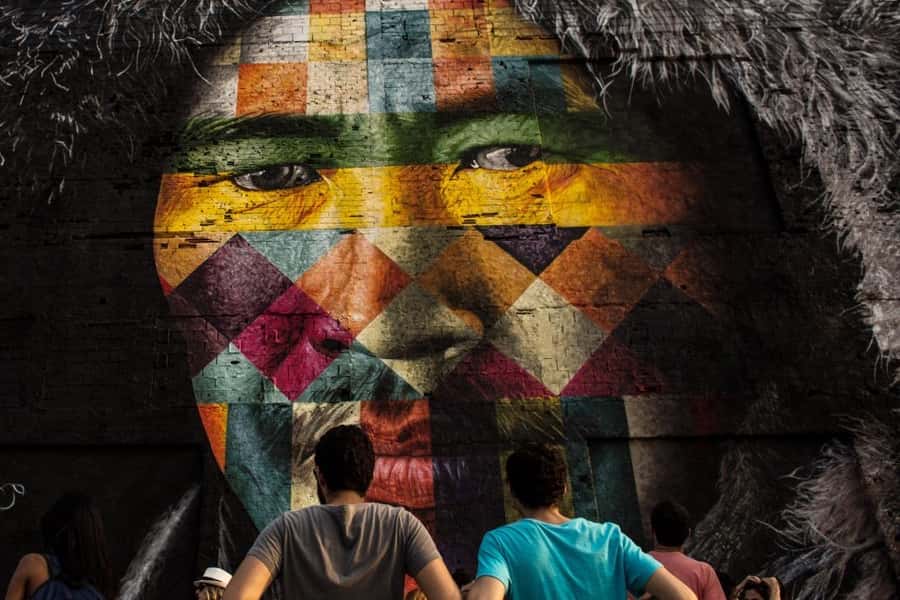
A big practical win here is that the itinerary includes a tram ride on the VLT. It was inaugurated for the 2016 Olympic Games, and you’ll use it to get to Olympic Boulevard.
Why that matters: Rio’s downtown areas can look different block to block. Taking the tram helps you move across that “before vs. after” feeling without turning it into a long transit slog. It also means you’ll arrive with energy still intact for the murals, rather than starting the main visuals already tired.
As you ride, you’ll begin noticing street art creeping in around the transit corridor. So even before the main mural stop, you’re training your eyes—learning to spot tags, painted sections, and large-scale works that often tell their own story.
Olimpic Boulevard and the world’s largest street mural
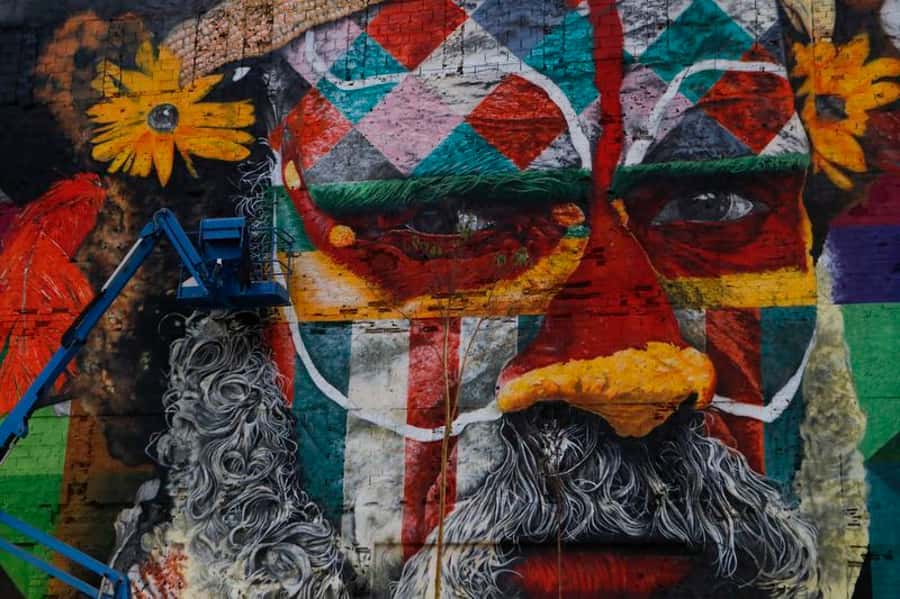
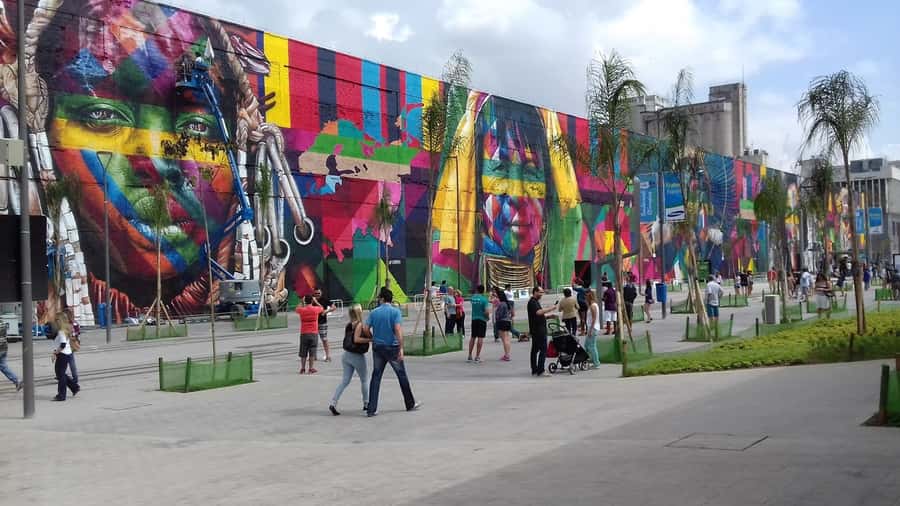
This is the headline moment. You’ll get off at the Olympic Boulevard stop and dive into old and modern Rio through paint and wall-size artwork.
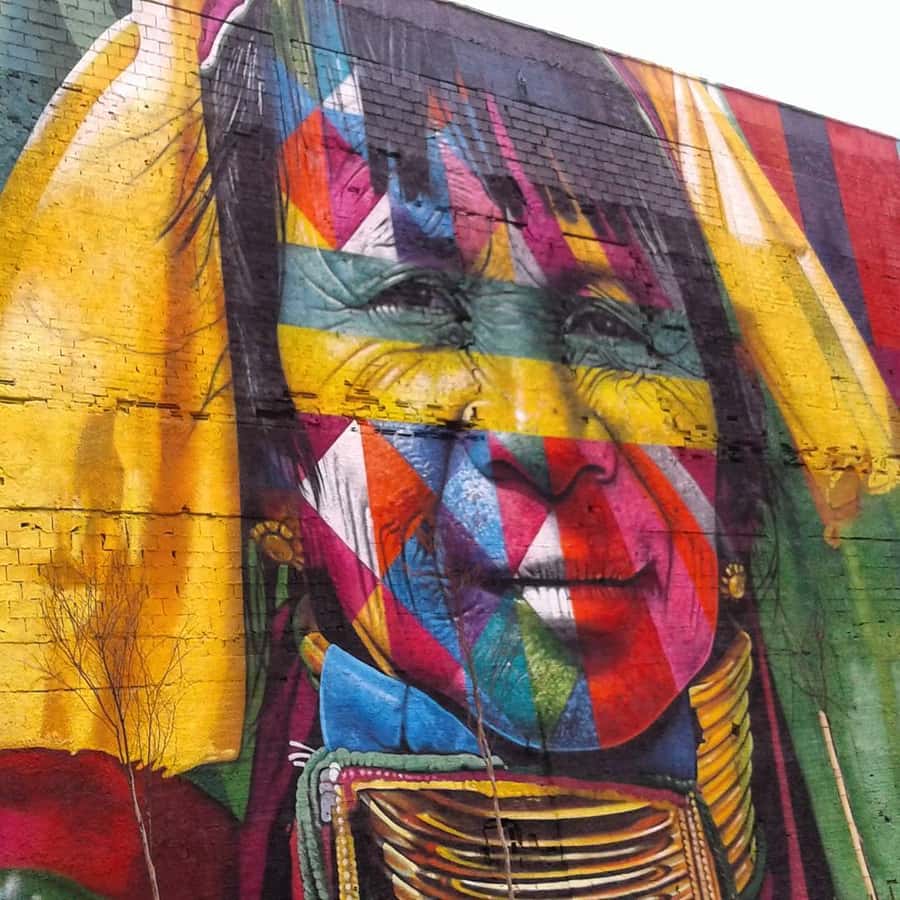
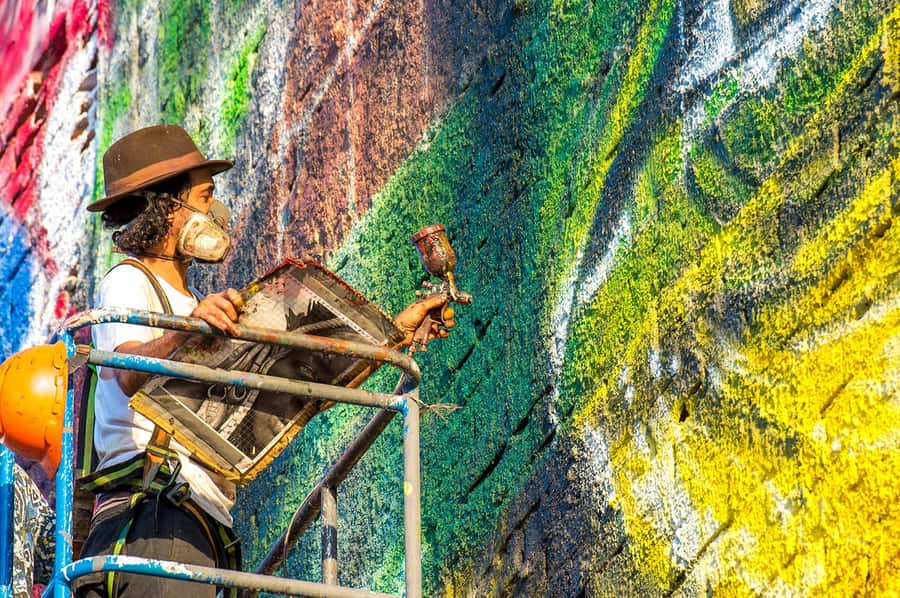
The highlight is the world’s largest street mural, and the scale is the point. When a mural is built that large, details work like a map. You can usually spot faces and symbols at a distance, then come closer for layered meaning. The guide’s job is to help you read what’s going on instead of just staring at color.
You’ll also hear about major mural names such as The Ethnicities. The value of having a guide here is huge: the titles and themes act like subtitles. Without them, you might still enjoy the visuals. With them, you understand why the artist chose these forms, these references, and this message.
Expect a mix of graffiti and larger painted pieces. Some sections are clearly contemporary. Others feel like they’re building on longer-running conversations in Brazilian visual culture. That mix is what makes Olympic Boulevard so useful as a “big screen” for the city’s street-art identity.
Walking the art street logic: more than murals
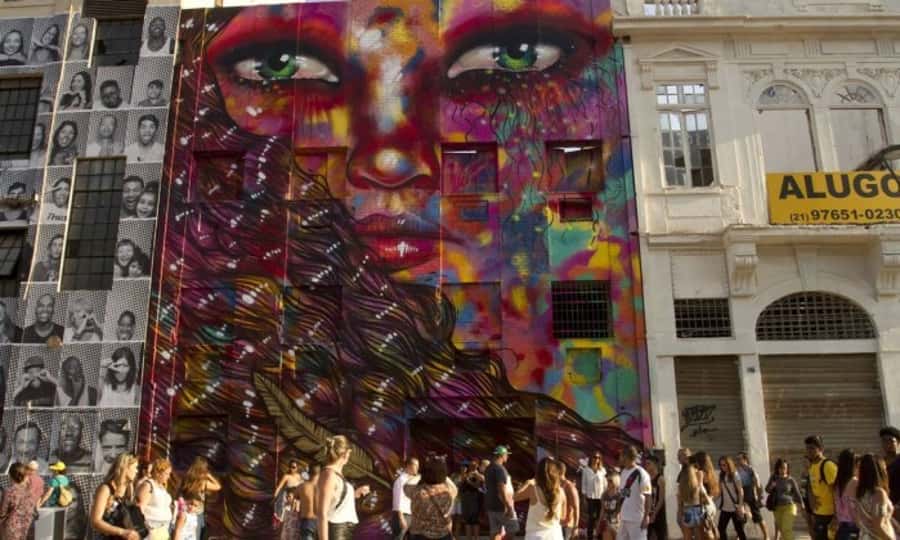
After the big stop, the tour keeps teaching you how to see. You’ll spend time looking at different forms of urban art—graffiti, paintings, and mural segments—while your guide ties them back to culture and current events.
One of the most rewarding parts of a tour like this is learning patterns:
- How street art can signal who belongs, who speaks, and who gets ignored.
- How artists use global references while still rooting the work in local life.
- How certain styles show up more in some neighborhoods than others.
In Rio, that’s not just art theory. It changes how you interpret what’s around you once the tour ends. You start to notice the difference between random tagging and intentional artwork, between quick visuals and pieces built to last.
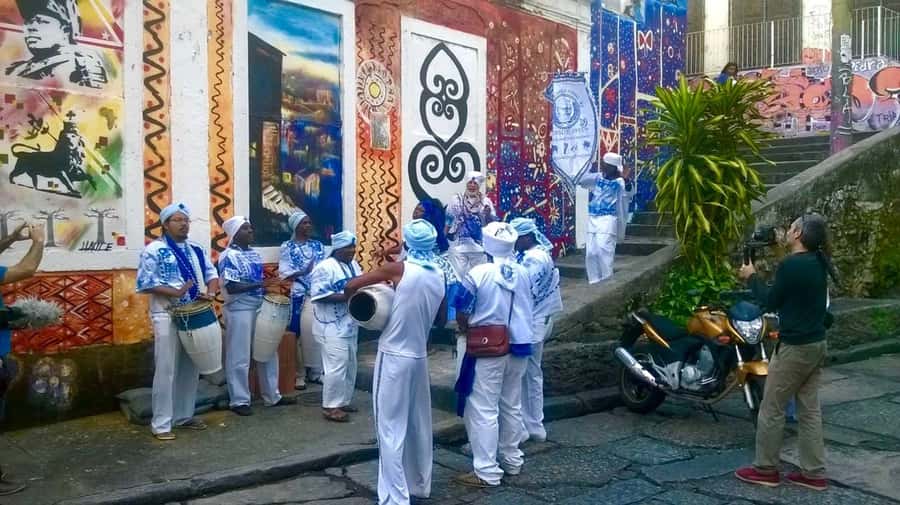
I’d also be ready for related visual stops along the way. One strength of this route is that it doesn’t limit itself to only spray-painted walls. You might spend time next to other art forms or painted displays that are still part of the broader city-art conversation. If you’re expecting a nonstop parade of graffiti, keep expectations flexible and focus on the guide’s explanations.





Finish at the Museum of Tomorrow: easy exit, less stress
The tour wraps up at the Museum of Tomorrow. That’s a solid ending for two reasons. First, it’s a well-known landmark, so you can orient yourself. Second, you’ll be directed on how to get back to your accommodation.
This matters because street-art walking tours can be tough to end unless the operator helps you transition to your next step. Here, the finish location plus the guidance gives you a clean landing.
If you’re continuing the day on your own, I’d suggest planning something that doesn’t require a huge amount of walking right after. You’re outdoors, you’ve been on your feet, and you’ve seen a lot of color. Your brain will want some downtime.
Price and what makes it feel worth $45
At $45 per person, this tour sits in the “you’re paying for a guide, not just access” category. The included items help justify the cost:
- An urban arts specialist tour guide
- Tram tickets
That’s the core value. You’re not just looking at walls—you’re getting context and transportation support so you reach the main mural area efficiently.
Also, the tour is 3 hours, which is a practical length. You get enough time to hit the big points without spending your whole day in one theme. And since food and beverages aren’t included, you can eat before or after on your schedule. That’s often better than being tied to whatever’s convenient for the group.
If you’re trying to do street art in Rio on your own, you’d still pay for transit and you’d probably spend time figuring out what’s worth your attention. Here, you buy the shortcut: the guide helps you prioritize.
What the guides seem to do best
The guide experience is a standout. One name that came up strongly is Edmundo, praised for deep knowledge of both art styles and the background behind the work. What people really enjoyed wasn’t just facts—it was the feeling of connection. In at least some cases, the guide has personal ties to artists, which can turn a mural talk into a story with real stakes.
Even when your favorite part is purely visual, the strongest tours are the ones where you can ask questions and get clear answers. That’s what you should look for in this format: a guide who can explain the why behind titles, symbols, and evolving styles.
If you speak English, Portuguese, or Spanish, you’re in good shape. The guide is listed as available in those languages, so you can expect the explanations to land in your comfort zone.
Timing, heat, and comfort tips for a 3-hour walk
This tour is short, but it’s still a walk. Bring water and wear comfortable clothes. On hot Rio afternoons, being prepared isn’t optional.
Here’s how I’d set yourself up:
- Plan to sip water even if you don’t feel thirsty.
- Wear breathable layers. Street-art photos can pull you into standing still, which makes heat feel worse.
- Keep your phone or camera charged. This is a big visual payoff route.
- Wear shoes that handle sidewalks plus occasional curb transitions.
Also, the walking pace can feel brisk at times. That doesn’t have to ruin the experience—good guides keep the energy high and still stop long enough for meaningful viewing. Just be ready for the reality that this isn’t a slow museum gallery pace.
Finally, double-check your day plan. One person mentioned the tour felt shorter than advertised, and that can happen when groups move faster than expected or when timing gets tight. So keep your next appointment flexible.
Who should book this tour?
Book it if you:
- Want to see Rio street art with real explanations, not just pictures.
- Love murals with scale, especially the big moment at Olimpic Boulevard.
- Like learning how Brazilian culture shows up in art, including references that cross borders.
You might skip it if:
- You need lots of shaded breaks and a super slow pace.
- You want only graffiti walls and nothing else. The route can include other visual art-adjacent stops.
- You have mobility or health limitations. This tour is listed as not suitable for wheelchair users and it’s also not recommended for people with certain health concerns (including heart problems and respiratory issues) or for older age brackets listed by the operator.
Kids are also limited by age, with multiple lower age cutoffs included in the information.
Should you book the 3-hour Rio Urban Arts Walking Tour?
If you’re choosing just one street-art experience in Rio that combines a guide, transit, and a major mural payoff, I’d lean toward booking this. It’s focused. It’s efficient. And the world’s largest street mural stop is the kind of moment that makes a theme tour feel worth doing.
My main caution is simple: treat it like an outdoor art walk in the real world. Bring water, wear comfortable shoes, and plan for some time outside in heat. If you go in expecting to learn how to read the city’s visual language, you’ll likely come away seeing Rio differently.
FAQ
Where is the meeting point?
You meet at 13:30 in front of the Municipal Theatre of Rio de Janeiro, Praça Floriano, S/N – Centro, Rio de Janeiro – RJ, 20031-050, Brazil.
How long is the tour, and what time does it start?
The tour lasts 3 hours and starts at 13:30.
What languages are available?
The live tour guide is available in English, Portuguese, and Spanish.
Is food or drinks included?
No. Foods and beverages are not included, so plan to eat before or after.
What should I bring?
Bring water and comfortable clothes.
Can I get a refund if my plans change?
Yes. Free cancellation is available up to 24 hours in advance for a full refund.