REVIEW · RIO DE JANEIRO
Rio Street Art Tour
Book on Viator →Operated by Guia Wellington/Berimbautour · Bookable on Viator
Street art in Rio has politics on every wall. This 3-hour private tour connects Glória, Cinelândia, and Porto Maravilha using subway and VLT, then turns murals into stories you can actually follow.
I especially love the Wellington-led storytelling that connects what you see on walls to how Rio works culturally and politically. I also love that you’re not stuck on a bus: you get public-transport rides and walk between major sights like Selarón Staircase and the museum area.
One possible drawback: the tour requires good weather, and it mixes walking with short transit hops—so bring comfortable shoes and don’t overpack your day with tight connections.
In This Review
- Rio Street Art Tour: quick hits before you go
- Meeting at the Municipal Theater and stepping into central Rio
- Glória and Boulevard Olimpico: legalized graffiti meets city architecture
- Selarón Staircase: the third most visited stop, explained with real meaning
- Cinelândia: libraries, the main theater, and why civic buildings belong in a graffiti tour
- Olympic Boulevard and the Museum of Tomorrow: modern Rio after street-level art
- Porto Maravilha and the world’s largest graffiti mural
- How the 3 hours really flow: subway, VLT, and an easy walking rhythm
- What you’ll learn: politics, Carnival, architecture, and Afro-Brazilian culture
- Value check: why $68.61 can be a smart buy
- Who this tour is for (and who might want to choose another plan)
- Should you book the Rio Street Art Tour?
- FAQ
- How long is the Rio Street Art Tour?
- What does the tour cost?
- Where do we meet?
- Is this tour private?
- How do you travel between stops during the tour?
- Are admission tickets required for the sights?
- Does the tour depend on weather?
- What is the cancellation policy?
- Can most people participate, or is it very difficult?
Rio Street Art Tour: quick hits before you go
- Glória + Boulevard Olimpico context: start with legalized graffiti in Rio and trace the city’s visual influences
- Selarón Staircase stop: time with a huge, photo-famous landmark explained beyond the postcard
- Cinelândia + main theater and libraries: art and architecture anchored in civic life
- VLT rides between neighborhoods: public transit used as part of the experience, not just logistics
- Museum of Tomorrow area: modern Rio contrast right after the street-level scenes
- Porto Maravilha + the world’s largest graffiti mural: end with the mural scale that changes your perspective
Meeting at the Municipal Theater and stepping into central Rio
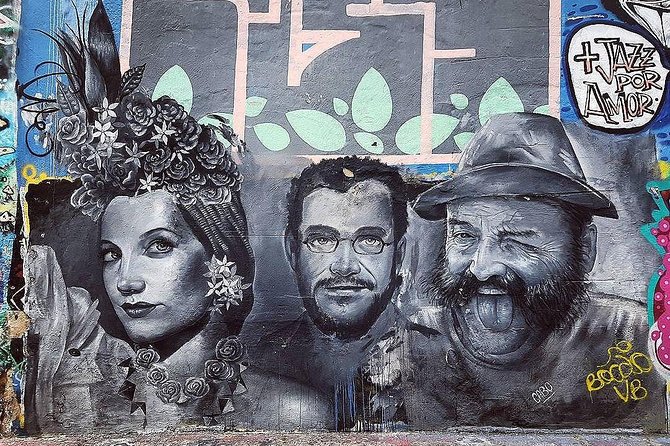
The day starts at the Municipal Theater of Rio de Janeiro, in Praça Floriano (Centro). It’s an easy landmark to find, and it puts you right where Rio’s big public spaces start making sense—streets, transit, and crowds all in one place.
The tour keeps a steady pace. You’ll move between neighborhoods rather than spending all your time in one busy pocket. That matters because street art in Rio isn’t just “pretty walls.” It’s tied to geography, history, and who gets to speak in public.
You can also read our reviews of more tours and experiences in Rio de Janeiro

Glória and Boulevard Olimpico: legalized graffiti meets city architecture
From the meeting point, you’ll take the subway to Glória and begin at Boulevard Olimpico. The opening focus is on some of the first legalized graffiti in Rio—useful because it frames graffiti as more than vandalism or decoration. It’s part of how the city negotiated who could make art in public.
Then you’ll shift into what you might call the architectural “translation” of Rio. You’ll notice European architectural influence as you pass key areas, which helps you understand why street art keeps referencing everything from identity to power. In short: you’re training your eye to see both the murals and what’s around them.
If you like “how did we get here?” stories, this start does the job. It sets up the later murals so they don’t feel random. They feel like chapters.
Selarón Staircase: the third most visited stop, explained with real meaning
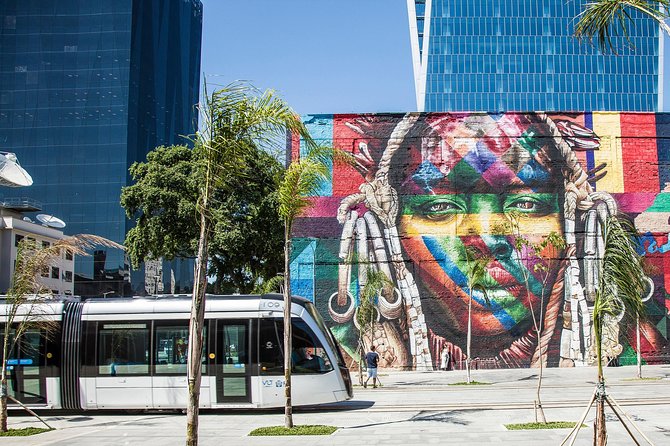
After Glória, the route brings you to Escadaria Selarón. The staircase is listed as the third most visited tourist spot in the city—so yes, you’ll recognize it fast. But the value here is what you learn while you’re standing there.
You’re not just looking at colorful tiles. You’re learning why this staircase matters in the Rio conversation: how public art turns into a symbol, and how visitors and locals end up using it differently. The guide also connects it to the larger street art theme so it doesn’t become a stand-alone photo stop.
Practical note: this is one of the most crowded areas you’ll hit. If you want calmer photos, keep an eye on timing during your visit and trust the guide’s pacing.
Cinelândia: libraries, the main theater, and why civic buildings belong in a graffiti tour
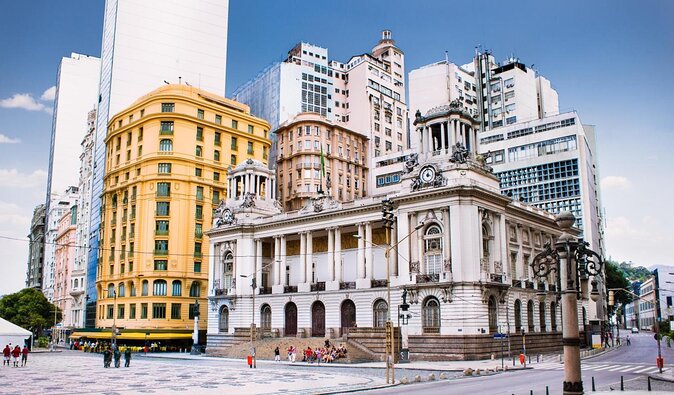
Next comes Cinelândia. This is where you’ll see the main libraries and the main theater of the city. It sounds like a detour from street art, but it’s actually the point.
Rio has two artistic languages running in parallel: the formal world of theaters and libraries, and the informal world of murals and graffiti. Standing in Cinelândia gives you the context to understand what street artists are replying to. You start to notice how public art works when the city already has big cultural institutions.
After this, you’ll take the VLT (public transportation) toward the Olympic Boulevard area. This rail-and-walk rhythm helps you keep momentum without feeling like you’re constantly “transit-ing.” The VLT leg is part of how the city’s layout becomes visible.
Olympic Boulevard and the Museum of Tomorrow: modern Rio after street-level art
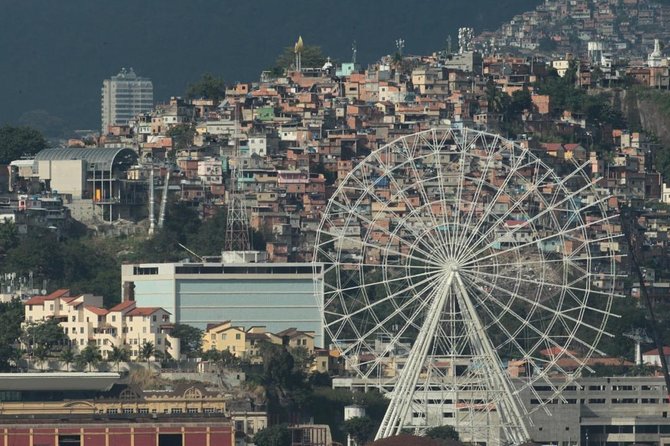
The tour reaches Olympic Boulevard, described as home to the city’s main museums. You’ll spend time in this museum zone, and the day also sets you up to end up at the Museum of Tomorrow earlier as part of the route.
This combination is smart for your brain. Street art can feel chaotic if you see it without contrast. Then you get modern museum architecture and a big institutional space that helps you place what you’re seeing in the broader Rio story.
If you want a “then and now” feel—like how artistic identity shifts between streets and museums—this is one of the best parts of the itinerary. It keeps the tour from becoming only graffiti-focused and gives you a sense of how Rio showcases culture in different settings.






Porto Maravilha and the world’s largest graffiti mural
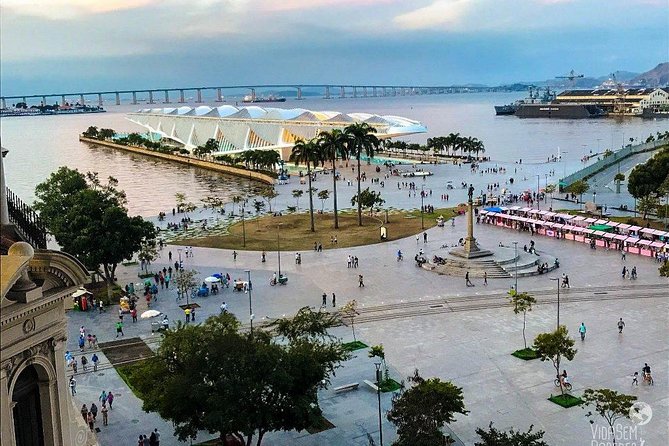
The tour finishes in Porto Maravilha, where you’ll meet the world’s largest graffiti mural. That scale is the kind of thing that changes how you look at murals afterward.
This stop is where the tour’s theme pays off. Earlier you learned about legalization, architecture, and civic spaces. Here, those lessons become visual. You start to notice composition, messaging, and how massive public walls can act like community billboards.
You’ll likely connect with the mural area through the VLT route as you move through the day. The tour is set up so that the big mural isn’t just a random “last photo.” It’s the culmination of everything you’ve been taught to look for.
How the 3 hours really flow: subway, VLT, and an easy walking rhythm
The overall duration is about 3 hours. That short time is part of the value. You get a connected neighborhood loop without turning your day into a travel marathon.
The mechanics are simple:
- You start with the subway to Glória.
- You use the VLT (tram) for key jumps between areas.
- You do easy walking through the art-heavy zones.
This format helps in two ways. First, it reduces the time you spend figuring out transit. Second, it lets you experience different kinds of streets—grand, institutional, and intensely local—without skipping the “in-between” neighborhoods.
One more practical point from what people often appreciate: this is not a sit-and-scroll tour. Wear shoes you can stand in. Bring a bottle of water if it’s hot. Rio street-time is real-time.
What you’ll learn: politics, Carnival, architecture, and Afro-Brazilian culture
Street art in Rio can be funny, beautiful, and angry—all at once. The tour’s best feature is how it translates those murals into context you can carry with you after the photos.
You’ll hear explanations tied to:
- the city’s shift toward legalized public graffiti
- how European architectural influence shows up in Rio’s look
- meaning in specific murals, including social and political messages
- cultural connections like Carnival and samba schools
- Afro-Brazilian history and community identity
The guide for this experience is often associated with Wellington/Berimbautour. In the way the tour is described, Wellington is credited with clear English and a friendly approach. Some guests also mentioned opportunities to practice Portuguese during the walk—handy if you’re trying to break out of tourist Spanish.
Another standout detail: the tour can sometimes add extra Rio-flavor moments beyond murals. One account notes a visit related to Carnival float staging and storage. That kind of add-on doesn’t replace the art, it explains the wider system that feeds Rio’s big public celebrations.
Value check: why $68.61 can be a smart buy
At $68.61 per person, you’re paying for two things: guided interpretation and time saved.
Interpreting murals is harder than it looks. If you walk around Porto Maravilha or the staircases without context, you’ll still enjoy the visuals. But you might miss the why. This tour is built to explain the messages behind the walls and connect them to neighborhood history and city dynamics.
You’re also getting a route that uses public transportation between areas. That can be a real deal in Rio, where picking the wrong connection can cost time you don’t have. A guided path keeps you moving in the right direction while you learn as you go.
And because the listed stops show admission ticket free for the attractions in the route, the money mostly goes toward the guide and the structured experience rather than entry fees.
Who this tour is for (and who might want to choose another plan)
This tour is a great fit if you:
- want street art with context, not just photos
- like learning about Rio through neighborhoods rather than only from major monuments
- enjoy mixing public transit with walking
- prefer a smaller-group vibe (it’s private, so it’s just your group)
It may be less ideal if you:
- want zero walking and zero transit hops
- are visiting on a day when weather looks iffy (the experience requires good weather)
- hate crowds, because the Selarón Staircase area is famous and often busy
If you’re the kind of traveler who notices details—tiles, typography, symbols, city layout—this tour tends to click fast.
Should you book the Rio Street Art Tour?
If you’re doing just one “street art day” in Rio, this is a strong choice. The route connects Glória, Selarón, Cinelândia, museum territory, and Porto Maravilha in a tight 3-hour arc. That gives you variety without chaos.
Book it if you care about the meaning behind the murals and want a guide who can connect art to culture, architecture, and social issues. Skip it only if you’re skipping walking, or if your schedule lines up with poor-weather chances.
If the weather is good and you want Rio through its walls and streets, this tour is an easy yes.
FAQ
How long is the Rio Street Art Tour?
It runs about 3 hours (approx.).
What does the tour cost?
The price is $68.61 per person.
Where do we meet?
You meet at the Municipal Theater of Rio de Janeiro, Praça Floriano, S/N – Centro, Rio de Janeiro – RJ, 20031-050, Brazil.
Is this tour private?
Yes. It’s private, so only your group participates.
How do you travel between stops during the tour?
You use public transportation, including the subway and the VLT, plus walking.
Are admission tickets required for the sights?
The stops listed include admission ticket free.
Does the tour depend on weather?
Yes. The experience requires good weather. If it’s canceled due to poor weather, you’ll be offered a different date or a full refund.
What is the cancellation policy?
You can cancel for a full refund up to 24 hours in advance. If you cancel less than 24 hours before the start time, the amount paid isn’t refunded.
Can most people participate, or is it very difficult?
Most travelers can participate, and the route includes an easy walking route along with transit.