REVIEW · RIO DE JANEIRO
Rio de Janeiro: Guided Bike Tours in Small Groups
Book on GetYourGuide →Operated by Rio by Bike · Bookable on GetYourGuide
Rio on two wheels beats most tours. You get small-group pace, real neighborhood streets, and clear local context. I especially like how the routes work for different time windows and how guides keep the ride feeling safe and smooth; one thing to weigh is that the longer option is more demanding physically and bike quality can vary.
What makes this experience click is the mix of famous Rio stops with less-touristy streets, all guided in English by people who know what you’re seeing. You’ll roll past places like Sugarloaf’s base views, Flamengo Park, Lapa’s art, and the Lagoa Rodrigo de Freitas. The only downside I’d flag: you’re moving at street pace in heat, and if you’re expecting a slow sightseeing stroll, you may wish you’d booked the shorter route.
In This Review
- Key things I’d bet on
- A small-group bike tour that teaches you how Rio works
- Choosing your ride: 3-hour vs 4-hour vs the full 7-hour day
- 3-hour Urban Tour: Copacabana, Sugarloaf, Botafogo, and Lagoa views
- 4-hour Panoramic Tour: Bay of Guanabara, Lapa, and Selarón’s 2000+ tiles
- 7-hour Ultimate Tour: South Zone, old center, lunch, and lagoon finale
- Guide style and ride safety: what “small group” feels like on the ground
- Price and value: what $36 really buys you (and what to budget)
- Where you start and how to show up smoothly
- Who should book this bike tour in Rio
- Should you book? My practical take
- FAQ
- How long are the Rio bike tours?
- What itineraries are available?
- What’s included in the price?
- Where is the meeting point?
- Do the guides speak English?
- What should I bring or wear?
- What happens if it rains?
Key things I’d bet on
- Small groups up to 10: easier questions, faster regrouping, less waiting around.
- Three itinerary choices: 3-hour South Zone, 4-hour Bay + Old Rio, or a full-day 7-hour combo.
- Famous sights plus real back streets: Copacabana to Botafogo’s everyday side.
- Public art and big-name Rio landmarks: Selarón steps and the Cinelândia Square area.
- Bike rental + helmet included: you show up ready to ride, not to figure it out.
- Lunch included on the 7-hour: a practical add-on if you want the long day to feel complete.
A small-group bike tour that teaches you how Rio works
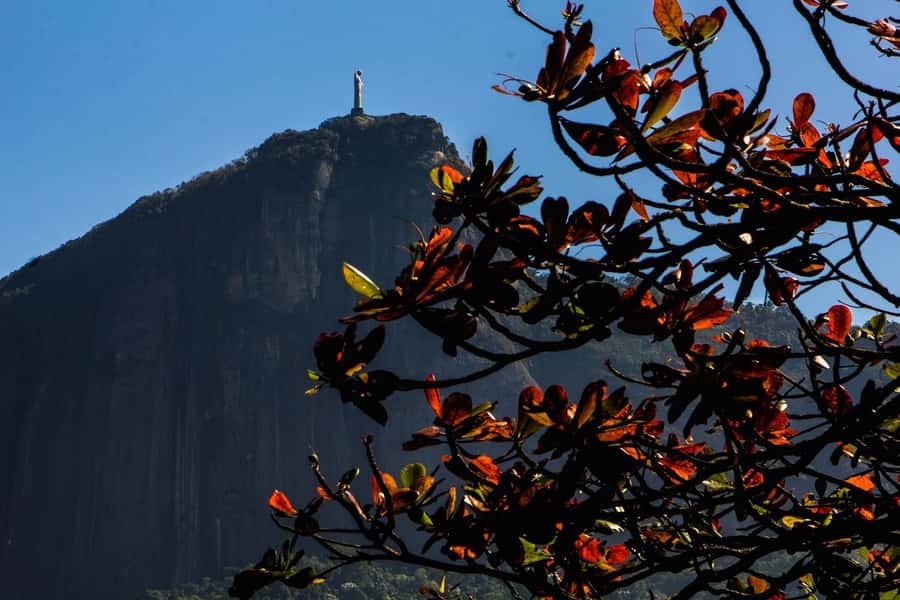
Rio can look simple from the beach: water, mountains, postcard views. But the city has a rhythm—one neighborhood feeds the next, and the “why” behind streets and squares matters as much as the “what.” This tour does that job by moving you through the city and giving you stops that make the stories make sense.
I like the small-group setup because it keeps the ride social without getting chaotic. You can hear your guide, you get time for photos without holding up the line, and the group stays tight enough to feel like an actual outing rather than a conveyor belt. It’s also one of the few ways to cover real distance while still getting context—bike routes let you see the sides of Rio that buses just skim past.
One practical consideration: you’re in the open air, and Rio heat can be real. Some rides also involve street crossings and traffic flow, so you’ll want to follow the guide’s instructions and stay attentive, especially if you’re new to riding in a city.
You can also read our reviews of more cycling tours in Rio De Janeiro



Choosing your ride: 3-hour vs 4-hour vs the full 7-hour day
This is where the tour earns its keep. Instead of forcing you into one long itinerary, you pick the amount of Rio you want to cover.
- The 3-hour Urban Tour focuses on the South Zone and the southern side of the city’s shoreline energy.
- The 4-hour Panoramic Tour broadens the view to the Bay of Guanabara and adds Rio’s older, more central areas.
- The 7-hour Ultimate Tour stitches both routes together and adds lunch, giving you a one-day “greatest hits” plan without feeling like you sprinted between attractions.
If you’re short on time, go with the 3-hour. If you want more city layers—bay, old center, nightlife-adjacent art—choose the 4-hour. And if you truly want a full orientation day, the 7-hour makes sense, but plan for a tougher ride.
3-hour Urban Tour: Copacabana, Sugarloaf, Botafogo, and Lagoa views
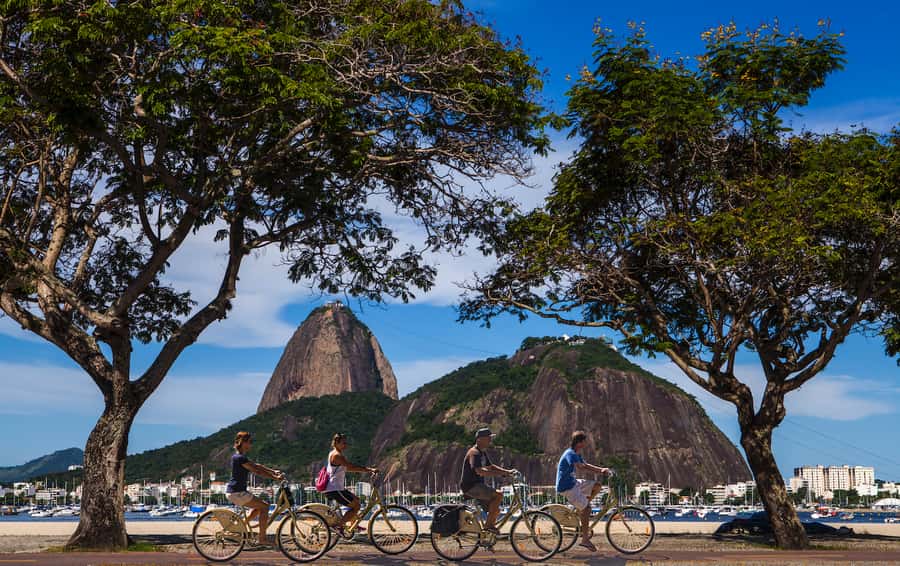
This shorter option is smart if it’s your first day in Rio or if you want a highlights loop with time left for your own wandering later. It starts at Copacabana, right where locals spend a big chunk of their social life.
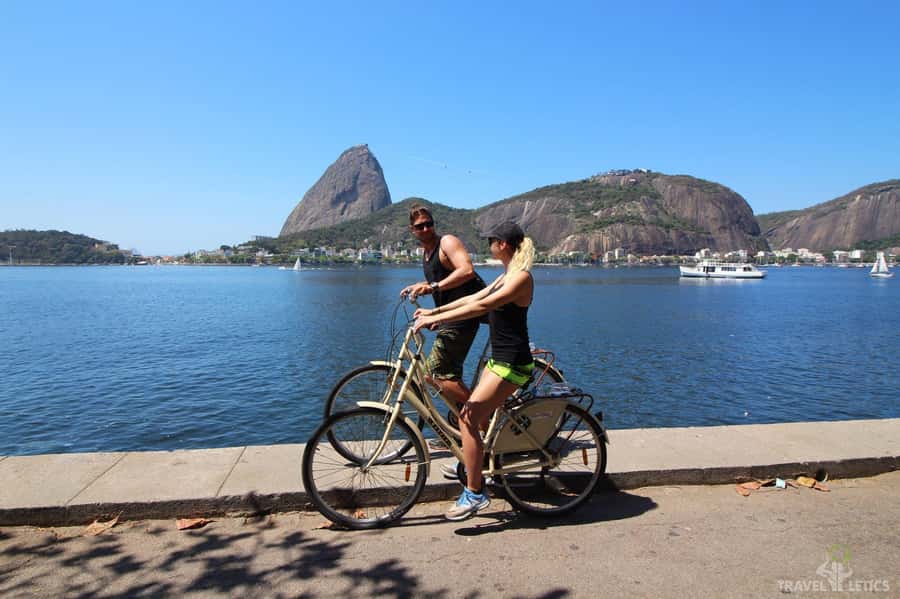
From there, you bike toward Sugarloaf Mountain for close-up views of just how imposing it is. This is one of those stops that feels more dramatic from the street than from a distant viewpoint—watching the mountain’s bulk shift in perspective as you move is part of the fun.
Next comes a breather at Vermelha Beach. It’s described as a tiny oasis of quietness, which matters because Rio’s beaches can blend together unless you get a pause. It also gives you a mental reset before the ride turns more neighborhood-oriented.
Then you head to Botafogo, where the tour shifts from iconic scenery to the back lanes and everyday flow of Rio. This is where you get a stronger sense of how Cariocas live when they’re not at the beach.
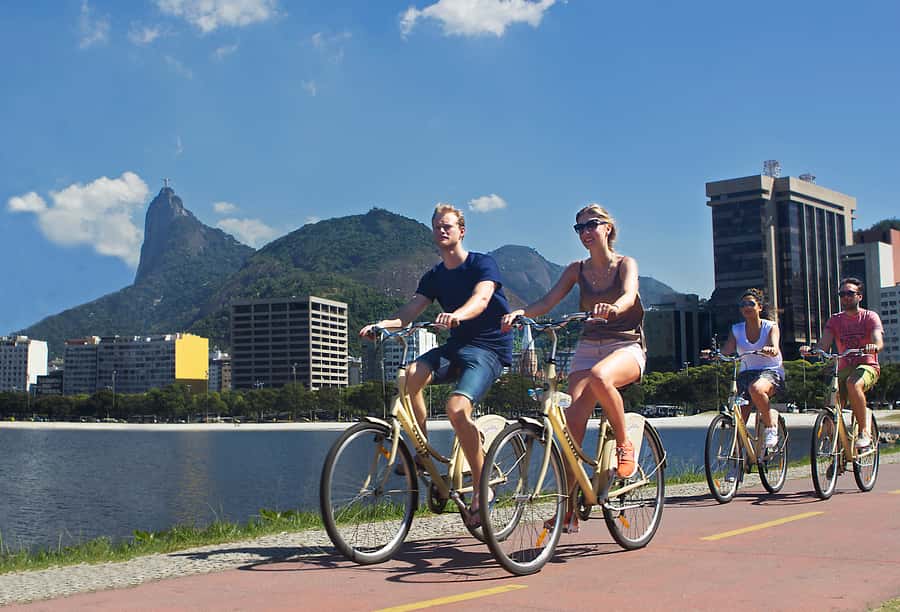
The ride finishes at Rodrigo de Freitas Lagoon, with surrounding green hillsides and the neighborhoods that line the water. If you like the idea of ending on calm, scenic breathing room, this is a great choice. You’ll also come away with strong bearings—this loop helps you understand where the city’s “north-south” energy sits relative to the bay and the hills.
4-hour Panoramic Tour: Bay of Guanabara, Lapa, and Selarón’s 2000+ tiles
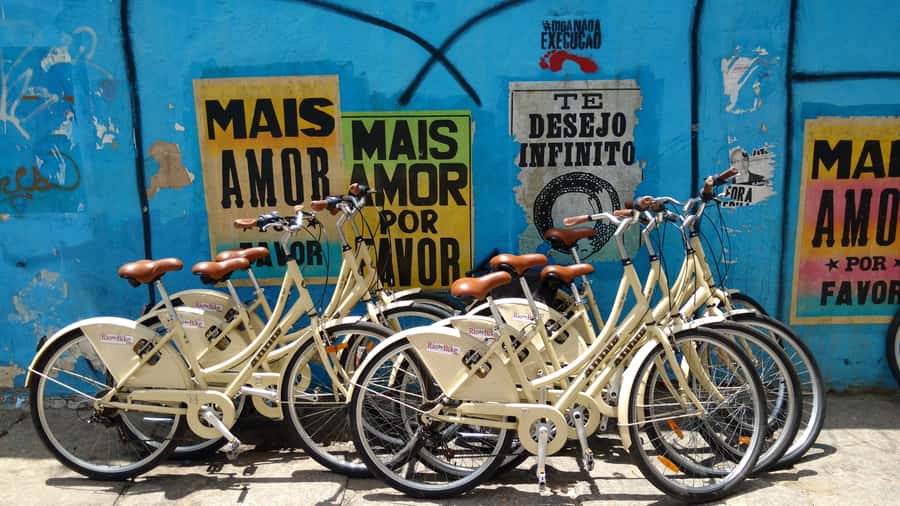
If your goal is to understand Rio beyond the shoreline, the 4-hour option is the best middle ground. It starts by rolling from Copacabana toward Botafogo, keeping the ride moving through recognizable zones.
Along the way, you pass by São João Batista cemetery, often described as Rio’s “celebrity” cemetery. The stop matters for more than curiosity. It’s a reminder that Rio’s history is layered in places people usually skip past, and it ties modern city life to the people who shaped Brazil through politics, arts, and architecture.
Then the route turns toward the Bay of Guanabara via Flamengo, with a beachfront stretch that adds wide-open perspective. There’s also a historical note here: it’s tied to the first European settlement after the discovery of the city. Even if you don’t care about dates, the context helps you interpret why the shoreline developed the way it did.
From the bay, you head into the historical center, with stops at Cinelândia and the bohemian neighborhood of Lapa. Lapa is known for nightlife, but you’ll be seeing it during daylight from a cyclist’s angle—more street texture, less club energy.
The headline art stop is Jorge Selarón’s staircase, covered in over 2000 tiles from different countries. This isn’t just a photo moment. It’s public art you can walk through, talk about, and understand as a human project embedded in a city neighborhood. The effect is part museum, part street corner, part personal story—exactly the kind of place that makes a guide worth having.
You finish back toward Flamengo Park and then along Copacabana beach for the final stretch. That “return-to-the-famous” ending works well: you end with the view your brain expects, but with a stronger sense of what sits underneath it.
7-hour Ultimate Tour: South Zone, old center, lunch, and lagoon finale
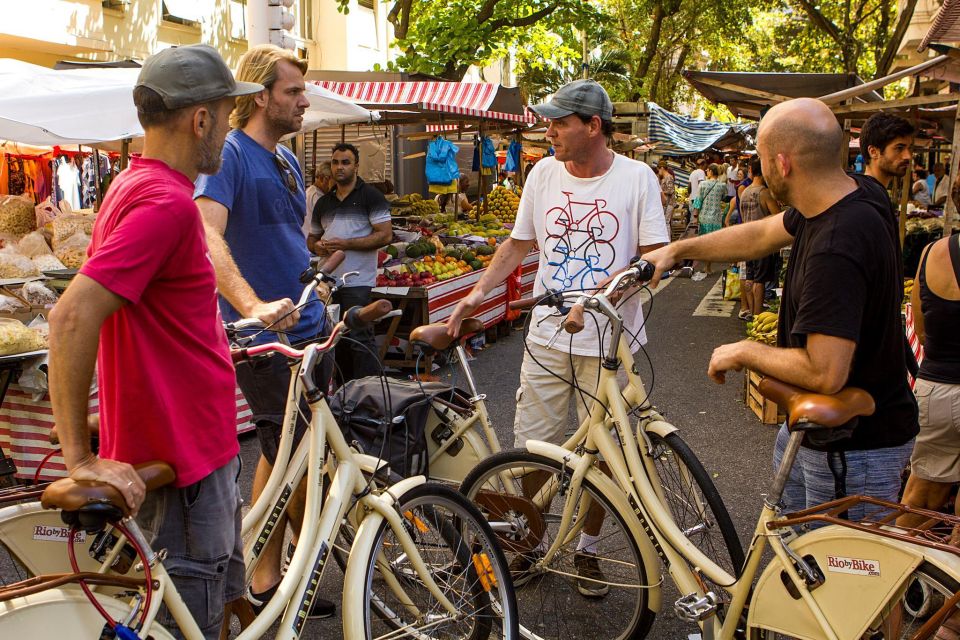
The 7-hour option is for people who want one full “orientation day” and don’t mind a long ride. It combines the South Zone energy, the bay perspective, and the older city layers—plus it adds a typical Brazilian lunch included in the ticket price.
This is the best route if you want both the city’s modern-looking scenic highlights and its older street culture. You’ll still cover the South Zone zones associated with Copacabana and Ipanema, but you also spend time in areas that are less “straight to the postcard” for most first-timers—like Botafogo and Urca.
Then the day swings into Lapa again, focusing on that bohemian quarter feel. You’ll also get Cinelândia Square, a historic and central stop that helps you understand Rio’s institutional side, not just its beaches and hills.
After that, you’ll revisit Selarón’s staircase for the public-art moment. This is where a good guide makes the difference: the way people build and repurpose art in real neighborhoods is often the story you remember after the photos fade.
Lunch is built in here, which I like for real life planning. If you’re doing a full day of biking, you don’t want to spend your energy hunting for food between attractions. Included lunch also lets you keep the tour rhythm instead of switching to self-guided logistics.
Finally, the last stretch includes Rodrigo de Freitas Lagoon, surrounded by hills that are described as clad in Atlantic rainforest. The effect is a soft ending: from streets and stairs to water and green slopes.
One heads-up: this option is often rated as the one for people with a decent level of riding ability and fitness. If you’re easily exhausted by heat, or you’ve never ridden in a city before, consider the 3-hour or 4-hour route instead.
You can also read our reviews of more guided tours in Rio De Janeiro






Guide style and ride safety: what “small group” feels like on the ground
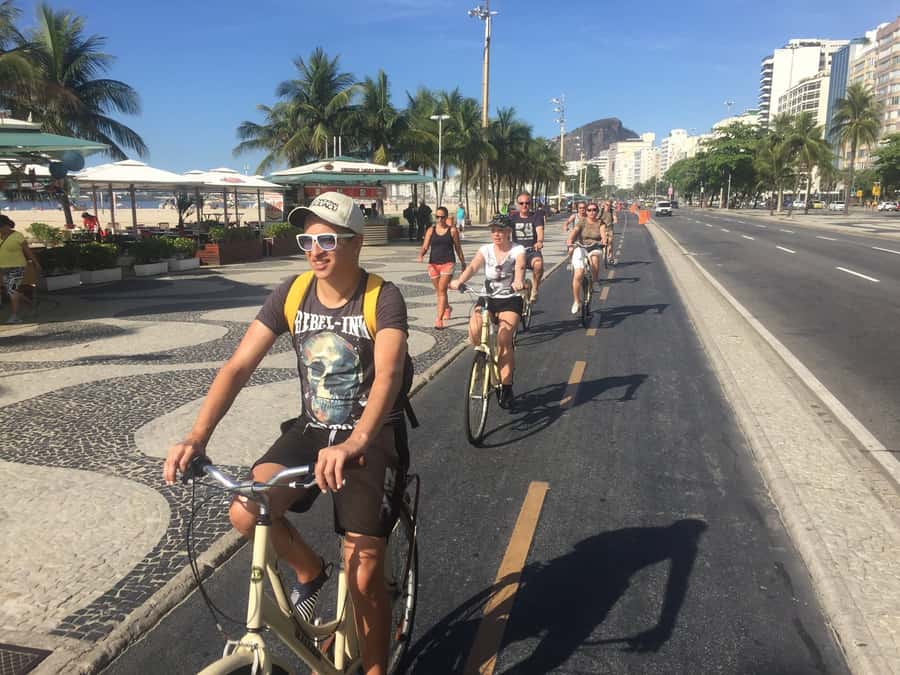
Most good tours have a guide. This one tries to make the guide the main benefit. You’ll get live English commentary and a pace that’s set to keep everyone moving together without turning the ride into a race.
You’ll also feel guide attention in street crossings. In the ride experience, people tend to notice how confidently the group gets through intersections and busy segments when the leader is calm and consistent. That shows up especially on the routes that mix scenic stretches with city streets.
Names you might see associated with this experience include Sean, Duco, Marco, Milo, Thiago, Sergio, Ulysses, Douglas, Thomas, and Philip. What stands out across these reports is the same theme: guides who keep the day light but structured, and who slow down enough for beginners to feel comfortable.
Two practical notes for you:
- Wear light, comfortable clothes and keep your eyes up. You’re biking, not sitting in a car.
- Bring sun protection. You’ll want sunscreen and a hat, plus a bottle of water—Rio sun is not a gentle suggestion.
There’s also one bike-related caution. One person noted the bikes could be better in quality. That doesn’t mean the ride won’t work. It does mean you should be honest with yourself about your comfort and report any issues right away.
Price and value: what $36 really buys you (and what to budget)
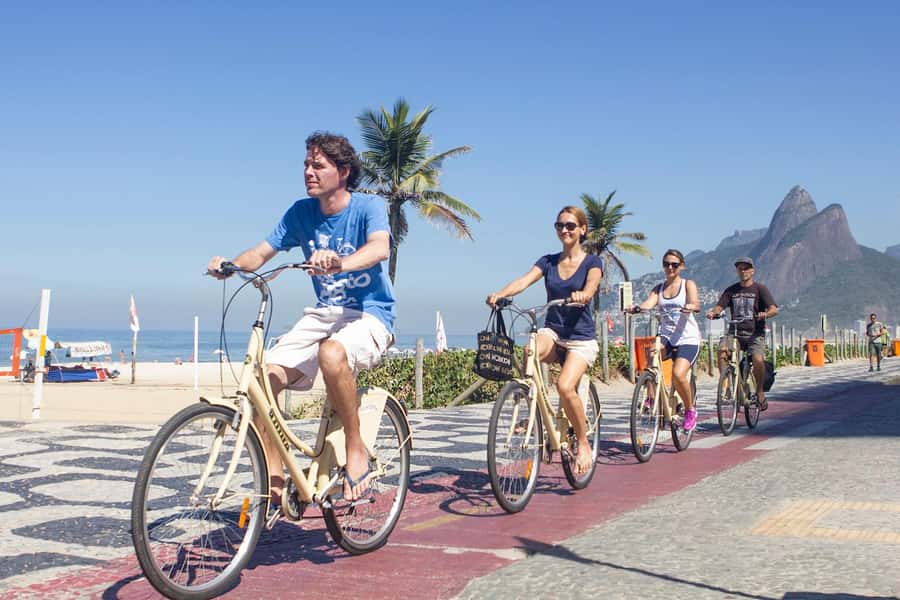
At $36 per person, this is priced like an efficient, practical sightseeing activity—especially because it includes core essentials: bike rental, a helmet, and a tour guide. If you choose the 7-hour option, you also get lunch included, which can be a meaningful value boost for a full-day plan.
So the best way to think about the price is not just the ticket number. It’s the cost of:
- getting a bike without hunting rentals
- having a guide to connect landmarks with neighborhood context
- staying in a tight route that saves you time and energy
What’s not included is simple: drinks, and lunch unless you book the 7-hour option. Hotel pickup and drop-off also aren’t included. That means you’ll want to plan your morning and know how you’ll reach the starting point.
If you’re deciding between this and a self-guided bike rental, ask yourself if you want orientation and explanation. If yes, the guide component is the value engine here.
Where you start and how to show up smoothly
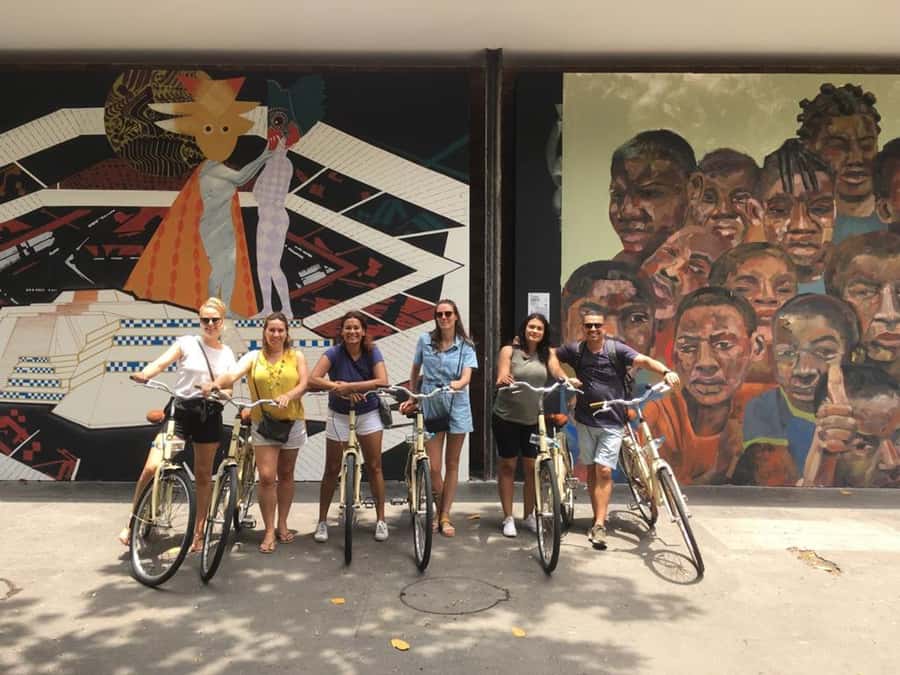
Meeting point is in front of Galeria Felisberto de Menezes, next to a bus stop. The tour also asks you to arrive 15 minutes early, which matters because you’ll want time to fit the bike, put on the helmet, and get briefed before you’re out in traffic.
The tour is subject to weather conditions. If it rains, the tour can be canceled, and you’ll be contacted at least 45 minutes before the start time. A reschedule may be possible, but the key tip for you is to check your email and/or WhatsApp for last-minute updates rather than assuming everything is always on.
Who should book this bike tour in Rio
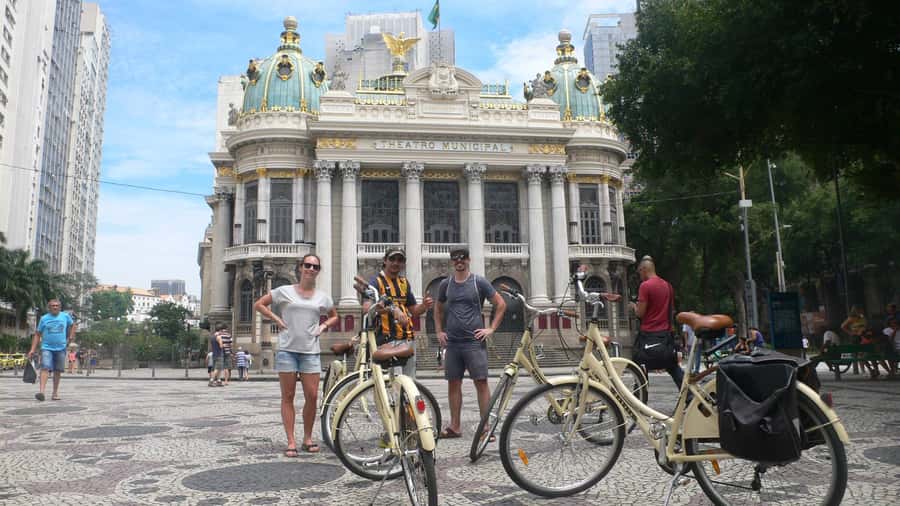
This tour fits best if you want a mix of iconic Rio and real city texture, and you like the idea of covering distance without losing context.
It’s a good match for:
- first-time visitors who want orientation fast
- people who like streets more than just viewpoints
- couples and small groups who want control of their day after the ride
- anyone who values clear explanations tied to what you’re physically seeing
It may be less ideal if:
- you dislike biking in heat or have limited stamina
- you’re hoping for a slow, minimal-exertion sightseeing schedule
- you expect everything to be fully car-free and calm
There’s also an age guideline: suitable for children from 12 years old or taller than 1.50 meters.
Should you book? My practical take
I’d book this guided bike tour if you want to see Rio efficiently and understand the city while you’re moving. The route options make it easy to match your time, and the included basics (bike, helmet, guide) lower the friction of doing something active in a new place.
Choose the 3-hour if you’re just kicking off your Rio plan or you want a softer ride day. Choose the 4-hour if you want bay views plus the art-and-city-core connection. Choose the 7-hour if you’re ready for a longer, more physical day and you like the idea of an included lunch to keep things simple.
If you’re sensitive to heat or you’re a newer cyclist, pick the shorter route and treat it like your first step into Rio on wheels.
FAQ
How long are the Rio bike tours?
You can choose durations from 3 to 7 hours, depending on which itinerary you select.
What itineraries are available?
There are three options: a 3-hour Urban Tour (Praia Vermelha, Botafogo & Lagoa), a 4-hour Panoramic Tour (Botafogo, Flamengo Park & Old Rio), and a 7-hour Ultimate Tour that combines the urban and panoramic routes plus lunch.
What’s included in the price?
Bike rental, a tour guide, and a helmet are included. Lunch is included only if you book the 7-hour option.
Where is the meeting point?
Meet in front of Galeria Felisberto de Menezes, next to a bus stop.
Do the guides speak English?
Yes. The live tour guide operates in English.
What should I bring or wear?
Wear comfortable light clothes, and bring sunscreen and a hat. A bottle of water can also be helpful.
What happens if it rains?
The tour is subject to weather conditions. If it rains, the tour can be canceled, and you should be contacted at least 45 minutes before the start time. In case of cancellation, there is an option to reschedule.