
REVIEW · RIO DE JANEIRO
Rio: Christ the Redeemer & Selarón Steps Half-Day Tour
Book on GetYourGuide →Operated by C2RIO TOURS & TRAVEL · Bookable on GetYourGuide
Christ the Redeemer is a whole different view. In just 3 hours, you get the Corcovado panorama plus the color and story of the Selarón Steps without wasting time figuring out transit. I like the tight route: mountain first for the big views, then Lapa for photos and tile details.
I also like how the tour is run by a trilingual guide who focuses on what you’re seeing and how to photograph it. Names like Daniel, Carlos, Carla, Raquel, and Priscilla show up as guides known for clear explanations and helpful picture-taking. One thing to plan for: pickup and drop-off aren’t always a perfectly door-to-door experience, and time up top can feel short if you’re trying to do photos, chapel, and views all at once.
In This Review
- Key things you’ll notice
- Copacabana pickup and the 3-hour rhythm
- Corcovado Mountain: Christ the Redeemer in practical detail
- Photo and comfort tips before you head up
- Tijuca Forest ride: the green break before the big view
- From Santa Teresa to Lapa: Rio’s neighborhoods in motion
- Selarón Steps: how to photograph the tiles and what the story means
- Price, guide quality, and comfort tips for a smooth half-day
- Should you book this half-day tour?
- FAQ
- How long is the Christ the Redeemer and Selarón Steps half-day tour?
- Where does hotel pickup happen?
- Is food included in the price?
- Does the tour run in bad weather?
- What should I bring with me?
- Is this tour suitable for wheelchair users or people with mobility impairments?
Key things you’ll notice
- 710 meters above sea level at the Christ viewpoint means real panoramic sightlines if clouds cooperate
- Tijuca Forest ride breaks the trip from beach traffic into something greener and cooler
- Santa Teresa and Lapa are passed as quick orientation stops, setting context fast
- Selarón Steps gives you the best kind of souvenir: a photo spot with a real story behind the tiles
- Hotel pickup in Rio’s South Zone (Copacabana/Leme/Ipanema/Leblon) keeps you from wrestling with schedules
Copacabana pickup and the 3-hour rhythm

This half-day is built for people who want Rio’s two biggest icons without turning it into a whole day. You meet in Copacabana, and pickup is available from hotels in Rio’s South Zone: Copacabana, Leme, Ipanema, and Leblon. Then you’re in an air-conditioned vehicle, headed toward the mountain while the city is still waking up.
The big practical point: 3 hours is just enough time to see everything, but not enough time to linger for hours. You’ll want to be ready for quick transitions: drive up, visit, drive down, then head for Lapa and the steps. If you’re prone to motion sickness on winding roads, this is also the kind of tour where you’ll feel it—so plan your comfort before you go (more on that below).
You can also read our reviews of more tours and experiences in Rio De Janeiro



Corcovado Mountain: Christ the Redeemer in practical detail
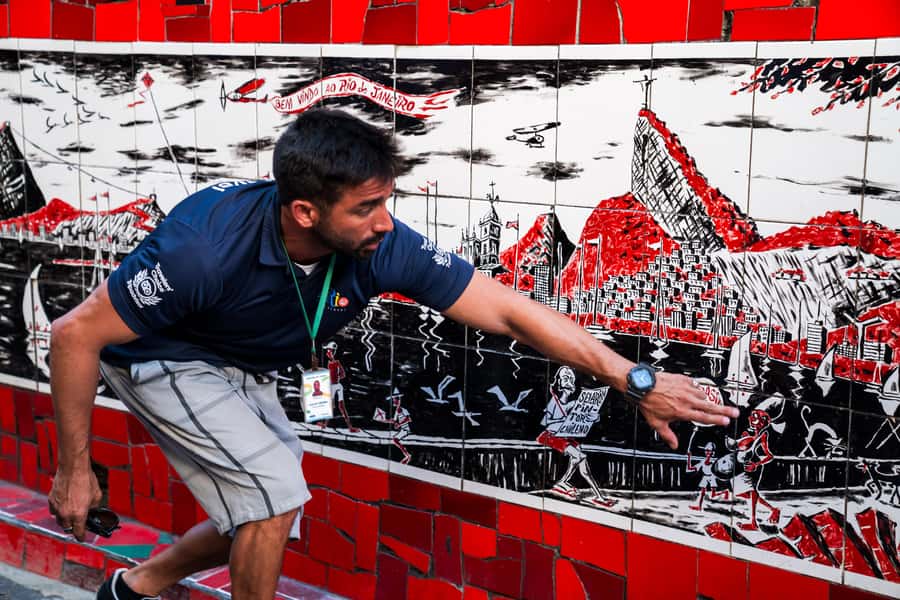
Christ the Redeemer is one of the New Seven Wonders of the World, and from Corcovado you understand why people remember it for years. The statue sits at about 710 meters above sea level, high enough that Rio’s buildings look like a living map. From the top, you’ll get wide views across the city, and on clearer days you can actually trace how the neighborhoods spread out toward the water.
What I find most valuable about going with a guide here is not just the ticket—it’s the timing and the photo pointers. A good guide helps you figure out where to stand for better angles and how to frame shots without turning your group into a bottleneck. On some days, groups end up with a tighter window at the top (around 40 minutes in one case), so think of this stop as a “capture and breathe” moment, not a long, slow picnic.
Also, keep in mind there’s more to do than just look up at the statue. There’s a small chapel area at the top, and if you have the minutes, it’s worth a quick step inside for a calmer pause away from the photo rush. And if weather is unpredictable, don’t assume you’ll get perfect visibility; you’ll still get the experience, but your results will depend on cloud cover.
Photo and comfort tips before you head up
- If you’re worried about car sickness, sit toward the front and keep it light before the ride
- If clouds move in, prioritize photos quickly, then spend the next minutes just looking out
Tijuca Forest ride: the green break before the big view

The drive through Tijuca Forest is part of what makes the whole experience feel worth it. You’re traveling through one of the largest urban forests in the world, and that matters because it cools the mood. Instead of a straight shot from city to viewpoint, you get a short, scenic route that changes the air and the sound.
This is one of those details that can be easy to overlook when you’re focused on the statue, but it’s also where your expectations reset. The forest makes the mountain feel less like an isolated tourist stop and more like you’re actually going somewhere different. If it’s rainy or humid, the greenery can look dramatic, and even when visibility isn’t perfect, the ride itself still feels special.
You’ll still be in a vehicle, so you don’t have to handle navigation or parking. You do want to keep an eye on the timing, though: the forest section is beautiful, but it’s not meant to turn into a stop-and-stroll. You’re there for the viewpoints, and the schedule pushes you toward them.
From Santa Teresa to Lapa: Rio’s neighborhoods in motion
After Christ, you head down and the tour shifts from viewpoint energy to neighborhood atmosphere. You’ll drive past Santa Teresa, known for narrow cobblestone streets and a hillside feel, plus that iconic yellow tram. Even though you’re not parking and wandering for hours, that quick pass helps you place what you later see on the ground.
Then you arrive in Lapa, a nightlife hotspot with the Carioca Aqueduct nearby. Even if you don’t plan to party tonight, Lapa is the kind of area that gives Rio its “night turns into story” feeling. Think of it as your visual transition: from the religious grandeur of Corcovado to a neighborhood full of human color and street energy.
One word of realism: this part is fast. It’s orientation plus photos, not a deep neighborhood walking tour. If you love to explore, you’ll likely want to extend your evening after the tour ends, especially around Lapa.






Selarón Steps: how to photograph the tiles and what the story means

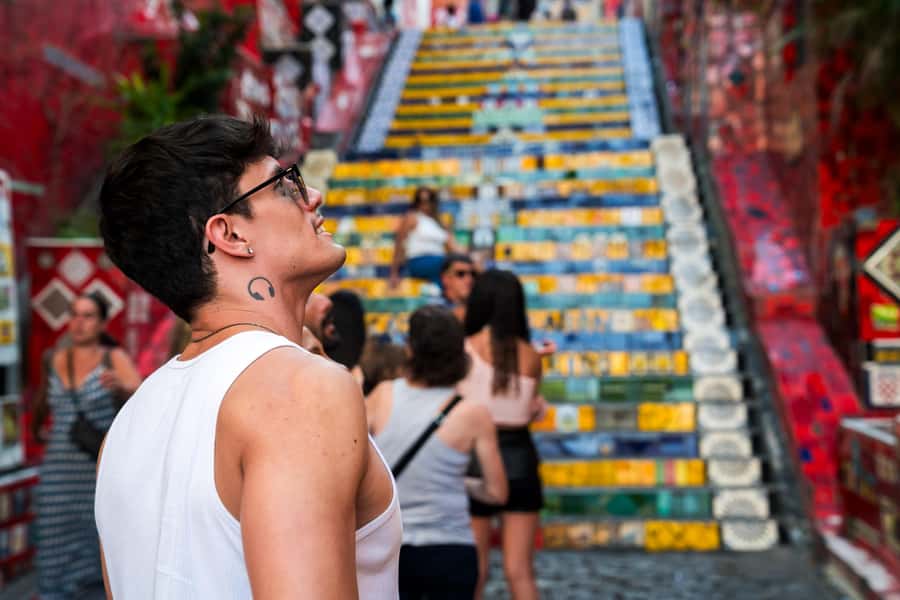
The Selarón Steps are one of Rio’s most distinctive landmarks, and you don’t really need a speech to understand why. The brightly colored tiles cover the stairs like a permanent art project you can climb. It’s the kind of place where your camera immediately says yes—then your curiosity kicks in once you notice the details.
Here’s what makes it more than a pretty photo stop: the steps began with the work of Chilean-born artist Jorge Selarón, who started renovating dilapidated steps in front of his own house. Over time, the project became iconic enough to show up in magazines, newspapers, travel programs, and documentaries. That’s the key: you’re seeing personal art that became public identity.
For your visit, treat it like a short photo session with a little respect for the space. The stairs are a flow of people, so if you try to pose while blocking the way, you’ll get stressed and people will get annoyed. Better plan: take a few “wide” shots first, then walk to angles that let you frame multiple tile colors at once. The guide’s photo suggestions can help here, especially if you’re not sure which side gives the most dramatic patterns.
If you only have limited time, your best move is to pick one or two must-have shots (straight-on stair lines and a close-up tile texture) and then enjoy the rest with slower viewing.
Price, guide quality, and comfort tips for a smooth half-day

At $58 per person for about 3 hours, the value is mostly about what you’re not doing. You’re paying for a guided outing, air-conditioned transport, and tickets to Christ the Redeemer. If you tried to DIY this with separate transport and tickets, you’d still spend money on transportation, then lose time on coordination—time you don’t have in a half-day.
Where this tour tends to win is the human side. Guides such as Daniel and Carlos are known for explaining the areas you pass and answering questions seriously, not just reciting a script. Others like Carla or Raquel focus on photo help and positioning. Even when weather is messy, the tour runs—rain or shine—so you’re not stuck with a ruined day plan.
Now, the practical comfort checklist that will help you enjoy the day more:
- Bring a passport or ID card, since you’ll be asked to show it
- Wear something you can move in. This isn’t designed for long climbs with help
- If you’re sensitive to winding roads, plan to sit toward the front and keep food light
- Expect you’ll get enough time for photos, but not enough time to do a leisurely wander at every stop
One more reality check: this tour is not suitable for mobility impairments or wheelchair users, so if that’s you, you’ll want a different Rio plan.
Should you book this half-day tour?

I’d book it if you want two of Rio’s biggest, most photo-worthy stops—Christ the Redeemer and the Selarón Steps—with transport and tickets handled, plus a guide who helps you understand what you’re seeing. It’s also a good match if you’re staying in the South Zone and want a simple plan that doesn’t depend on rerouting buses and taxis.
I’d think twice if you’re extremely picky about getting lots of time at the top, because the mountain visit can feel short. Also, if you know you’ll need very specific door-to-door pickup, ask ahead about the exact pickup point since some departures may involve getting to the closest pickup location.
If you want a focused, efficient Rio icon day, this is a solid way to do it—no fuss, big views, and a surprisingly meaningful art stop at the end.
FAQ

How long is the Christ the Redeemer and Selarón Steps half-day tour?
The tour lasts about 3 hours. You’ll want to check available starting times when you book.
Where does hotel pickup happen?
Pickup is available from hotels in Rio’s South Zone, including Copacabana, Leme, Ipanema, and Leblon. The tour also meets groups at a Copacabana meeting point.
Is food included in the price?
No. Foods and drinks are not included, so you’ll want to plan snacks or a meal outside of the tour time.
Does the tour run in bad weather?
Yes. This experience operates rain or shine.
What should I bring with me?
Bring a passport or an ID card.
Is this tour suitable for wheelchair users or people with mobility impairments?
No. This experience is not suitable for people with mobility impairments or for wheelchair users.