REVIEW · RIO DE JANEIRO
Rio Surf Experience!
Book on Viator →Operated by One Carioca day · Bookable on Viator
Catch your first Rio waves. This surf day is built around one goal: ride safely and leave with a real sense of how surfing works, not just a quick splash.
I like the way the guides focus on choosing the right spot for your level that day, instead of forcing everyone to the same beach. I also like the structure: warm-up, then practice the pop-up movement on sand before you head out.
One thing to consider is logistics. You meet at a specific point in Barra da Tijuca (there isn’t stated hotel pickup), so show up on time and use the address they provide.
In This Review
- Key things that make this Rio surf experience work
- Entering the surf clinic at Barra da Tijuca
- How they find waves for your exact level
- Safety brief first, then a practical warm-up
- The pop-up lesson that turns nerves into progress
- Catching waves and actually getting time on the board
- A Rio viewpoint stop after your wetsuit session
- Price and value: Is $90 for a 4-hour surf day fair?
- Who this surf day is best for
- Logistics you should not ignore: meet-up timing and weather
- Should you book Rio Surf Experience?
- FAQ
- How long is the Rio Surf Experience?
- Where do I meet for the tour?
- Is hotel pickup included?
- What happens once we get to the beach?
- Do I need to bring surf equipment?
- What group size should I expect?
- Is it suitable for beginners?
- What if the weather is bad?
Key things that make this Rio surf experience work
- Max 6 people: you get more attention and better odds of catching waves.
- Level-based wave hunting: they go looking for conditions that fit your skill.
- Sand practice before water: warm-up and pop-up drills help prevent common beginner wipeouts.
- English-speaking coaching: clear instructions for pop up, stance, and where to sit for waves.
- A scenic payoff after surfing: a viewpoint stop adds the classic Rio “wow” moment.
- Gear is provided: so you’re not hunting for equipment on arrival.
Entering the surf clinic at Barra da Tijuca
You start at Av. Rodolfo Amoedo, 455 in Barra da Tijuca, at a Banco24Horas location. The tour ends back at the same meeting point, so you’re not doing a complicated end-of-day transfer.
The whole experience runs about 4 hours. That time window matters because it’s long enough to get real reps—warm-up, practice, actual wave attempts—but short enough that you still have energy for the rest of Rio afterward.
The group size is small (maximum 6 travelers). In practice, that usually means less waiting and more “hands-on attention” when you’re learning. If you’re a solo traveler or a couple, that also makes the day feel more relaxed than the big-funnel tours.
You can also read our reviews of more tours and experiences in Rio de Janeiro.



How they find waves for your exact level
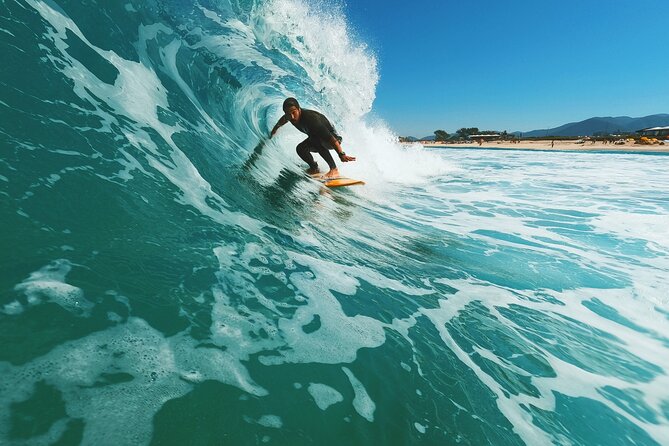
The core idea is simple: the guide checks conditions and then takes you to the spot that’s best for your surfing level that day. That approach is one of the reasons beginners tend to feel comfortable.
If you’re brand new, you don’t need the most dramatic waves—you need the right angle, timing, and a place where you can stand up and try again. The best lesson is the one where you get repetitions with feedback, not the one where you spend the session watching stronger surfers.
Even for people with some experience, this “match the conditions to the group” style is a plus. You’re more likely to get waves that help your technique instead of waves that just punish every mistake.
Safety brief first, then a practical warm-up
Once you’re at the beach, the guide covers safety measures at sea. That usually includes how to handle surf basics like timing, board control, and staying aware of what’s around you (especially important in a shared ocean environment).
Then comes the warm-up and body training. They don’t just say stretch and go. You do warm-up exercises and practice the movement of standing on the board first in the sand, which is smart for two reasons:
- It lets your body learn the sequence before you’re balancing on moving water.
- It reduces the risk of injury that comes from trying to figure things out on the fly.
One of the best things about this format is the mental side. A mindful warm-up helps you focus on what you’re doing next, not panic when you feel the board shift.
The pop-up lesson that turns nerves into progress
Most people struggle with surfing for one reason: they know the board is there, but their body doesn’t automatically move the way it needs to. This tour attacks that problem directly.
You’ll train the pop-up mechanics—how to get from lying down to standing—then you move into the water to catch waves. The coaching tends to be patient and very step-by-step, and the name Gabriel comes up often in the best feedback. People describe him as very helpful for beginners, with positive energy that keeps the lesson from feeling stressful.
If you’re learning, you’ll probably appreciate the way they break things down so you can actually follow the steps under pressure. If you’ve tried before and felt frustrated, the difference is you’re not stuck doing the same thing wrong for hours—you get guidance aimed at the moment you’re struggling with.
Also, the session feels personal. With only a small group, there’s room for correction and encouragement right when it matters.
Catching waves and actually getting time on the board
The fun part is, of course, the ocean time. After the sand practice, you head into the water and start catching waves. The goal isn’t just one ride—it’s multiple attempts with feedback as you improve.
The guides are active during the session. From what you can expect based on the coaching style, you’re not left to guess. You’ll get help on where to be, when to paddle, and how to position yourself to get a chance at a wave.
There’s also a clear effort to avoid the worst kind of beginner problem: a spot so crowded or rough that you spend your energy dodging trouble instead of learning. One recurring theme in the good experiences is that the guide finds waves without turning the day into a shuffle.
One note: surf days can be weather-dependent. If drizzle happens, you still may go out depending on the conditions, but the tour operator reserves the right to shift dates if weather isn’t suitable.




A Rio viewpoint stop after your wetsuit session

Surfing is physical, but it’s also emotional. You come back energized and a little proud (even if you wipe out a few times early on).
Then you head to a place with a breathtaking view. This is the “Rio in one photo” moment: scenery after the salt air, a chance to shake off the sand, and time to actually look at the city you’re visiting instead of focusing only on the next wave.
In at least one standout experience, the viewpoint felt like the perfect finish—something you remember even after the adrenaline fades.
Price and value: Is $90 for a 4-hour surf day fair?
At $90 per person for roughly 4 hours, the price is in the category where you should ask: what’s included besides the thrill?
Here’s the value picture as it relates to what you’ll get:
- Instruction, not just access: you’re coached through warm-up, pop-up mechanics, and wave attempts.
- Gear provided: you don’t need to rent or bring your own equipment.
- Small group size: max 6 travelers means better coaching attention.
- A scenic add-on: the viewpoint stop adds more than just surf time.
- Wave selection based on your level: that can reduce the number of wasted attempts in the wrong conditions.
If you’ve ever taken a lesson where you’re watching more than learning, this structure is where the money tends to make sense. The session is short enough to stay focused, and the coaching elements are practical enough that beginners often feel real progress.
Who this surf day is best for
This experience is described as working for most travelers, and it especially fits people who want a guided start.
It’s a strong match for:
- Beginners who need step-by-step pop-up help and sand-based practice.
- Families where teens or kids are trying something new and you want patient instruction.
- Couples who want an active morning and then a scenic payoff.
- Solo travelers who like small-group dynamics and don’t want to be lost in a crowd.
If you’re an experienced surfer and you’re chasing advanced barrels only, you might find it more beginner-to-intermediate focused. But even then, the best part for a seasoned paddler is often refining the fundamentals with a coach watching what you do.
Logistics you should not ignore: meet-up timing and weather
The biggest practical consideration is the meeting point. You meet at the Banco24Horas on Av. Rodolfo Amoedo, 455 in Barra da Tijuca, and the activity ends there too. If you’re hoping someone will pick you up at your hotel, that’s not stated in the provided details, and past confusion around transport is easy to understand.
So do this:
- Plan to arrive a bit early.
- Have the meeting address saved offline.
- If your hotel is far, consider a quick taxi or ride-share so you’re not stressed.
Next is weather. The tour requires good weather, and if it’s canceled due to poor conditions you’ll be offered another date or a full refund. That’s normal for ocean activities, and it’s worth building flexibility into your Rio schedule.
Finally, bookings seem to happen well in advance—on average about 25 days ahead. If you’re traveling in a busy season, you’ll have a smoother time locking in your slot early.
Should you book Rio Surf Experience?
I’d book it if you want a beginner-friendly surf lesson that feels structured and coached, not chaotic. The small group size and the focus on sand-practice pop-up mechanics are the combination that tends to turn nerves into standing up and riding a wave.
Skip it—or at least double-check expectations—if you need guaranteed hotel pickup or you’re the kind of traveler who relies on last-minute flexibility without confirming details. For everyone else, this is a solid Rio activity: surf time, real instruction, and then a classic viewpoint finish that makes the morning feel like a full experience.
If you’re in Rio and you’ve been thinking, I should try surfing, this is the kind of day that makes that thought become a memory.
FAQ
How long is the Rio Surf Experience?
The experience lasts about 4 hours.
Where do I meet for the tour?
You meet at Banco24Horas, Av. Rodolfo Amoedo, 455, Barra da Tijuca, Rio de Janeiro, RJ 22620-350, Brazil. The tour ends back at the meeting point.
Is hotel pickup included?
The details provided list a specific meeting point, and they do not mention hotel pickup.
What happens once we get to the beach?
You’ll receive safety measures at sea, do warm-up exercises, practice standing and the pop-up movement in the sand, and then go into the water to catch waves.
Do I need to bring surf equipment?
Gear is provided.
What group size should I expect?
The tour/activity has a maximum of 6 travelers.
Is it suitable for beginners?
Most travelers can participate, and the instruction is designed to help beginners, including guidance on pop-up technique.
What if the weather is bad?
The experience requires good weather. If it’s canceled due to poor weather, you’ll be offered another date or a full refund.