REVIEW · RIO DE JANEIRO
Ginga Tropical Show – Brazilian Rhythms
Book on Viator →Operated by Gray Line Brazil · Bookable on Viator
Rio nights can be short and loud.
This show turns Brazilian dance into a guided, high-energy evening, with live drumming and costume changes that feel like Carnival turned up a notch. I really like the way the program strings together regional styles (samba, bossa nova, lambada, forró) into one smooth story, and I also love the fact that it’s built to get you moving—dancers invite participation, not just applause. The main thing to weigh is logistics: the theater is in a mall setting and, while most people have smooth pickup, a few bookings report mix-ups or seating issues, so it’s smart to confirm your timing and plan to arrive early.
Before you even see the stage, you’ll feel the rhythm. After pickup, you travel to Centro Cultural Veneza and get a kind of dance-by-the-numbers tour of Brazil—Parintins Festival, Carimbó, Xaxado, Frevo, Maculelê, Capoeira, Dance of Orixás, Bossa Nova, Samba de Gafieira, and more—so the performances land with context. One possible drawback to know up front: some people found the dinner experience didn’t match expectations (including cases where the show timing or venue setup affected dinner), so if you care about the meal, double-check what’s included for your exact option.
In This Review
- Key Things to Know Before You Go
- A Brazilian Dance Show Built for Rio’s Tempo
- Pickup and Getting There: Why Timing Is Everything
- Centro Cultural Veneza: Mall Theater Vibes, Big Performance Energy
- The Pre-Show Ride: A Quick Map of Brazil’s Dance Styles
- What You’ll See on Stage: Samba, Bossa Nova, Lambada, and More
- Capoeira and Ritual-Themed Dance: When It Gets More Than Entertaining
- Audience Participation: The Part That Changes the Feel
- The Guide and Drivers: What People Actually Notice
- Price and Value: Is $97.82 a Good Deal?
- Optional Upgrade: Brazilian Barbecue Dinner (What You Should Expect)
- Service Reality Check: When Things Go Wrong
- Who This Show Fits Best
- Should You Book Ginga Tropical Show?
- FAQ
- How long is the Ginga Tropical Show?
- Where does the show take place?
- Is hotel pickup and drop-off included?
- What’s included with the standard ticket?
- What kinds of dances and music will I see?
- Will I be asked to participate?
- What is the minimum age to attend?
- If I choose the ticket-only option, where do I pick up my ticket?
- Is dinner included, and what is the optional upgrade?
- What is the cancellation window?
Key Things to Know Before You Go
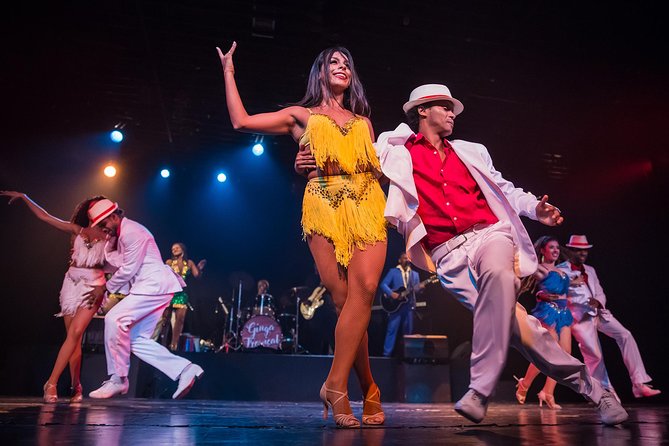
- It’s a one-stop Brazilian dance sampler: samba, bossa nova, lambada, forró, capoeira, and more are all part of the show.
- Live drumming drives the pacing: the rhythm is constant, and it helps the cast keep momentum.
- You’ll get cultural context, not just dancing: the guide explains Rio social dance history and the role of the dance hall.
- Expect audience participation: people are invited onto the floor, especially near the end.
- Small group size (up to 40): with pickup and a guide, it tends to feel organized when operations are running smoothly.
A Brazilian Dance Show Built for Rio’s Tempo
Ginga Tropical Show is the kind of evening activity Rio does well: it’s indoor, late enough to fit dinner plans, and packed with movement. The whole point is that Brazilian music and dance aren’t treated like museum pieces. They’re treated like living things—played by musicians, performed by dancers, and tied to places and traditions across Brazil.
What makes this one different from a basic dance performance is the structure. You’re not only watching. You’re also hearing how each style fits into the bigger picture of Carnival energy and Rio’s dance culture. That matters because the show includes everything from smoother couple-dance moments to athletic capoeira sequences.
You can also read our reviews of more tours and experiences in Rio de Janeiro

Pickup and Getting There: Why Timing Is Everything
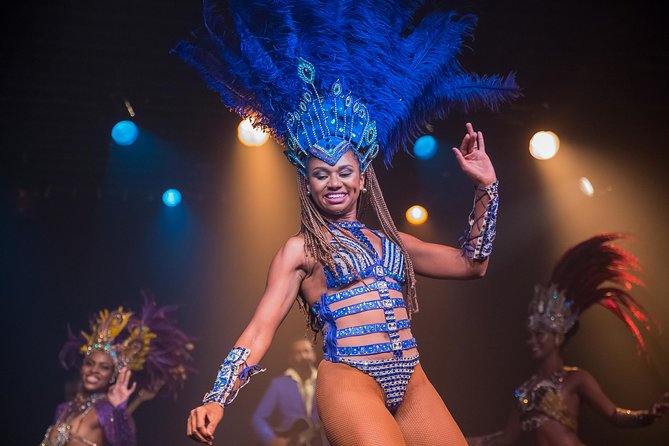
You start with hotel pickup in Rio’s South Zone (most central hotels there are included if you pick the transfer option). From there, you head to Centro Cultural Veneza. The total experience runs about 2 to 3 hours, and the show itself is scheduled for a late evening slot.
Here’s the practical part: if pickup lands early, you might kill some time before the theater. If pickup lands tight, you’ll want to be ready to go the moment the van arrives. Some bookings show a pattern where pickup is around 7:50 and the performance begins later (around 9:30), with the show running until close to 11. Even if your schedule differs, the lesson stays the same: don’t treat this like an 8 PM show where you can stroll in late.
Also note one detail that affects stress: the venue is at Avenida Pasteur, 184, Botafogo. One negative comment mentioned limited taxi stand convenience nearby, so if you’re the independent type and end up using taxis, consider arriving with a little padding and not at the last second.
Centro Cultural Veneza: Mall Theater Vibes, Big Performance Energy

The show happens at Centro Cultural Veneza, inside a mall theater. That setup has a tradeoff.
On the good side, mall theaters are usually predictable: seating is there, doors are where you expect them, and the venue is climate-controlled. One review even praised improvements like better acoustics and A/C relative to what some smaller venues get wrong.
The drawback is that mall theaters can make you feel boxed in, especially if your group size swells or if there’s any overbooking. A couple of complaints described people sitting in uncomfortable spots like plastic chairs or even on steps. I’m not saying that’s the norm, but it is a reality you should plan around with your expectations: you’re going for the show, not for luxury seating.
The Pre-Show Ride: A Quick Map of Brazil’s Dance Styles
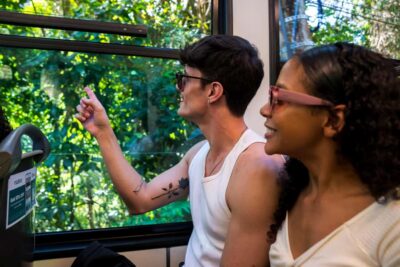
The cast and guide use the ride to prime your brain. You’re essentially getting a dance map of Brazil while traveling to the venue. The program mentions a sequence of styles and regional references like Parintins Festival, Lambada, Carimbó, Xaxado, Forró, Frevo, Maculelê, Capoeira, Dance of Orixás, Boleadeiras (RS), Bossa Nova, and Samba de Gafieira—plus Carnival themes.
Why I think this matters: if you only see one dance style on stage, you might miss the point that Brazil’s dances come from different roots—different cities, neighborhoods, and social spaces. This show nudges you to connect what you’re seeing to a larger set of traditions, so the different segments feel intentional rather than random.
What You’ll See on Stage: Samba, Bossa Nova, Lambada, and More
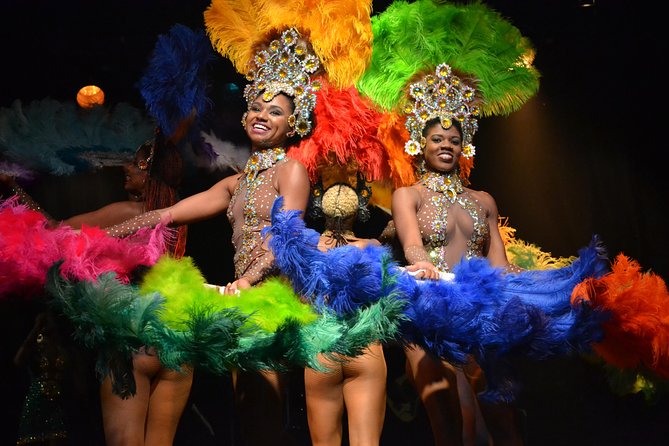
Once you’re in your seat, the show cycles through major Brazilian styles. The highlights list the big names: samba, bossa nova, and lambada, with forró and other styles woven in. The cast also performs capoeira, and you’ll see reenactments tied to folklore and ritual elements from places like the Amazon, the Pampas, Lapa, and Bahia.
Here’s how those categories show up in a typical viewing experience:
- Samba segments tend to deliver speed, swagger, and big group energy, often paired with dramatic costumes.
- Bossa nova moments lean more toward musical nuance and mood—less about sprinting across the stage, more about rhythm and expression.
- Lambada usually means hip movement and a couple-dance feel that bridges smoothly into audience involvement.
And then you get the curveballs. Capoeira isn’t just a dance costume—it’s athletic, and when it lands on stage it reads like movement you can’t fake: controlled, rhythmic, and physical.






Capoeira and Ritual-Themed Dance: When It Gets More Than Entertaining
One reason this show sticks in my mind as a “worth it” pick is that it doesn’t keep everything in the safe, tourist-friendly lane. Capoeira shows up as part of the program, and there are also segments connected to Orixás and Bahia ritual themes.
You don’t need to know the religious history to enjoy the performance, but you do need to watch with curiosity. The best moments are the ones where the audience sees that dance and music can carry meaning beyond entertainment. That’s also where the guide’s explanation helps—particularly around Rio’s social dance spaces and why dance halls mattered historically.
Audience Participation: The Part That Changes the Feel
This is not a sit-and-stare show the whole time. At different points—especially toward the end—dancers invite you up. Multiple experiences point out that participation is a big part of the fun, and there are moments where the cast teaches or cues basic samba steps so you can join in without feeling completely lost.
If you’re shy, you still get value. Watching someone else take the stage keeps the energy up, and you’ll feel less like you’re watching strangers perform for your benefit. If you do choose to join, keep your expectations simple: follow the rhythm, copy one move, and let the group carry you.
The Guide and Drivers: What People Actually Notice
The show includes a professional guide, and that human layer is a key value driver. In one praised experience, the guide named Luis was singled out for clear explanations of what you’d see and what different parts of Brazil bring to the dance language.
For transport, the driver named Victor also got a specific shout for being professional and smooth. I’m mentioning these names because you often can’t predict service quality from a description. The good news: when things run well, you’ll feel it in how on-time pickup happens and how clearly your guide frames the show segments.
Price and Value: Is $97.82 a Good Deal?
At $97.82 per person, this isn’t the cheapest thing you’ll do in Rio. So the “value test” is whether you’re buying more than a 60-minute performance.
What you get here that helps justify the cost:
- Hotel pickup and drop-off in most South Zone areas (if you select that option).
- A ticket included for the show.
- A guide who ties segments to Rio dance culture and regional context.
- A program that includes multiple Brazilian dance and music traditions in one sitting.
If you’re the kind of traveler who wants one solid evening that covers a lot of ground—samba, bossa nova, lambada, capoeira, forró—then the price can make sense. If you’re mostly after a quick, low-cost night out, you might feel this is pricey for a single venue.
One tip: book with the mindset that you’re paying for structure and energy, not for fancy dining.
Optional Upgrade: Brazilian Barbecue Dinner (What You Should Expect)
There’s an optional upgrade for a Brazilian barbecue dinner. The description says it’s a buffet with barbecued meats, local specialties, seafood, and salads, plus dessert and drinks available for purchase.
Based on comments, a few people said the meal felt more like a big all-you-can-eat buffet than what the words barbecue dinner normally promise. That doesn’t mean it’s bad—one person even described the restaurant as formal and said meats were repeatedly brought to the table, with a wide variety and many other dishes too.
My practical advice: treat the dinner upgrade as a fuller start to your night, not as a guarantee of a specific barbecue-style setup. If food is your top priority, confirm exactly what’s included for your date and whether any venue timing changes could affect how dinner is served.
Service Reality Check: When Things Go Wrong
A small number of reports describe issues like no pickup, no show, late transport, or overbooking seating discomfort. Those are serious problems, and if you’re risk-averse, that matters.
At the same time, the larger set of experiences describe the show as energetic, fun, and well coordinated—with reliable pickup and a strong cast. So I don’t treat this as a guaranteed nightmare. I treat it as: plan smart.
Do this if you book:
- Re-check your reconfirmed departure time when you receive it.
- Arrive with extra buffer so you don’t feel rushed if there’s traffic or a tight pickup window.
- If you’re doing the dinner upgrade, be mentally flexible about how the venue schedule can affect order or timing.
Who This Show Fits Best
This show is a great match if you want a compact Rio cultural evening:
- You want music and movement more than quiet sightseeing.
- You like interactive experiences where you might dance too.
- You want multiple Brazilian styles in one place, including capoeira.
- You appreciate when a guide explains why Rio’s dance culture developed the way it did.
It may be less ideal if you:
- Strongly dislike crowded seating or are very sensitive to theater logistics.
- Need a perfectly predictable meal experience with no schedule changes.
- Want to avoid any chance of operational hiccups—because, even when rare, the negative reports show it can happen.
Should You Book Ginga Tropical Show?
My decision rule is simple: book it if you’re craving a fun night that teaches you Brazilian dance styles in a way you’ll remember. The combination of live drumming, multiple regional dance traditions, and the guide’s explanations makes this one feel like more than entertainment.
If you do book, give yourself a little time and keep your expectations grounded. This isn’t a luxury stage. It’s a dance night. When it hits right, it’s the kind of Rio experience you’ll talk about on the ride back to your hotel.
FAQ
How long is the Ginga Tropical Show?
The experience runs about 2 to 3 hours.
Where does the show take place?
The show ticket office lists Centro Cultural Veneza at Avenida Pasteur, 184, Botafogo, Rio de Janeiro.
Is hotel pickup and drop-off included?
Hotel pickup and drop-off are included if you select that option. The included description says pickup and drop-off is available for most hotels in Rio’s South Zone.
What’s included with the standard ticket?
The included items are a professional guide and the ticket to the Tropical Carnival Show. Food and beverages are not included.
What kinds of dances and music will I see?
The show includes Brazilian music and dance styles such as samba, bossa nova, lambada, forró, and capoeira. It also references folklore and rituals from different Brazilian regions.
Will I be asked to participate?
The show is designed to be interactive, and the program mentions that you’ll get up and dance when the Carnival-costumed dancers and drummers invite audience participation.
What is the minimum age to attend?
The minimum age to participate in the show is 6 years old.
If I choose the ticket-only option, where do I pick up my ticket?
You should go to the ticket office at Centro Cultural Veneza, Avenida Pasteur, 184, Botafogo, Rio de Janeiro, using your reservation name and voucher number.
Is dinner included, and what is the optional upgrade?
An optional upgrade offers a Brazilian Barbecue Dinner buffet. It includes barbecued meats, local specialties, seafood, and salads. Dessert and drinks are available for purchase.
What is the cancellation window?
Free cancellation is available up to 24 hours in advance for a full refund.