REVIEW · RIO DE JANEIRO
Rio de Janeiro: Christ the Redeemer, Sugarloaf, & City-tour
Book on GetYourGuide →Operated by Passeio Rio Turismo Receptivo · Bookable on GetYourGuide
Rio from above is pure Rio. This 8-hour highlights tour strings together Christ the Redeemer and the Sugarloaf sunset with a guide who helps you understand what you’re seeing (and what to photograph). You also get a buffet lunch and a smart mix of viewpoints and city landmarks so the day feels like Rio, not just a checklist.
The trade-off is time and walking. You’ll be on your feet for several stops (including the Selarón Staircase), plus lots of sun—so bring comfy shoes and plan for a full day. Also, it’s not suitable for wheelchair users.
In This Review
- Key Highlights You’ll Feel All Day
- How This 8-Hour Rio Tour Works (and Why It’s Worth Your Time)
- From Your Hotel to Tijuca National Park: Setting the Stage
- Christ the Redeemer on Corcovado: More Than a Famous Photo
- Mirante Dona Marta: The Shot Before the Main Event
- Metropolitan Cathedral of Saint Sebastian: Modern Icon, Big Scale
- Museum of Tomorrow and Cinelândia: Future Thinking in Central Rio
- Buffet Lunch in Rio: Fuel Without Fuss
- Lapa’s Arches and the Night-Photo Factor
- Selarón Staircase: The Mosaics That Make Santa Teresa Feel Real
- Sugarloaf Mountain at Sunset: The Payoff View
- What Makes the Guide Matter on This Tour
- Practical Tips So the Day Feels Easy (Not Exhausting)
- Who This Tour Fits Best
- Should You Book This Rio: Christ, Sugarloaf, and City Landmarks Tour?
Key Highlights You’ll Feel All Day
- Christ the Redeemer viewpoint time with guided explanations
- Tijuca National Park scenic drive on the way up to Corcovado
- Mirante Dona Marta panorama over Maracanã, Guanabara Bay, Flamengo Park, and more
- Modern Rio stops: Metropolitan Cathedral + Museum of Tomorrow (external visits)
- Selarón Staircase mosaics by Jorge Selarón connecting Lapa and Santa Teresa
- Sugarloaf Mountain at sunset with cable car ride and about 1 hour at the top
How This 8-Hour Rio Tour Works (and Why It’s Worth Your Time)

Rio is big, hills are steep, and traffic can be chaotic. This tour solves the main headache by bundling the top viewpoints and central landmarks into one guided day, starting with hotel pickup between 7:00 AM and 8:30 AM.
What makes it especially appealing is the pacing. You get a morning built around famous panoramic views (Corcovado and Dona Marta), then you shift into architecture and culture in central Rio, and you end with the payoff: Sugarloaf Mountain for sunset. The guide is also live and multilingual (English, Spanish, Portuguese), which matters here because Rio’s sights are more meaningful when someone explains the context.
One more practical plus: the tour includes the skip-the-ticket-line promise for key attractions, which can save you time you’d rather spend looking at the view.
You can also read our reviews of more city tours in Rio De Janeiro



From Your Hotel to Tijuca National Park: Setting the Stage

Pickup is the starting point of the whole rhythm. You’ll meet your van at your hotel (there are many pickup options across Copacabana, Ipanema, and nearby areas), and then you move toward the hills.
Early in the ride, you pass through Tijuca National Park, with a scenic drive and planned sight stops along the way. This part matters because it’s not just transport—it’s the transition from beach-city Rio to the “mountain Rio” feel. If you’ve only seen Rio from photos, you’ll start noticing how the city stacks against the cliffs and forest slopes.
Tip: bring a hat and sunscreen even for the ride. Even when you’re not walking, you can get sun fast in open-air viewpoints.
Christ the Redeemer on Corcovado: More Than a Famous Photo
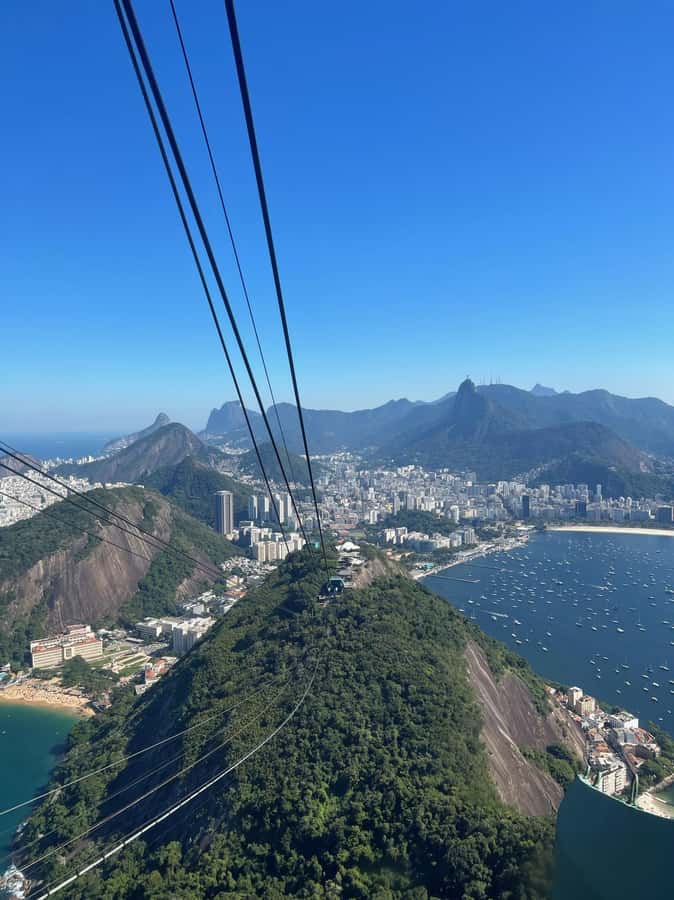
Christ the Redeemer is one of those places where the hype is real. The statue is reached after the mountain drive, and you’ll have a guided visit and photo stop time set aside for it.
What I like about this stop on a guided tour is that you don’t just arrive, snap a pic, and shuffle along. The guide helps you orient yourself—where the city stretches out below and why the angle from Corcovado has become the iconic Rio view.
You’ll also have a window for guided time and, in practice, some time for shopping right around the area. Just keep expectations realistic: this is a major attraction, so you’ll want to be ready for crowds and lines where they exist.
Mirante Dona Marta: The Shot Before the Main Event

After Corcovado, you head to Mirante Dona Marta, a viewpoint at about 360 meters above sea level. This is the moment where the tour starts feeling less like a theme park and more like learning how Rio’s geography works.
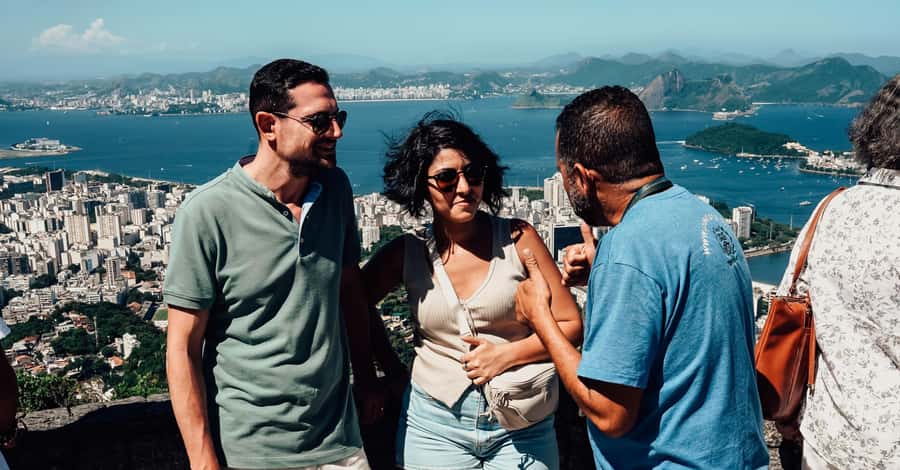
From here, you can see a wide sweep that includes Maracanã Stadium, Guanabara Bay, Flamengo Park, Rodrigo de Freitas Lagoon, and—again—Christ the Redeemer. That second look at Christ is surprisingly useful. From different angles, you can understand what makes the statue such a visual anchor for the whole city.
The guide’s job here is key: they’ll point out what you’re seeing so you leave with mental maps instead of random landmark photos.
Metropolitan Cathedral of Saint Sebastian: Modern Icon, Big Scale
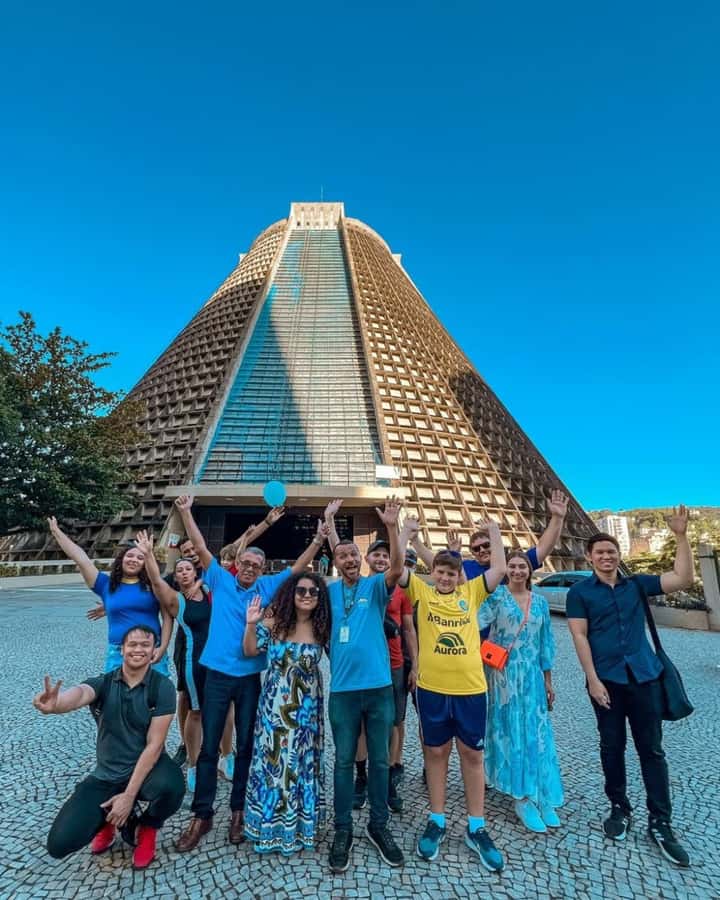
Next you’ll visit the Metropolitan Cathedral of Saint Sebastian, inaugurated in 1979. It’s a bold modern design, and the sheer scale stands out: it’s 75 meters high and can accommodate up to 20,000 people.
This stop works well after the mountains because it flips your perspective from natural panorama to architecture. The cathedral is not a small, “blink and you missed it” attraction. You’ll get guided time and time to take in the structure so it feels like something you actually understand, not just pass by.
If you’re the type who usually skips inside churches because you think you know what you’ll see, this is one where you might pause longer than you planned. The style is unmistakably Rio-era modern.






Museum of Tomorrow and Cinelândia: Future Thinking in Central Rio

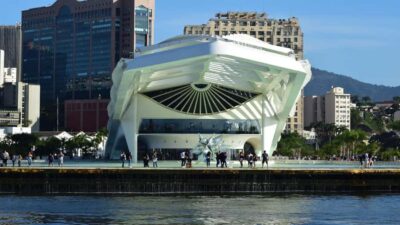
Then you head into central landmarks—first with the Museum of Tomorrow at Mauá Square (external visit). This place is described as a science and technology center focused on sustainability and the future, and it’s designed to make you think about your role in shaping the planet.
Even if you don’t go inside every exhibit (external visiting means you’re seeing the site rather than fully touring it), the museum’s presence still gives you a strong “Rio today” vibe. It’s a reminder that Rio isn’t only about old postcards and beaches—it also cares about science and environmental thinking.
From there, the tour includes Cinelândia and an external look at the Municipal Theater of Rio, a cultural landmark inspired by European opera houses. The idea is simple: you’ll see how Rio’s cultural identity isn’t only local—it also absorbed older European theatrical architecture as it grew into a major world city.
What I like: these central stops keep you moving without making the day feel like an endurance test. You’re getting major landmarks with guided orientation, then transitioning to food and neighborhood color.
Buffet Lunch in Rio: Fuel Without Fuss

You’ll have about 1 hour for lunch at an all-inclusive buffet. That timing is practical—long enough to eat well, not long enough to drain the day.
Buffet lunches in Brazil can be a great value because you can sample multiple Brazilian dishes without ordering a lot of separate items. With a guided day, this kind of included meal also prevents the common problem of spending more time deciding what to eat than actually eating.
Quick advice: eat earlier in the lunch window. It gives you less of a scramble later when you’re heading to outdoor viewpoints and photo stops.
Lapa’s Arches and the Night-Photo Factor
After lunch, you visit Lapa’s Arches, built in the 18th century as an aqueduct. Today they’re more than a historical structure—they’re a cultural icon and a popular photo spot, especially with nighttime illumination.
Even during daylight, the arches help you understand why Rio neighborhoods feel distinct. Lapa has that nightlife reputation, and those arches are one of the visuals that define it.
The tour keeps this portion fairly short for a reason: the real color and personality come next.
Selarón Staircase: The Mosaics That Make Santa Teresa Feel Real
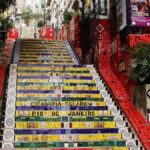
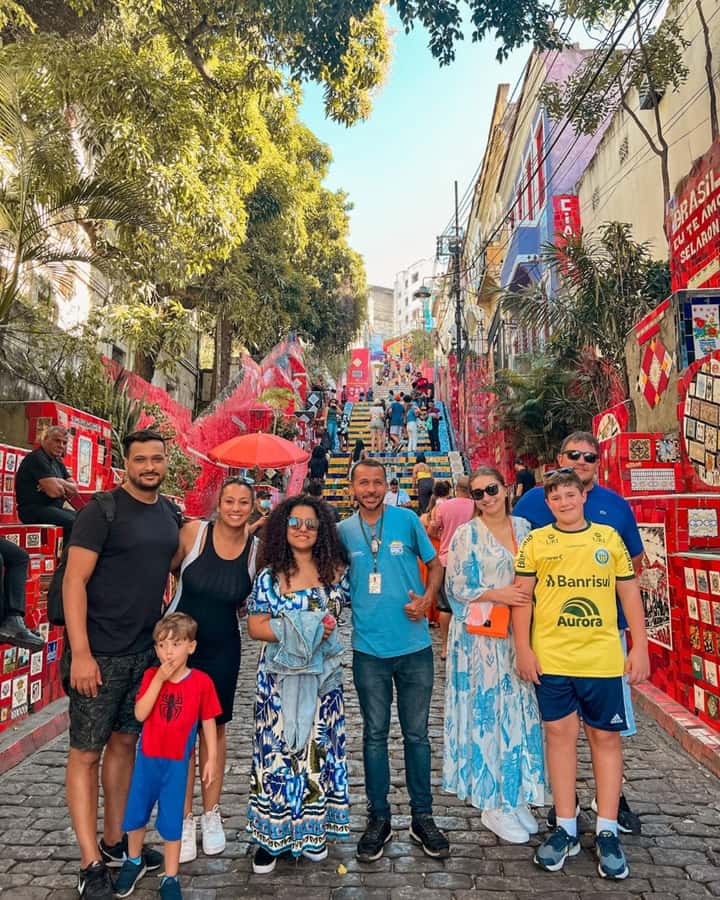
Now for one of Rio’s most memorable street-art experiences: the Escadaria Selarón. This staircase connects the bohemian Lapa district to Santa Teresa, and it’s decorated with mosaics created by Chilean artist Jorge Selarón.
The colors—green, yellow, and blue—are part of what makes it so instantly readable from a distance. It’s also famous in pop culture, including being featured in music videos by U2 and Michael Jackson.
What to expect on the ground: you’ll have a photo stop and guided time. The structure is stepped, so you’ll be walking and leaning in for photos. Wear shoes you trust, and expect sun and uneven surfaces.
Also, the tour includes a short visitor center stop with some break time and shopping. That’s a helpful moment to cool down, use a restroom if you need, and reset before the staircase and neighborhood walking.
Sugarloaf Mountain at Sunset: The Payoff View
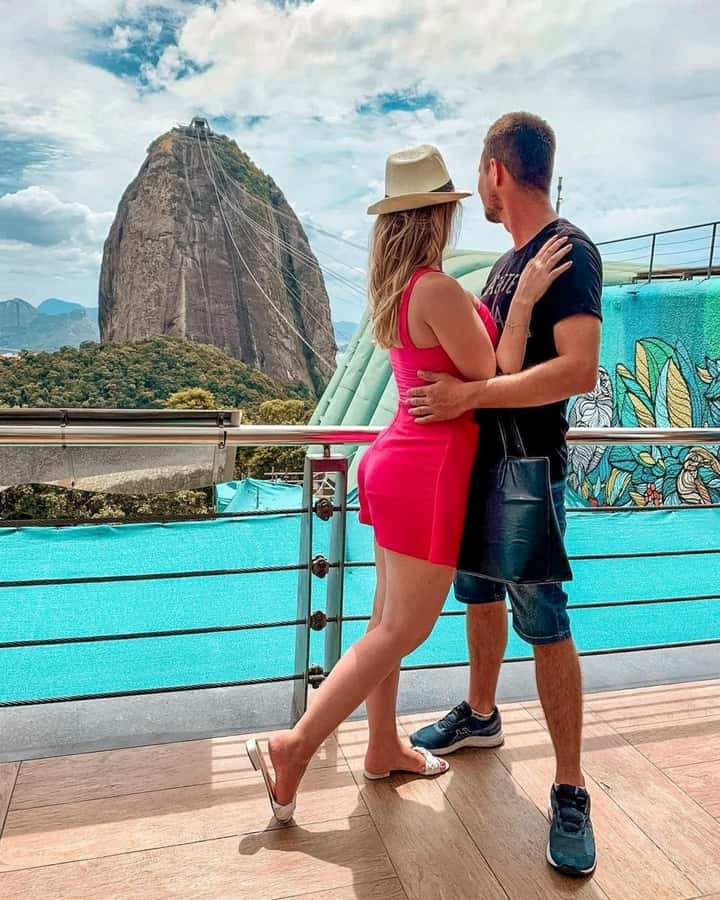
Finally, you end at Sugarloaf Mountain for a guided sunset experience. You’ll get time for photo stops and guided orientation, and you’ll ride the cable car for the aerial views.
From the top, you’ll have about 1 hour to enjoy the view. The key detail here is that sunset shifts the light across Guanabara Bay and the city skyline, then the lights start coming on as the sky fades into orange and pink. This is the kind of timing that’s hard to recreate on your own unless you’re very organized.
There are also bars at the top where you can relax while you watch the horizon. Even if you don’t plan to buy anything, the point is simple: the setting is designed for lingering, not rushing.
One more practical note: weather can change how sunsets look. The tour schedule may adjust due to weather conditions or city events, but Sugarloaf sunset is the stated goal.
What Makes the Guide Matter on This Tour
This is one of those tours where the guide can genuinely make the day feel smoother and more meaningful.
In the experiences tied to this operator, guides like Victor and Isaac are highlighted for clear, engaging explanations and for being friendly, patient, and professional. That shows up as you move from viewpoint to viewpoint—your guide helps you connect what you’re seeing to Rio’s layout and history, so you don’t feel like you’re just being transported between famous names.
And it helps that the tour offers English/Spanish/Portuguese, so language barriers don’t turn key moments into silent photo breaks.
Practical Tips So the Day Feels Easy (Not Exhausting)
Rio’s top sights are outside, at elevation, and under strong sun. For this day, you’ll have more comfort if you prepare like a local.
Bring:
- Comfortable shoes (walking + stairs at Selarón)
- Hat and sunscreen (sun exposure is part of the experience)
- A camera and/or phone storage for lots of viewpoint photos
- Water bottle so you can stay hydrated during outdoor time
You’ll also want to plan your clothing for heat and occasional windy mountain weather. And since the tour states there are restrictions on food and drinks during the day, you shouldn’t expect to snack your way through every segment. The buffet lunch is your main meal window.
One more key point: schedule changes can happen due to weather or city events. That’s normal in Rio. If your priority is the sunset glow at Sugarloaf, be ready to roll with small timing changes while keeping your energy up.
Who This Tour Fits Best
This tour is a great fit if you:
- Want major Rio landmarks in one day without organizing separate tickets and routes
- Like guided context—especially for viewpoints and big-structure stops
- Prefer an organized day that still leaves time for photos and viewpoints
It may be less ideal if you:
- Need a low-walking itinerary (Selarón stairs and multiple outdoor stops)
- Want total independence to linger in one place for hours
- Have limited mobility, since it’s listed as not suitable for wheelchair users
If you’re short on time in Rio but want the “greatest hits” plus city-center culture, this hits that sweet spot.
Should You Book This Rio: Christ, Sugarloaf, and City Landmarks Tour?
I’d book it if your goal is a well-paced, guided day covering Christ the Redeemer, Mirante Dona Marta, key central architecture (including Metropolitan Cathedral of Saint Sebastian and the Museum of Tomorrow area), and ending with Sugarloaf Mountain at sunset.
Skip it if you already know Rio well and you prefer to build your own route around fewer stops. This tour is designed to be efficient and structured, not custom.
If you’re trying to get your bearings fast and see why Rio looks the way it does—from mountains, bays, and mosaics—this is a smart way to spend your day.