REVIEW · RIO DE JANEIRO
Rio: Boat Tour of Guanabara Bay
Book on GetYourGuide →Operated by C2RIO TOURS & TRAVEL · Bookable on GetYourGuide
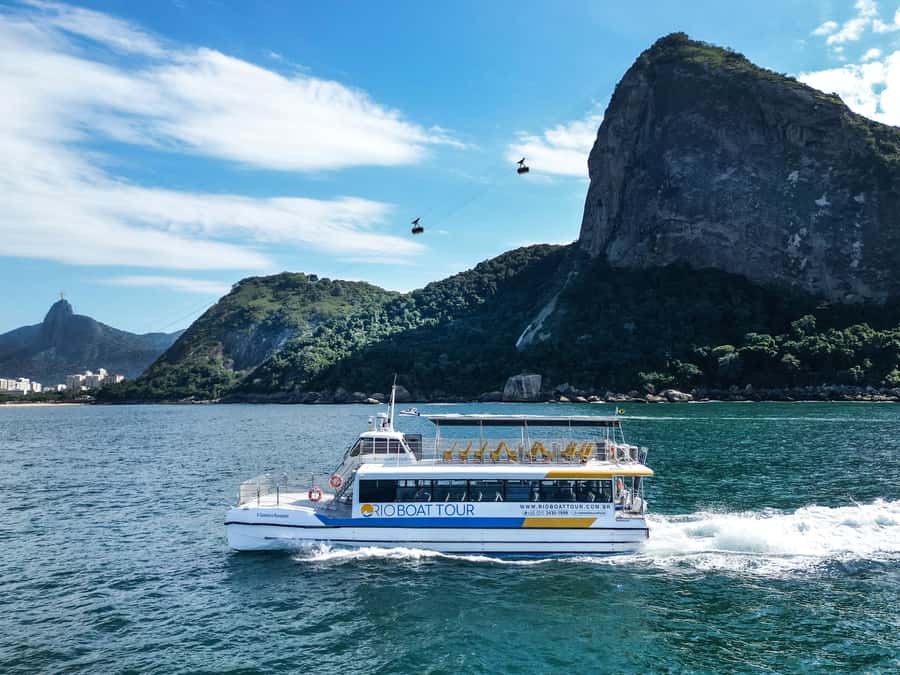
Guanabara Bay turns Rio into a moving postcard. I like seeing Rio from the water, with real port energy, and getting great photo moments like the Sugarloaf Mountain viewpoint. One catch: on breezy days, it can be hard to hear the narration over wind, people, and engine noise.
You start at Marina da Glória and ride a smart loop that mixes Porto Maravilha architecture, Niterói landmarks, and fortress/coast views in about 1.5 hours. You can go in the morning or take the afternoon sailing aimed at sunset, though timing can vary with conditions.
In This Review
- Key points before you go
- Why Guanabara Bay on a Catamaran Beats Land Sightseeing
- Marina da Glória: Where the Ride Begins and What You Should Do First
- Museum of Tomorrow and Porto Maravilha: The First Big “Wow” Moment
- Villegagnon Island, Santos Dumont Airport, Fiscal Island, and the Navy Arsenal
- Crossing to Niterói: Rio-Niterói Bridge and Concha Acústica Views
- MAC Museum in Niterói: Oscar Niemeyer’s Disc-Shaped Statement
- Fortress Tour From the Water: Adão and Eva Beaches and the Coastal Strongholds
- Sugarloaf Mountain From Sea Level: The Photo Stop That People Actually Wait For
- Urca Casino and Flamengo Beach: The Return Loop That Closes the Circle
- Morning vs Sunset Sailing: Choosing the Timing That Fits Your Expectations
- Narration Audio: What to Expect and How to Hear the Story
- Onboard Comfort, Drinks, and Photo-Help Tips
- Who Should Book This Guanabara Bay Catamaran Ride
- Weather and Wind: The Bay’s Mood Can Change Quickly
- Should You Book This Tour or Skip It?
- FAQ
- How long is the Rio boat tour of Guanabara Bay?
- Where do I meet for the tour?
- Are there departures in the morning and at sunset?
- Is there an audio guide, and what languages are offered?
- Does the tour include stops where I get off the boat?
- Is breakfast available on this tour?
- What should I bring?
- Is the tour wheelchair accessible?
- Are children allowed, and are young kids free?
- What happens if weather affects the trip, and can I cancel?
Key points before you go
- Sugarloaf Mountain photo time: a short window where you can shoot from the catamaran
- Port-to-city perspective: Villegagnon Island, Santos Dumont Airport, Fiscal Island, and more
- Niterói highlights in one pass: Rio-Niterói Bridge, Concha Acústica, and Oscar Niemeyer’s MAC
- Fortress and beaches from the water: Santa Cruz, Lage, São José, and São João viewpoints
- Audio guide in 3 languages: Portuguese, English, Spanish (but wind can interfere)
- Good “big sights fast” value: you cover a lot without long museum time
Why Guanabara Bay on a Catamaran Beats Land Sightseeing
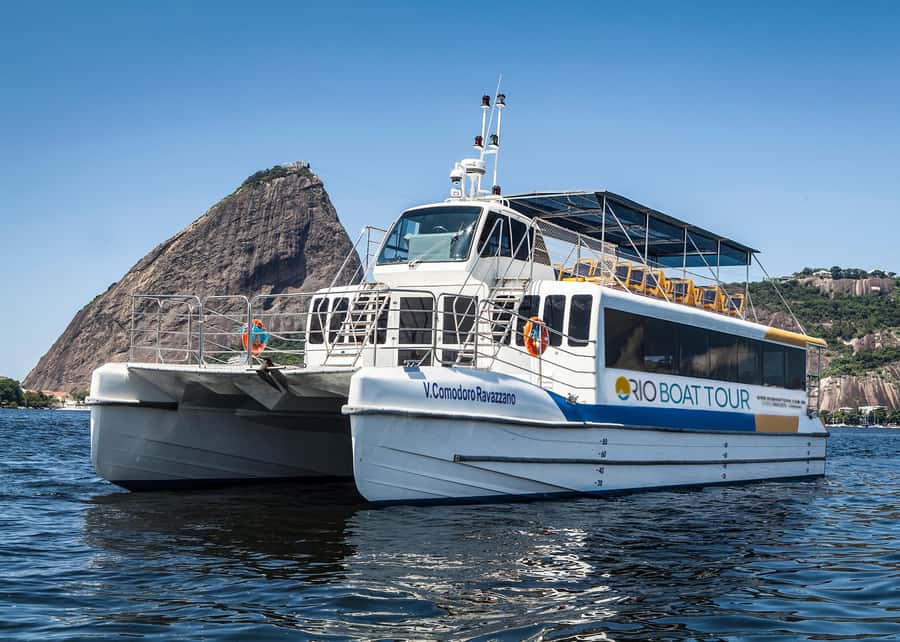
Rio is famous for its viewpoints, but the bay gives you something different: scale and context. From the water, you see how the city hugs the coastline and how hills, fortresses, beaches, and harbors all fit together in one view.
This tour is built for your time. In about 1.5 hours, you glide past a mix of modern landmarks and old military/civic sites. It’s not a slow, stop-everywhere day. Instead, you get a smooth ride where the “walks” are replaced by “watching” and quick photo breaks.
The best part for most people is the photo angle. You’re not shooting from far away or from behind fences. You’re close enough to feel the geography. And if you’re a first-timer, this is a strong way to get your bearings fast—Rio suddenly makes sense after seeing it from sea level.
You can also read our reviews of more boat tours in Rio De Janeiro
Marina da Glória: Where the Ride Begins and What You Should Do First
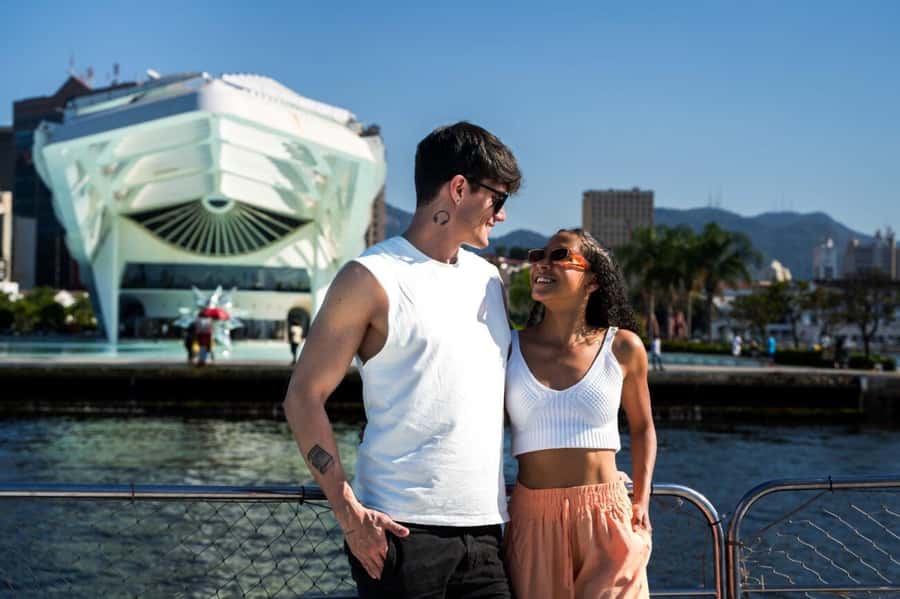
Your meeting point is Marina da Glória. Arrive early enough to find your boarding area calmly, because there can be limited signage and the marina layout can feel confusing at first.
If you’re traveling on a Sunday or a holiday, take note: vehicle access to the Aterro do Flamengo lanes isn’t allowed. That doesn’t mean you can’t get there, but it does mean you should plan for extra travel time and avoid leaving it to the last minute.
Practical tip: bring your ID/passport, a camera, sunscreen, and water. Even if the tour feels quick, you’ll want to be comfortable for the full ride in open-air conditions.
Museum of Tomorrow and Porto Maravilha: The First Big “Wow” Moment
After boarding, you head toward the Museum of Tomorrow area in Porto Maravilha. This is where you start seeing Rio as more than beach and mountains. Porto Maravilha is all about the port-side transformation, and the museum’s architecture signals that change from the water.
As you move along, you’ll start hearing and sensing the working-bay vibe. One of the pleasures here is that you get the port soundscape as part of the experience, not just a view. It makes the city feel alive, industrial, and real—not just postcard-perfect.
You also get a front-row feel for how Rio’s coastline is structured. The catamaran view compresses distances. Buildings, islands, and bridgelines look closer than they do from land.
Villegagnon Island, Santos Dumont Airport, Fiscal Island, and the Navy Arsenal
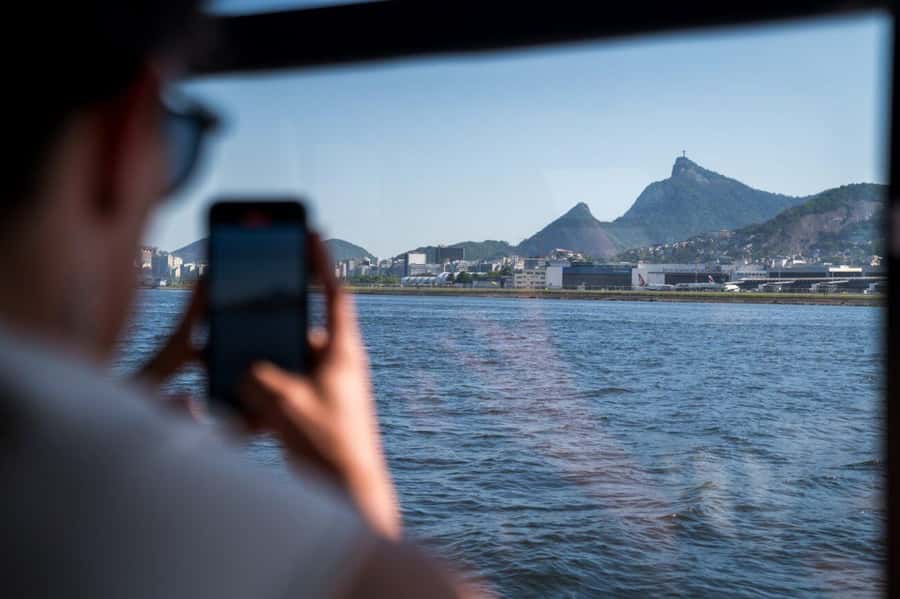
The middle stretch leans into port life and coastline details. You’ll pass by Villegagnon Island, Santos Dumont Airport, Fiscal Island, and the Arsenal of the Navy.
Why this matters: Rio’s landmarks are often introduced with a “hero shot.” This section gives you the behind-the-scenes version. You see how aviation, maritime infrastructure, and the city’s geography all stack up.
Also, these are the kinds of passes where timing helps. If you’re shooting video or photos, aim to keep your camera ready during the approach to each landmark. From a moving boat, the most photogenic angles don’t last long.
One more note: narration audio can be affected here. Engine noise and wind can compete with the speaker system, especially if you’re on deck. If you care about the commentary, choose your seat thoughtfully (more on that later).
Crossing to Niterói: Rio-Niterói Bridge and Concha Acústica Views
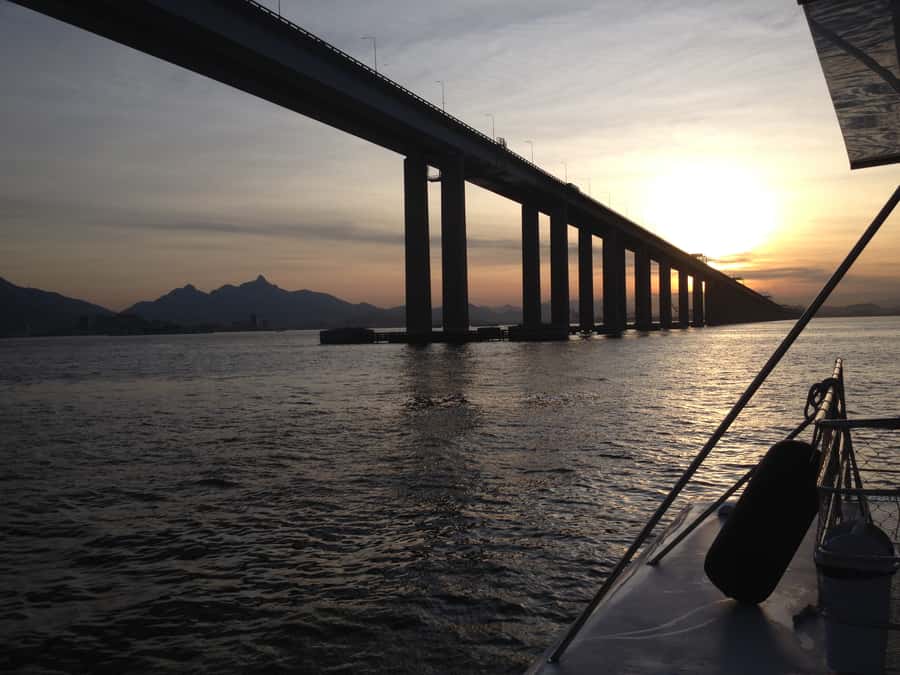
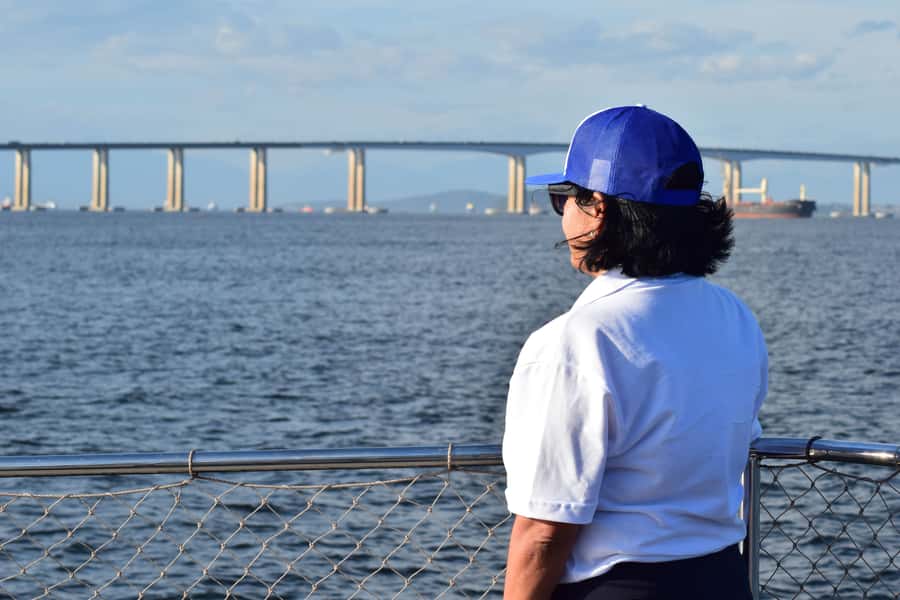
Next, the route shifts toward Niterói. You’ll pass the Rio-Niterói Bridge, which is one of those structures that instantly makes you understand the bay scale. From the water, the bridge doesn’t feel like a line on a map—it feels like a divider between worlds.
You’ll also see Concha Acústica (Acoustic Shell). Even though you’re not stopping to tour the site, it’s a recognizable landmark along the waterfront. The value is that you see it in context: buildings, water, and the coastline together.
If you’re traveling with someone who loves architecture, this is where the tour starts satisfying that itch. Rio and Niterói feel like they’re talking to each other across the bay.





MAC Museum in Niterói: Oscar Niemeyer’s Disc-Shaped Statement
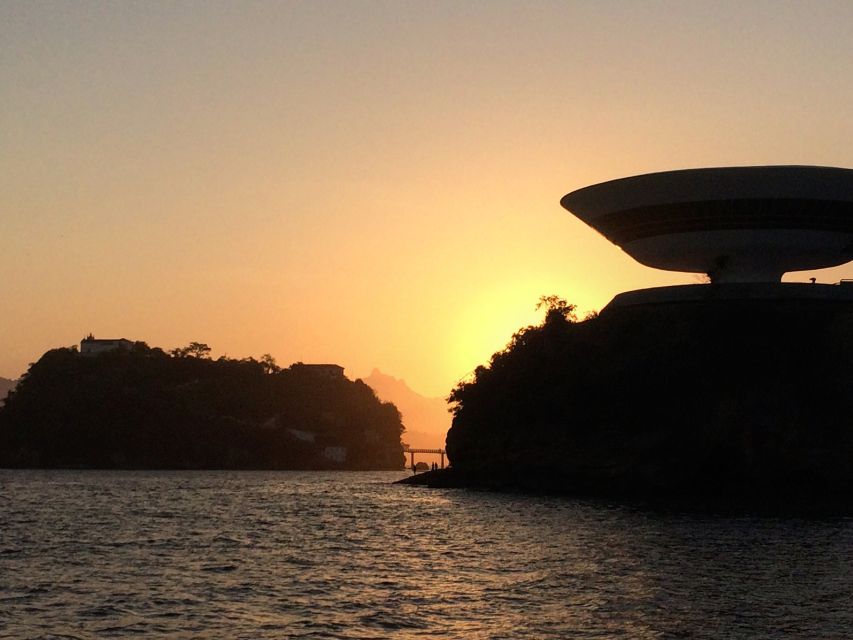
The catamaran heads toward the MAC (Museum of Contemporary Art), designed by Oscar Niemeyer. The museum’s distinctive disc shape is exactly the kind of landmark that looks better from the water than from street level.
You don’t need a long visit to appreciate it. From the catamaran, you get an instant read on the form and how it sits in the shoreline environment. It’s also a good moment for photos because the bay often gives cleaner sightlines than the sidewalk does.
A tip if you’re photographing: focus on shape and placement, not only details. From the catamaran, the scale of the building relative to water and horizon is what sells the shot.
Fortress Tour From the Water: Adão and Eva Beaches and the Coastal Strongholds
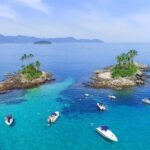
On the return side, the coastline gets more dramatic. You’ll pass Adão and Eva Beaches, then see Santa Cruz Fortress, Lage Fortress, São José Fortress, and São João Fortress.
These are big names for a reason, but from the water the story changes. Fortresses stop looking like distant silhouettes. They start looking like strategic points, placed for a reason along the bay’s access routes.
The trade-off is that you won’t land or explore inside. This is a “see from the water” experience, not a “walk around the site” day. Still, the views are the whole point. If you want variety in your photo set—beach, fortification, skyline—this part delivers.
If you get motion-sick, keep an eye on where you sit. Upper deck with open air can help some people feel steadier, but it can also mean more wind.
Sugarloaf Mountain From Sea Level: The Photo Stop That People Actually Wait For
Then comes the moment many people care about most: the view of Sugarloaf Mountain. You’ll pass it and get a few minutes to take pictures from the catamaran.
This matters for two reasons. First, Sugarloaf is one of Rio’s most recognizable icons, and sea-level angles feel more powerful than the usual lookout photos. Second, the tour gives you a time-boxed chance to shoot, so you’re not trapped watching the same thing for an hour.
Seat advice based on real-world experience: if you want the best angles, aim for the upper deck, and consider the left side toward the back for side views of major points and clearer listening for announcements. Not every day is identical, but this is a smart starting strategy.
Bring your camera strap. You’ll want hands free when the boat shifts. And remember: the best light is usually a moving target here, so don’t wait until the last second to aim.
Urca Casino and Flamengo Beach: The Return Loop That Closes the Circle

Before you get back to Marina da Glória, you’ll pass the old Urca Casino and Flamengo Beach.
This return section helps you feel the whole loop. You’re no longer imagining how Rio is arranged—you’re watching it connect. Flamengo’s long stretch of shoreline is a nice closing note, especially after the fortress-heavy coastline.
Also, the ride back can feel calmer for many people. You’ve already gotten the key landmarks, and now you can relax into the final views, take a last round of photos, and enjoy the ocean air as you head back to the marina.
Morning vs Sunset Sailing: Choosing the Timing That Fits Your Expectations

You can book a morning departure or an afternoon sailing timed for sunset. The sunset option usually sounds like a perfect plan—Rio at golden hour from the water is hard to beat.
But here’s the reality you should plan around: weather and wind can change how the trip plays out. On at least some afternoons, the sailing may finish well before the peak sunset moment, so don’t treat sunset like a guarantee.
My practical advice: if sunset is your only reason to book, you might still love this tour, but keep your expectations flexible. If you’re more interested in the architecture and fortress views, the morning trip can be just as rewarding—and often easier for people who want cooler light without waiting.
Narration Audio: What to Expect and How to Hear the Story
The tour includes an audio guide in Portuguese, English, and Spanish. That’s a big plus for independent travelers who don’t want to rely on a live voice only.
Still, sound quality isn’t always perfect. Breezes, other passengers talking, and especially engine noise can make it tough to hear every word through the speaker system.
Two ways to make the audio experience better:
- Choose seating that keeps wind in check as much as possible (and try not to sit directly where you feel the strongest engine vibration/noise).
- Treat the audio as helpful context, not the sole way you learn. The visuals do the heavy lifting anyway.
If you’re lucky, your guide on the trip may be one of the names that show up often for clear explanations, including Renato (Renato Marino), Claissa, or Carla. Even then, wind can still interfere, so good expectations help.
Onboard Comfort, Drinks, and Photo-Help Tips
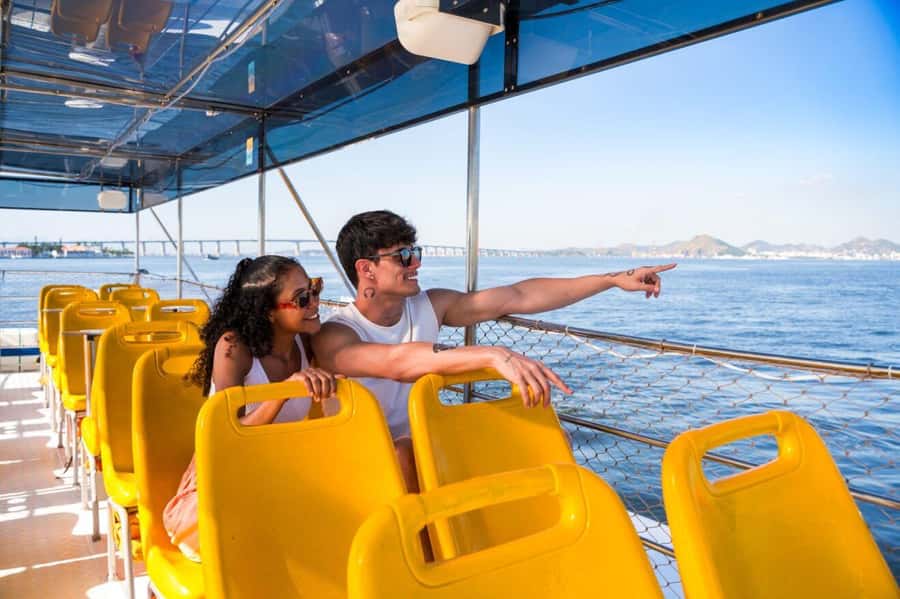
This is a modern, well-equipped catamaran, and it’s set up for comfort during a short tour. You can usually find a good viewing spot on deck, and upper levels tend to give you more open sightlines.
You can buy drinks and snacks on board. A couple of people have said the onboard drink pricing felt reasonable, and that helps if you’re doing this as a casual break in your day.
One helpful detail: at photo moments, staff may assist with taking pictures. If that’s important to you, arrive ready with a clear shot idea and say what you want in plain terms before the boat reaches the view window. It saves time and stress.
If you’re doing the breakfast option, you’ll eat at Marina da Glória before boarding. There’s also a coffee shop right in front of the embarkation area, so you can start calm rather than rushing with empty hands.
Who Should Book This Guanabara Bay Catamaran Ride
This works best if you want:
- Big sights fast: you’ll cover multiple iconic areas in a compact timeframe
- Photos from sea level without planning multiple separate outings
- A break from walking heat, with cool bay air and plenty of viewing time
It’s also a solid choice for couples and families who don’t need long stops on land. You get the highlights in motion, and you’re not stuck in traffic or schedules.
Accessibility-wise, the tour is listed as wheelchair accessible, which makes it easier for many people with mobility needs.
The main “not for everyone” factor is the lack of disembarkation. If you want to wander around monuments for an hour at a time, this isn’t that tour style. Also, unaccompanied minors aren’t allowed, so you’ll need to travel with an adult for kids.
Weather and Wind: The Bay’s Mood Can Change Quickly
Guanabara Bay is beautiful, but the tour is weather-dependent. If conditions aren’t favorable, the operator may cancel and offer an alternative tour date. In strong wind, the boat trip may not take place.
That means you should build this into a day where you can handle a change. Even with a flexible plan, try not to schedule anything tight right after your sailing.
Bring sunscreen and water too. A breezy ride can still be sunny, and you’ll be out on deck long enough to feel it.
Should You Book This Tour or Skip It?
Book it if you want a practical, scenic overview of Rio and Niterói from the bay, plus real photo time at Sugarloaf Mountain. The modern catamaran ride, the port-side architecture, and the fortress/coast views all pack a lot into about 1.5 hours.
Consider skipping or picking a different style tour if:
- You’re expecting a perfectly timed sunset that always hits peak golden light
- You’re counting on loud, perfectly clear narration regardless of wind and engine noise
- You want lots of time on land at each landmark
If you’re flexible and mainly want views that help you understand Rio’s layout, this is a strong choice.
FAQ
How long is the Rio boat tour of Guanabara Bay?
The tour lasts 1.5 hours.
Where do I meet for the tour?
You meet at Marina da Glória for boarding.
Are there departures in the morning and at sunset?
Yes. There are morning departures and afternoon departures timed for sunset.
Is there an audio guide, and what languages are offered?
Yes. The audio guide is included in Portuguese, English, and Spanish.
Does the tour include stops where I get off the boat?
No. There are no stops for diving or disembarkations on this tour.
Is breakfast available on this tour?
If you choose the option with breakfast, you’ll enjoy breakfast at Marina da Glória before boarding.
What should I bring?
Bring your passport or ID card, a camera, sunscreen, and water.
Is the tour wheelchair accessible?
Yes, the tour is listed as wheelchair accessible.
Are children allowed, and are young kids free?
Children 4 and younger are complimentary as long as they do not occupy a seat. Unaccompanied minors are not allowed.
What happens if weather affects the trip, and can I cancel?
The tour depends on favorable weather. If it’s canceled due to poor weather (or strong wind), you’ll be offered an alternative tour date. You can also cancel up to 24 hours in advance for a full refund.