
REVIEW · RIO DE JANEIRO
Tijuca Forest w/ Chinese View,cascatinha Taunay,horto waterfall and parque laje
Book on Viator →Operated by Trip In Rio · Bookable on Viator
A misty rainforest view hits different. This small-group tour strings together Tijuca National Park highlights and Rio’s Chinese-and-imperial history in a tight half-day loop. You’ll climb for panoramas, then cool off by waterfalls, and finish in the peaceful Parque Lage area.
I especially like how the route mixes nature and human stories. Vista Chinesa and Emperor’s Table connect Rio’s landscape to early 20th-century monument building and earlier Chinese tea efforts. And I like that the stops are practical: timed so you’re not wandering all day, with plenty of time at the lookouts and waterfalls.
One thing to consider: you’re in the rainforest on a steep, sometimes demanding climb at Vista Chinesa. If you don’t enjoy inclines or you’re traveling with tight pacing, you’ll want to plan your pace and wear solid shoes.
In This Review
- Key things to know before you go
- Entering Tijuca National Park without the full-day grind
- Vista Chinesa: a paved trail with a steep payoff
- Who will like this stop
- Emperor’s Table: cantilevered engineering and the Chinese tea connection
- What to do at Emperor’s Table
- Cascatinha Taunay: waterfall beauty plus an artist’s legacy
- Practical notes for this waterfall stop
- Parque Lage: rainforest calm near Cristo Redentor and the Jardim Botânico
- Who should prioritize Parque Lage
- Timing, group size, and the ride in a car or jeep
- The value question: is $88.21 worth it?
- Weather matters more than you think
- Who this tour suits best
- Should you book this Tijuca Forest tour?
- FAQ
- What is the duration of this Tijuca Forest tour?
- How much does it cost?
- What are the main stops on the tour?
- Is admission included for the viewpoints and parks?
- Is this a small-group tour?
- What’s included in the price?
- Are snacks and bottled water included?
- Do I need good weather for this experience?
- Can most travelers participate?
- What is the cancellation policy?
Key things to know before you go
- Vista Chinesa is reached by a paved trail with a steep climb that rewards you with one of Rio’s best overlooks
- Emperor’s Table ties the area to Portuguese-era engineering and a surprising thread of Chinese labor tied to tea and agriculture
- Cascatinha Taunay is a beautiful waterfall scene backed by an iconic stone bridge and an artist’s legacy
- Parque Lage is a rainforest pocket inside the Tijuca system, set near the Jardim Botânico neighborhood
- Small-group feel with a maximum of 14 people, plus a guide and car/jeep support depending on group size
Entering Tijuca National Park without the full-day grind
Rio’s Tijuca Forest can feel huge—people come for a whole day, or they take a long hike and then collapse on the beach. This tour is built for the other style: see the famous bits, get real jungle air, and still have energy for dinner.
That matters because Tijuca is not just “pretty greenery.” It’s a working history lesson. The forest holds stories about irrigation, imperial-era planning, and how Rio tried to shape agriculture and transport inside this mountainous landscape. When your guide connects those dots, you start noticing details you’d miss on your own: where a road was engineered, why a viewpoint was built, and how the waterfalls became part of royal and artist imagination.
You also get an efficient rhythm. The schedule is light enough to keep it relaxing, but structured enough that you’re not stuck figuring out logistics on the edge of the jungle.
You can also read our reviews of more tours and experiences in Rio de Janeiro.



Vista Chinesa: a paved trail with a steep payoff

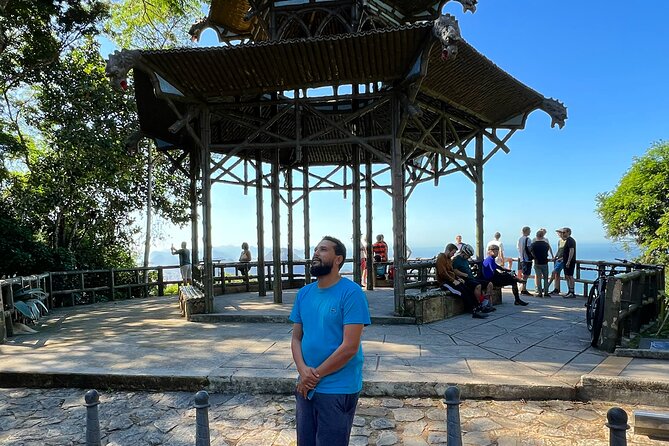
Vista Chinesa is the kind of lookout Rio does well. It’s not a random viewpoint. It’s a monument tied to Chinese presence and tea cultivation in Brazil, and it gives you a wide panorama over the southern zone of the city.
The approach is approachable at first: the trail is fully paved and easy to access. But then comes the part to respect. The climb to the lookout is described as demanding and steep. So here’s the practical advice: treat the first minutes as a warm-up, slow your breathing on the incline, and plan to stop for a photo only after you’ve found your rhythm.
Once you reach the peak, the “why” clicks. That expansive view turns the surrounding forest from scenery into context. You see how this green mass sits inside the city’s sprawl. On clear days, it feels like stepping onto a balcony above Rio’s everyday life.
Who will like this stop
If you like viewpoints and don’t mind a workout, you’ll enjoy Vista Chinesa a lot. If you’re sensitive to steep climbs, it can still be worth doing—but bring patience and go at your pace.
Emperor’s Table: cantilevered engineering and the Chinese tea connection
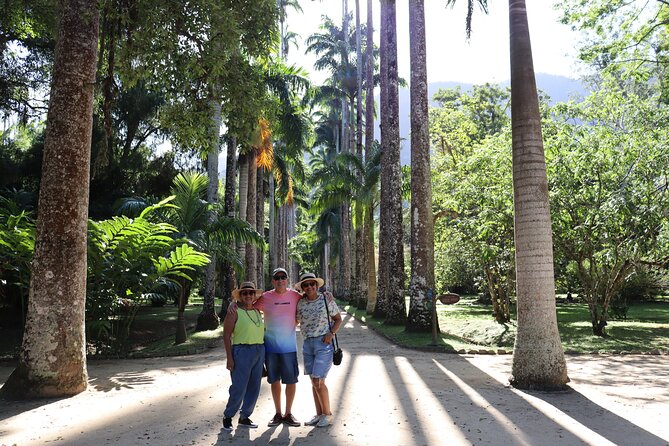
Next is Emperor’s Table, and it’s a clever palate cleanser. You go from a high panorama to a place where the history has sharper edges.
Here’s the story your guide should explain in plain language: in the mid-1800s, a botanic garden connection linked the area to Alto de Boa Vista by an engineered road. The description includes a cantilevered road and the involvement of figures tied to construction contracting and maintenance. In other words, this wasn’t just trail-building—it was infrastructure thinking.
Then the Chinese thread shows up. The region’s chronicle includes workers described as arriving from China (via Macau) to develop rice cultivation. The tea planters tied to D. João VI are part of the longer arc, and after the tea crop efforts failed, the Chinese presence continued in the region. There’s even a mention of a building recorded on a map as Casa dos Chinas, which helps explain why the city later built a pavilion called Vista Chinesa, using mortar to mimic bamboo.
Finally, you get the name Emperor’s Table. Above the area is a resting place prepared for frequent royal walks, and that’s where the “table” idea comes from.
What to do at Emperor’s Table
Give it about the full time you’re allotted, because you’re not just looking around—you’re reading the setting. If you take a moment to connect road engineering with the forest’s slopes, everything feels more logical.




Cascatinha Taunay: waterfall beauty plus an artist’s legacy
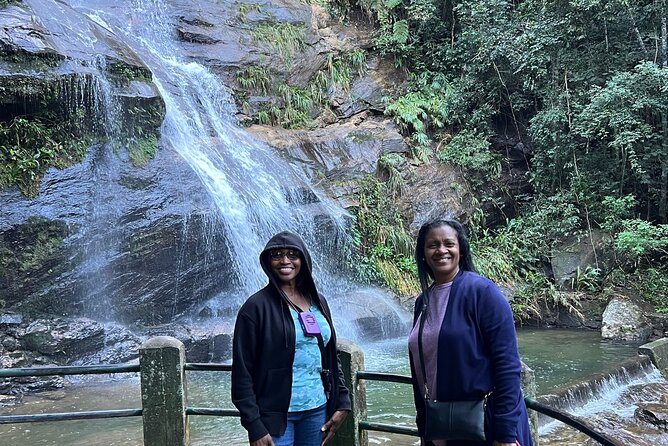
Cascatinha Taunay is the rainforest’s version of a cinematic scene. You’re looking at one of Tijuca’s waterfall highlights, formed by waters from the Tijuca River, the Conde River, and other tributaries. The setting feels classic Tijuca: dense greenery, mist in the air, and that wet-rock texture that makes the forest feel alive.
What makes this stop more than a quick photo moment is the infrastructure and the human story around it. The waterfall sits in front of a stone bridge described as Roman arch format. That bridge is tied to an 1860 commission by the Imperial Government and engineer Job de Alcântara. It’s one of those details that tells you Rio’s relationship with nature was also about planning and access.
Then there’s the Taunay connection. The artist Nicolas Antoine Taunay is described as building a small house near the cascatinha in 1817. He hosted meetings for the court and turned the waterfall into art. Even though his house was demolished in 1946, the site’s identity remains: there’s now preparation and refurbishment for a café and a new restaurant on the old cascata restaurant site.
Practical notes for this waterfall stop
Plan to slow down. One hour here is enough to enjoy the view, take photos, and absorb the vibe without rushing. If you’re heat-sensitive, this is where the forest can feel cooler and more forgiving than the exposed lookouts.
Also, because it’s a waterfall area, conditions can change quickly. If it’s raining lightly, expect slick surfaces and keep a steady step.
Parque Lage: rainforest calm near Cristo Redentor and the Jardim Botânico
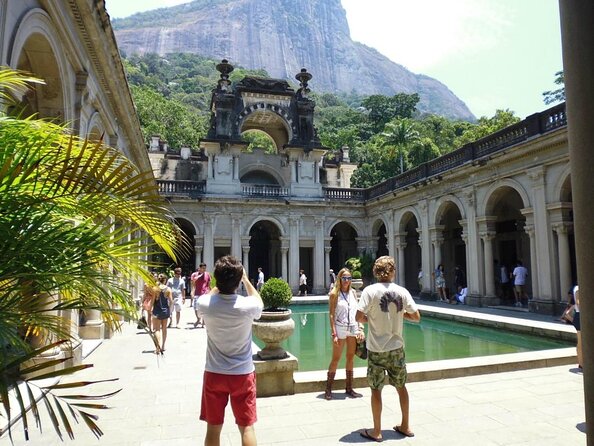
Parque Lage is where the tour turns gentle. It’s located in the Jardim Botânico neighborhood on the south side of Rio, close to major sights like the Jardim Botânico and Cristo Redentor. It sits inside Tijuca National Park, surrounded by Atlantic Forest.
The scale helps set the mood. It’s listed as 52 hectares of forest, so you’re not in a tiny fenced garden. You’re in a real patch of Atlantic forest, and it feels like a breather after the lookouts and waterfalls.
This stop also brings a different kind of enjoyment: walking through the forest edges and transitioning from “viewing Rio” to “being in Rio’s wild heart.” The time window is about 50 minutes, which is long enough for a stroll and short enough that you won’t feel tied to your schedule.
In at least some experiences, the tour includes a pause at the mansion area, where you can sit and soak in the surroundings. Even if you skip any extra purchase, the mental reset is the point: you go from stepping into history to simply enjoying shade and birdsong.
Who should prioritize Parque Lage
If you want nature without a steep climb, or you want a calmer finish before heading out to Rio’s evening plans, this is the stop you’ll probably remember most.
Timing, group size, and the ride in a car or jeep
This tour runs about 4 hours. That’s a sweet spot for Tijuca because it’s enough time to cover the big names without draining your day. The stop pacing is also viewer-friendly: you get roughly 30 minutes at Vista Chinesa and Emperor’s Table, about an hour at Cascatinha Taunay, and about 50 minutes at Parque Lage.
Group size is capped at 14, and that usually means you can actually hear your guide. You’re not stuck in a long line behind ten other languages and one camera crew.
Transportation is included, with a car or jeep depending on the group size. That’s important because Tijuca’s highlights are scattered and elevation changes can be tiring. Having the ride keeps you focused on seeing instead of navigating.
One more comfort note: the tour provides no bottled water or snacks, so you should bring water with you. A small pack beats hunting for drinks in the middle of the forest.
The value question: is $88.21 worth it?
At $88.21 per person, you’re paying for four things that matter in Rio: a guide, timely coverage of multiple Tijuca icons, included transport, and free admission tickets at the stops listed.
The free admission is not a small detail. In a city where ticketing can add up, this helps keep the day within control. And the included transport saves you from piecing together rides in an area where timing and traffic can be unpredictable.
Is it a bargain? It’s not “cheap,” but it is fair value for the structure. You’re basically buying an efficient route that hits Vista Chinesa, Emperor’s Table, Cascatinha Taunay, and Parque Lage within a half-day format.
If you’re a solo traveler or a couple, the small-group cap and guide attention can make the difference between a rushed checklist and a day that actually feels like a story. If you’re traveling with limited time and you want waterfalls and history without planning chaos, the price starts to make sense.
Weather matters more than you think
This experience requires good weather. That’s not just boilerplate. Lookouts and rainforest trails are weather-sensitive, and fog or heavy rain can cut down visibility at Vista Chinesa and make surfaces slick near waterfalls.
If the day looks questionable, I’d treat the forecast seriously. If conditions force a change, you’ll be offered a different date or a full refund. In practice, that protects your time and keeps you from paying for a half-day that turns into a blurry mess.
Who this tour suits best
I see this as a great pick for:
- First-timers who want Tijuca highlights plus history in under a half day
- Couples and small groups who prefer guided pacing over self-hiking
- People who want rainforest scenery but don’t want to spend the entire day on steep routes
- Anyone curious about Rio beyond beaches—especially the Chinese-tea and imperial engineering threads connected to the forest sites
It may be less ideal for:
- Anyone who strongly dislikes steep climbs (Vista Chinesa is paved but steep)
- Travelers who want a long, slow jungle hike with lots of off-trail time (this is focused on specific highlights)
Should you book this Tijuca Forest tour?
I’d book it if you want the major Tijuca moments in one tidy package, especially if you care about how nature and history connect. Vista Chinesa gives you the panorama, Emperor’s Table gives you the human story behind the setting, Cascatinha Taunay delivers the classic waterfall scene and infrastructure, and Parque Lage finishes with rainforest calm near the Jardim Botânico area.
If you’re short on time in Rio and you’d rather not gamble with transport and timing, this tour is a practical way to get real forest time without turning your day into a logistical project.
One last piece of advice: wear shoes you can trust on steep paved climbs and damp waterfall areas, and bring water. Do that, and this half-day can feel like you’ve escaped the city without actually leaving it.
FAQ
What is the duration of this Tijuca Forest tour?
The tour lasts about 4 hours.
How much does it cost?
The price is $88.21 per person.
What are the main stops on the tour?
You’ll visit Vista Chinesa, Emperor’s Table, Cascatinha Taunay, and Parque Lage. (The tour is also described as including a Horto waterfall experience.)
Is admission included for the viewpoints and parks?
Admission tickets are listed as free for the stops described.
Is this a small-group tour?
Yes. The experience has a maximum of 14 travelers.
What’s included in the price?
The tour includes a guide and car or jeep transportation (depending on group size).
Are snacks and bottled water included?
No. Snacks and bottled water are not included, so you should bring your own.
Do I need good weather for this experience?
Yes. The experience requires good weather. If it’s canceled due to poor weather, you’ll be offered a different date or a full refund.
Can most travelers participate?
The listing states that most travelers can participate.
What is the cancellation policy?
You can cancel for a full refund up to 24 hours in advance of the experience’s start time. If you cancel less than 24 hours before, you won’t receive a refund.