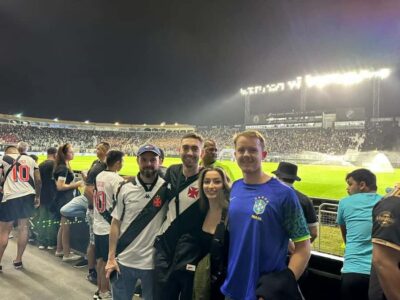
Maracanã at night is different. This match-day setup in Rio keeps football fans together from Ipanema to Maracanã, with a bilingual guide explaining what you’re seeing and how entry works. I especially like the way it handles the big modern hurdle: facial recognition, so you’re not stuck guessing at security.
I also like the simple structure: clear meet-up spot, private transport, and being escorted into your bleacher seats with time to settle in. One thing to consider is that your face is effectively your ticket for Flamengo and Fluminense matches, so if you don’t complete the registration in time, entry can become a problem.
In This Review
- Key things to know before you go
- Maracanã and the face-as-ticket reality
- The Ipanema meeting point: why it’s easier than it sounds
- Before match day: the biometric registration step you can’t ignore
- The ride to Maracanã: what the guide adds to the night
- The stadium experience: entering, finding your seat, and reading the crowd
- Timing on match day: how long it really feels
- After the match: getting back to Ipanema without chaos
- Tickets and price: what you’re actually paying for
- Who this Maracanã match experience is best for
- Should you book the Maracanã match experience with transport?
- FAQ
- Do I receive physical tickets for Flamengo or Fluminense matches?
- When do I need to complete the facial biometric registration?
- What’s included in the tour price?
- Where do we meet for the match?
- How long is the tour, and when does it start?
- What’s the group size limit?
Key things to know before you go
- Facial recognition is the ticket for Flamengo and Fluminense matches, so your registration has to be done correctly.
- A bilingual licensed guide walks you through the flow, from checkpoints to seating.
- Round-trip private transport handles the hardest part of the logistics in Rio: getting you there and home.
- Max 15 people keeps the group manageable and easier to keep together.
- You get stadium context en route, including what Maracanã has hosted over the decades.
- Bleacher seating is included, so you’ll want to be comfortable for the duration of the match.
Maracanã and the face-as-ticket reality
Maracanã is one of those stadiums that feels like it has gravity. You can see it in how fans move, how the noise builds, and how the whole place reacts as one body. What makes this experience especially worth it is that it’s built around the modern entry system Rio stadiums use for major matches.
For Flamengo and Fluminense games, there are no physical tickets provided. The clubs require facial recognition to enter. That means your face is your entry key, not a paper or app barcode. The tour company lines up the process ahead of time so you’re not scrambling in the hours before kickoff.
If you’re traveling from overseas, that part matters. New paperwork systems can feel stressful. Here, you’re given a video tutorial, an official biometric registration link, and a personal data summary meant to be used exactly as submitted. You also have instructions on how to finish the process, and you’ll be asked to let the team know once it’s done so they can validate your entry with local coordination.
You can also read our reviews of more tours and experiences in Rio de Janeiro



The Ipanema meeting point: why it’s easier than it sounds
The meet-up point is in Ipanema at Nossa Senhora da Paz / Ipanema, specifically the Nossa Senhora da Paz Subway Station. This is a smart choice for two reasons.
First, it’s a familiar “base” area for visitors. Second, your guide has you start there and stay with you through the important parts: the ride, the checkpoints, and the entry into the stadium. In practice, that reduces decision fatigue. You don’t have to figure out where to line up, what entrance to use, or how to interpret instructions on match day.
The tour runs about 6 hours total, and meeting times depend on kickoff. Kickoffs generally fall between 1:00 PM and 7:00 PM depending on the fixture, so your day will flex. Your exact meeting time and point are confirmed after booking.
Before match day: the biometric registration step you can’t ignore
You’ll get contacted after booking is confirmed for your selected date, at least one week before the match. That’s when the face-registration process begins.
Here’s what you should watch for:
- You’ll receive a video tutorial.
- You’ll get the official biometric registration link.
- You’ll receive a personal data summary and instructions to use it exactly as submitted.
- You’ll be told what to do, then you’ll need to complete the process and notify the company so they can validate your entry.
This is the biggest “do it right” part of the whole experience. If you take it lightly or miss a step, the risk isn’t theoretical. It’s tied to real entry control inside the stadium. So I suggest treating it like a must-do appointment: do it early, do it carefully, and don’t wait until the last night.
Also, match dates can shift. In one example, a booking was affected by schedule changes around the league fixture date. So it’s wise to keep your other Rio plans flexible in the days leading up to the game, in case the match day moves by a day.
The ride to Maracanã: what the guide adds to the night
Once match day arrives, you’ll meet at the subway station and join your bilingual guide. During the ride, you get context about:
- the stadium itself
- the teams you’re about to watch
- what to expect from the fans
This isn’t just trivia. It changes how you experience the match. When you understand why certain chants happen, what rivalries mean, and why Maracanã carries so much emotional weight, the atmosphere feels less like random noise and more like a conversation.
And yes, this matters for first-timers. Even if you know football, the Brazil version has its own rhythm: drums, flags, collective chanting, and a sense that the crowd is part of the game plan.
On different departures, guides have included people like Gabriel, Francisco, Chico, Matheus, Pedro, and Rafael. Different names, same idea: you’re there to watch, but you’re also there to understand what you’re watching.
The stadium experience: entering, finding your seat, and reading the crowd
When you arrive, the guide handles the parts that are hardest when you’re unfamiliar with local systems: escorting you through biometric checkpoints, security, and into your seats. This is one of the most appreciated parts of the experience because it turns a potentially stressful process into something orderly.
Most groups are given time to get settled before kickoff. In real terms, that usually means you can:
- browse nearby areas inside the stadium area (where available)
- grab a drink or snack
- take photos
- and get used to how loud it gets long before the first whistle
Your tickets are for bleachers, and the stadium is famously large. That combination means two practical things for you:
1) you’ll want to plan for a comfortable viewing posture
2) you’ll likely do some walking once you’re through the gates and out to the departure point after the match
As the game starts, you’ll notice how quickly the crowd sets the pace. Even if you’re not deep into Brazilian football, you’ll feel it: chants spreading, groups responding, and a constant wave of sound that makes the match feel bigger than the pitch.





Timing on match day: how long it really feels
The tour is about 6 hours. But it won’t feel like a single block of waiting. Your time is divided into:
- a meet-up in Ipanema
- the ride and orientation from the guide
- biometric/security entry and getting to your seats
- the match itself
- the return trip
Guides keep the group together through the busy points, which helps a lot when you’re surrounded by crowds, vendors, and match-day movement. It also helps your mental load. You don’t have to constantly re-check where you are or worry that someone will be left behind.
Kickoff time drives the exact schedule. The experience can start any time between 1:00 PM and 7:00 PM depending on the match. So if you’re planning dinner, beach time, or other tours, keep a wide buffer.
After the match: getting back to Ipanema without chaos
Here’s the part people don’t always predict: after the match, leaving a stadium can involve crowd navigation and some walking.
You’ll be driven back to Ipanema after the game. Some return logistics may involve a short walk from the stadium area to where the bus is located. In one account, people noted about 10–15 minutes of walking after the match due to crowd density and vendors.
Your guide and the team keep everyone together so you’re not hunting for transport in a noisy maze. Once you’re back in Ipanema, you can take a taxi or Uber to your hotel.
One of the small-but-real comforts is that the drop-off can be convenient within the Ipanema/Copacabana area depending on the flow. That’s the kind of detail that turns an exhausting night into a survivable one.
Tickets and price: what you’re actually paying for
At $174 per person, this isn’t the cheapest way to attend a match. If you’re confident buying tickets on your own and handling transport, you might spend less.
But in Rio match nights, cost isn’t only the ticket. The value here is the bundle:
- tickets included for bleacher seating
- private round-trip transport
- a licensed bilingual guide
- entry support through the required stadium systems
- stadium context so you’re not just watching blindly
That’s why people often feel the price is “worth it.” You’re paying to avoid the messy parts: figuring out where to stand, how entry works, and how to manage a big crowd while protecting your time and sanity.
There’s one more angle: for Flamengo and Fluminense, the facial recognition requirement is non-negotiable. You’re not just buying access to seats. You’re buying help making sure you can actually get in.
Who this Maracanã match experience is best for
This fits best if:
- you want the full big-match atmosphere at Maracanã without DIY stress
- you’re visiting Rio for a limited time and don’t want to spend your day on logistics
- you’re comfortable following instructions, especially around facial biometric registration
- you want to feel like a fan, not a tourist in a trench coat trying to blend in
It may be less ideal if you:
- hate any kind of pre-trip registration or tech step
- strongly prefer total independence and don’t want to follow a guided flow
- are price-sensitive and are willing to take on extra risk around ticket availability
Should you book the Maracanã match experience with transport?
If you care about football, and you want Maracanã to feel smooth and safe, I think it’s a strong choice. The best part isn’t only the match. It’s how the experience helps you get there, get in, and enjoy the atmosphere without turning the day into a stressful scavenger hunt.
I’d book it if you’re traveling on a tight schedule, want a guided introduction to Maracanã and the clubs, and appreciate that the company handles the hardest logistics: transport plus facial recognition entry. The main “no” reason is simple: if you don’t plan to complete the biometric registration properly, you’re taking on unnecessary risk.
If you do plan to register on time and keep your match-day plans flexible, this tour gives you a good deal of control over what could otherwise be a chaotic evening in one of the world’s most famous stadiums.
FAQ
Do I receive physical tickets for Flamengo or Fluminense matches?
No. For Flamengo and Fluminense matches, there are no physical tickets. Entry requires facial recognition, so your face is used to get in.
When do I need to complete the facial biometric registration?
After booking is confirmed, you’ll be contacted at least one week before the match date. You should complete the biometric registration before match day and then let the company know so they can validate your entry.
What’s included in the tour price?
The price includes bleacher tickets, a licensed bilingual private tour guide, round-trip private transportation to and from the stadium(s), and VAT/taxes/handling charges.
Where do we meet for the match?
You meet in Ipanema at Nossa Senhora da Paz / Ipanema, at the Nossa Senhora da Paz Subway Station.
How long is the tour, and when does it start?
The experience lasts about 6 hours. Meeting times vary based on kickoff, generally between 1:00 PM and 7:00 PM.
What’s the group size limit?
This activity has a maximum of 15 travelers.