REVIEW · RIO DE JANEIRO
Jeep’n’Culture: Rocinha Favela and Tijuca Rainforest Tour
Book on GetYourGuide →Operated by Gray Line Brazil · Bookable on GetYourGuide
Two Rio worlds, one Jeep ride. This Jeep’n’Culture tour pairs the quiet thrill of the Tijuca Forest with the human energy of Rocinha, all in a single 4-hour outing. It’s a practical way to see both sides of Rio without spending all day hopping between neighborhoods.
I really like that you get a guided nature portion with time at the Visitor Center and a chance to spot wildlife like monkeys, birds, butterflies, and even sloths. I also like the photo-friendly stop at Cascatinha Taunay, plus the built-in cultural stop in Rocinha with a history talk and a walk.
One drawback to plan for: you can spend a lot of time driving in the Jeep, and the walking/hike portions aren’t meant for people with mobility issues or back problems. If you’re expecting a long, deep nature trek or a slow-paced neighborhood wander, this schedule is tighter than that.
In This Review
- Key highlights worth your attention
- Two Rio worlds in four hours: how this tour actually plays
- Tijuca Forest: the world’s largest urban forest, minus the confusion
- Cascatinha Taunay waterfall: a quick stop with real photo payoff
- Wildlife spotting that’s actually guided (monkeys, birds, butterflies, and sloths)
- Getting to Rocinha via Estrada da Gávea and a break at Club Bar
- Rocinha: history talk plus a walking perspective that adds context
- Your guide matters: Mario, Bella, and why the right pacing helps
- Price and value at about $92: when it feels fair, when it might pinch
- Timing, comfort, and what to bring so you enjoy the outdoors
- Who should book Jeep’n’Culture, and who might skip it
- Should you book it? My decision guide
- FAQ
- How long is the Jeep’n’Culture: Rocinha Favela and Tijuca Rainforest Tour?
- Where does pickup happen?
- What languages is the live guide available in?
- What’s included in the Tijuca Forest portion?
- What wildlife might you see in Tijuca Forest?
- What does the Rocinha part include?
- Are meals or drinks included?
- What should I bring and what rules do I need to follow?
- Is the tour suitable for wheelchair users or people with mobility issues?
Key highlights worth your attention
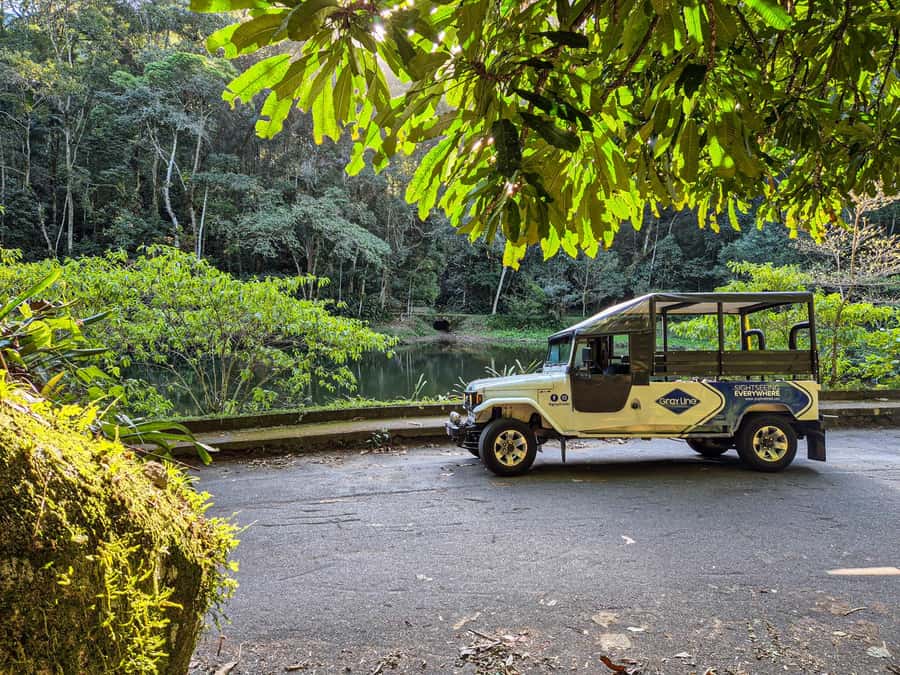
- Tijuca’s urban-forest feel: a rainforest experience surrounded by Rio’s city noise
- Cascatinha Taunay waterfall photos: a classic stop for pictures and quick scenic breaks
- Wildlife spotting with a guide: monkeys, birds, butterflies, and possible sloths
- Rocinha history talk + walking tour: more than a drive-through, with context on the community
- Estrada da Gávea scenic route: views from the drive and a break at Club Bar
Two Rio worlds in four hours: how this tour actually plays
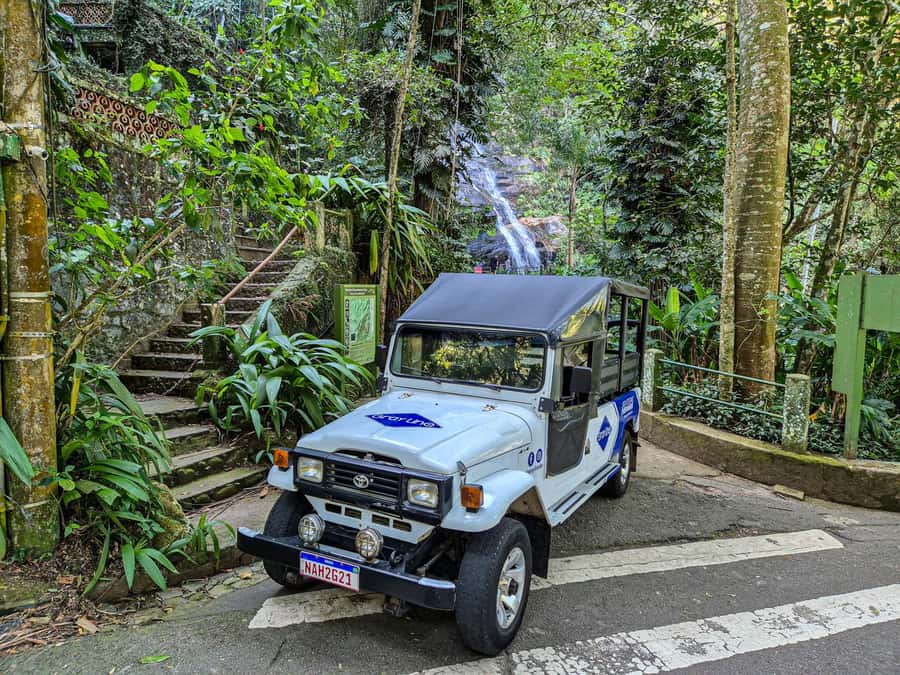
This tour is built on contrast. In the first part, you’re in Tijuca Forest, where the city drops away and the air feels different. Then, you switch gears and head to Rocinha, the largest favela in Latin America, where community life is the main event.
The big value here is that the tour doesn’t treat either place like a box-check. In Tijuca, you’re not just staring at trees from a roadside viewpoint. You’re guided through the Visitor Center and given an easy hike framework so you know what you’re looking at. And in Rocinha, you don’t just drive past streets. You get a talk on history and culture, plus a walking and scenic tour that helps you understand what you’re seeing.
The trade-off is time. It’s only 4 hours, so you’ll likely feel that “we’re in the Jeep a bit” rhythm. If your ideal day in Rio is slow and lingering, treat this as a taste—an efficient way to experience two heavy-hitters without burning a whole day.
You can also read our reviews of more tours and experiences in Rio De Janeiro.



Tijuca Forest: the world’s largest urban forest, minus the confusion
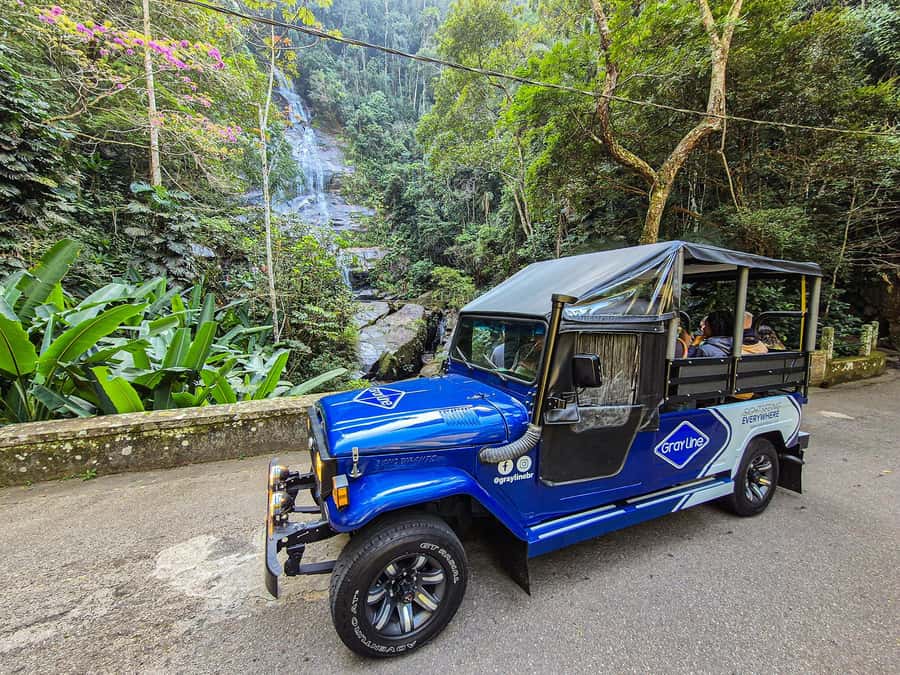
The Tijuca portion is the calm start. You’re surrounded by one of the most surprising things about Rio: a major rainforest ecosystem right up against a huge city. The tour leans into that idea—an “oasis in nature” feeling that’s easy to enjoy even if you’re not an experienced hiker.
What you’ll appreciate most is that the guide frames Tijuca as a living system, not just a backdrop. You’ll learn about local biodiversity, and the hike style is described as easy—more about walking with purpose than conquering trails. That matters because it keeps the experience accessible for many travelers who still want something more meaningful than a quick photo stop.
Keep expectations realistic: this isn’t a full-day jungle expedition. But if you want to understand why Tijuca is special and you’d like wildlife spotting help, the structure works well.
Cascatinha Taunay waterfall: a quick stop with real photo payoff

The star photo moment is Cascatinha Taunay, an iconic waterfall that’s specifically built into the route. If you’ve come to Rio for scenery—and you probably have—this is the kind of stop that helps the tour feel like more than transportation.
Because the waterfall is part of a guided nature block, you’re not just wandering around with no context. You’re there with timing and direction, which makes it easier to grab photos without feeling rushed in a chaotic spot.
My practical tip: bring your camera ready and expect changing light under trees. Waterfall shots often look better when you adjust your angle a step at a time. Even if your time here is limited, you can usually get a few strong frames quickly.
Wildlife spotting that’s actually guided (monkeys, birds, butterflies, and sloths)

One of the most useful parts of this tour is the promise of wildlife spotting, not random luck. The experience includes opportunities to spot monkeys, birds, butterflies, and even mentions the chance of sloths.
Here’s how I’d think about it if you want to get the most out of that portion: treat wildlife like a “search skill,” not a “reward.” A good guide can help you notice motion in the canopy, identify signs of animals, and understand what’s realistic to expect. You’re not just looking at trees—you’re learning how the forest signals life.
Also, don’t forget that insects and sun are part of the package. The tour asks you to bring insect repellent and sunscreen, which is a strong hint that you’ll be outside long enough to feel it. If you come prepared, you’ll enjoy the slower scanning moments that wildlife spotting requires.
Getting to Rocinha via Estrada da Gávea and a break at Club Bar

After Tijuca, the tour changes pace and setting fast. You’ll drive up Estrada da Gávea, then stop for a break at Club Bar with views.
This is more than a “coffee break.” The point of the drive and the scenic pause is to give you a sense of Rio’s geography—the way neighborhoods stack on hills, and how quickly the city’s shape becomes part of the story. Estrada da Gávea is a route that turns a transfer into sightseeing, which is why it works even for visitors who don’t usually love long drives.
Use the Club Bar stop to reset. Stretch your legs, hydrate if you need it, and take in the view before the tour shifts to community life and history. It makes the transition easier to process.



Rocinha: history talk plus a walking perspective that adds context
Now for the part many people remember most: Rocinha favela. This tour includes a talk about the history and culture of Rocinha, plus a walking and scenic tour of the area.
The key value is the guide-led context. Without it, Rocinha can feel like a collection of streets you pass through. With it, you can start connecting what you see to why the community developed the way it did. The tour is designed for cultural understanding—less voyeurism, more interpretation.
You’ll also experience Rocinha in two ways:
1) as a drive that shows scale, and
2) as a guided walking/scenic segment where you can slow down enough to notice details.
Practical note: the tour isn’t framed as a long stroll. It’s a short, structured introduction, which is good for first-timers who want awareness without exhausting themselves. If you’re hoping for a half-day deep dive on foot, you’ll want a longer, specialized community tour on another day.
Your guide matters: Mario, Bella, and why the right pacing helps

Because this is a guided experience, the tone can change a lot depending on the group and the guide’s style. In the available feedback, guides like Mario and Bella have been singled out positively, including notes about being flexible with wishes and making the activity feel complete and culturally interactive.
What does that mean for you? It means the tour isn’t only about destinations. The guide’s pacing can affect how much you enjoy wildlife scanning in Tijuca, how clearly the history talk lands, and how smooth the walking segment feels in Rocinha. When a guide does that well, you end up with a tour that feels like a coherent story rather than two separate stops stapled together.
Price and value at about $92: when it feels fair, when it might pinch

At $92 per person for 4 hours, this tour sits in the “reasonable for what you get” zone, but it depends on your priorities.
Here’s what you’re paying for:
- A professionally guided outing (not self-guided)
- Roundtrip transfers from many major areas (São Conrado, Leblon, Ipanema, Copacabana, Barra, Santa Teresa, and Downtown)
- Tijuca Forest time including Visitor Center and Cascatinha Taunay
- Rocinha cultural talk plus a walking/scenic segment
- Scenic driving that includes Estrada da Gávea and a stop at Club Bar
That’s a lot of content for a short trip. If you want both nature and culture in one outing—and you like having someone else handle logistics—this can feel like solid value.
When might it feel less fair? If you strongly prefer minimizing drive time, or if you expect a longer, deeper hike in the forest. Because the experience is structured around multiple stops, time can feel “allocated,” not leisurely.
My advice: treat it like an efficient highlight tour. If you want “master-level Tijuca” or “community-level Rocinha,” you may still want additional time on your own later.
Timing, comfort, and what to bring so you enjoy the outdoors

This is an outdoors-heavy day. The tour asks for comfortable shoes, camera, sunscreen, water, and insect repellent. That list isn’t random. It’s what lets you enjoy the easy hike, the waterfall stop, and the time in the open air without feeling miserable.
Also pay attention to what’s not allowed:
- No smoking
- No littering
- Don’t feed animals
- Don’t touch plants
Those rules help protect both the forest and the community environment. Follow them and you’ll also keep the vibe respectful.
Dress for comfort. Light clothing plus shoes with grip is the safest bet. And since you’ll be switching between very different settings, it helps to have a camera strap or pocket organization so you aren’t constantly fishing for gear.
Who should book Jeep’n’Culture, and who might skip it
This tour fits best if you’re:
- Visiting Rio for a shorter stay and want two major experiences without overplanning
- Interested in both nature and culture, and you like guided context
- Comfortable with a mix of driving, photo stops, and short walking segments
You might want to skip it if:
- You have mobility limits or back problems, because the tour is not suited for people with back issues or mobility impairments
- You’re using a wheelchair (not suitable)
- You’re pregnant (not recommended)
If you’re in good physical shape and you’re okay with a “taste plus context” format, it’s a smart use of half a day.
Should you book it? My decision guide
Book this tour if you want a compact, guided introduction to Rio’s two big contrasts: Tijuca Forest wildlife and waterfall scenery, then Rocinha’s history and lived culture. The combination of Visitor Center learning, a clear nature photo stop, and a guided cultural talk is what makes it more than a standard sightseeing drive.
Don’t book it if you’re chasing maximum time in Tijuca alone or you need a very slow, fully accessible walking day. Also, if your top priority is minimizing drive time, factor that the schedule is built around multiple locations in a short window.
If you do book, do two simple things: bring the right outdoor gear (repellent, water, shoes) and make sure your chosen tour language is confirmed for your guide. That’s often the difference between getting a solid story and feeling slightly lost during the key moments.
FAQ
How long is the Jeep’n’Culture: Rocinha Favela and Tijuca Rainforest Tour?
The tour lasts 4 hours.
Where does pickup happen?
Pickup is included at most hotels located in São Conrado, Leblon, Ipanema, Copacabana, Barra, Santa Teresa, and Downtown.
What languages is the live guide available in?
The live tour guide is available in English, French, German, Italian, Portuguese, Spanish.
What’s included in the Tijuca Forest portion?
You’ll have a guided tour focused on biodiversity, a visit to the Visitor Center, time at Cascatinha Taunay waterfall, and an easy hike where you have opportunities to spot wildlife.
What wildlife might you see in Tijuca Forest?
The tour notes opportunities to spot monkeys, birds, and butterflies, with a chance of seeing sloths.
What does the Rocinha part include?
You’ll drive through Rocinha, enjoy a talk on the history and culture of Rocinha, and take part in a walking and scenic tour of the area.
Are meals or drinks included?
No. Meals and drinks are not included.
What should I bring and what rules do I need to follow?
Bring comfortable shoes, a camera, sunscreen, water, and insect repellent. Smoking, littering, feeding animals, and touching plants are not allowed.
Is the tour suitable for wheelchair users or people with mobility issues?
No. It’s not suitable for wheelchair users, people with mobility impairments, people with back problems, or pregnant women.
If you tell me your travel dates and where you’re staying, I can suggest the best way to time this in your Rio plan.